The story about the history of Marchioness of Tavistock’s|Duchess of Bedford’s| Important Jewelry
England Great Britain U.K. United Kingdom of England Scotland Wales and Ireland English history Royal Jewellery & Aristocratic Jewels antique jewellery historian, Mountbatten, the Queen, crown jewels, Princess, windsor, house of windsor,
royal royalty royalfamily royaljewels diamond tiara queenvictoria duchess of york history england uk britain monarchy britishmonarchy britishroyals britishroyalfamily
The story about the history of Marchioness of Tavistock’s|Duchess of Bedford’s| Important Jewelry
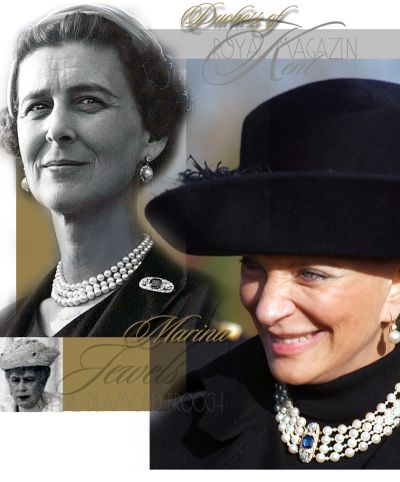
Queen Mary Sapphire Diamond Brooch |Marina Duchess of Kent rectangular sapphire and two diamonds sapphire brooch. The jewel was later altered and now used as sapphire clasp pearl necklace by Princess Michael.

More of Queen Mary’s Sapphire Brooches

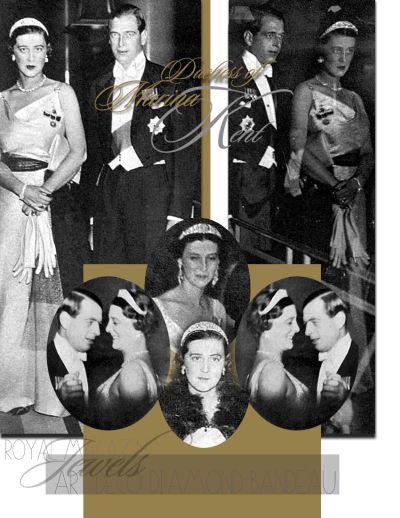
An all diamond scroll pattern tiara with brilliant custer centre and entourage of baquette diamonds, was one of the wedding gifts of the Duke of Kent to his bride. It was noted in the royal wedding gift list.
The Duchess of Kent wore the diamond tiara in her earlier times on some occassion, see the picture below.
Similar to the Duchess of Sussex wedding tiara, but not the same !!
For more stories about the history of royal jewels and details of the diamond bandeau:

Every jewel of the Queen tells a story – more about the history…
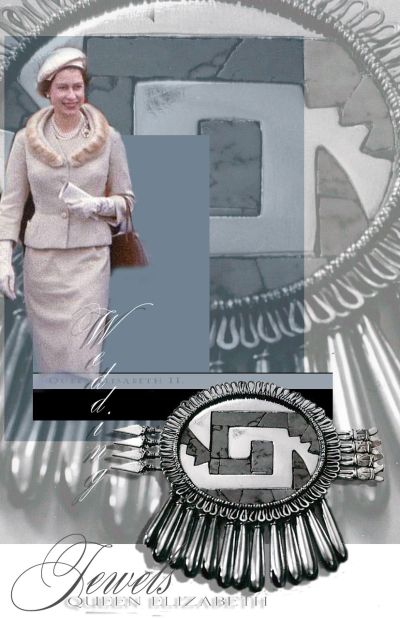
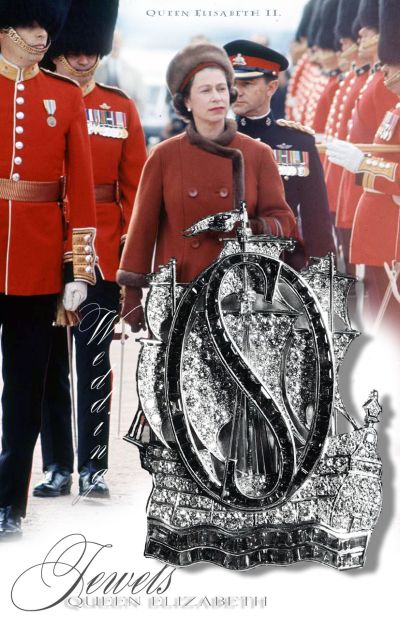
british royal familybroochclipCorbeille de MariagegoldjoaillerieOverseas leagueplatinumqueen Elizabeth IIroyal marriageroyal weddingruby sapphirethe queen
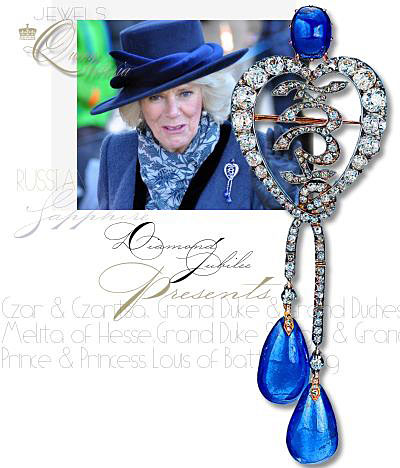
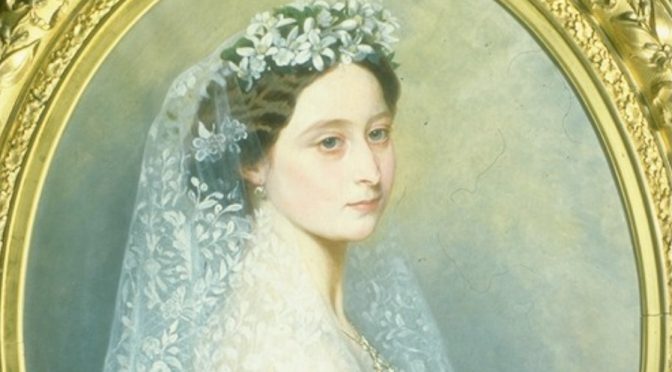
Princess Alice of Great Britain and Irland, the second daughter of Queen Victoria married Prince Louis of Hesse. The royal wedding presents >> are costly On the second occassion of her marriage, Princess Eugenie is wearing another historic jewel from the Queens vault, the Queen Adelaide’s Ears of Wheat Brooches/Hair ornaments. King William IV commissioned a set of six diamond ears of wheat to be used as brooches or hair ornaments in 1830 for Queen Adelaide, using 580 diamonds from King George III`s collection, they were among the heirloom jewels handed over by Queen Adelaide to Queen Victoria in 1837. Due to the King of Hanover`s successful claim against Queen Victoria for Queen Charlotte`s jewels, three of these had to be remade in 1858. See Queen Victoria with three of the ears of wheat, each on the side of her gown, on the top left. More about the royal jewel and the history of the ears of wheat in diamond>> Teck Ears of Wheat in Diamonds | Tiara | Wedding Princess Alice | Alexander of Teck| Countess Athlone Jewels| Royal Wedding Gifts & Presents| England Princess Eugenie, daughter of the Duke of York and his former wife Duchess Sarah, on her wedding day, wearing the Greville Diamond Kokoshnik Tiara, lent by her grandmother the Queen. The royal tiara was made for Mrs Greville a famous jewellery collector, by Boucheron and bequeted to Elizabeth The Queen Mother in 1942, she wore it not in public, „In the bad time“… instead after the war. Closed friends, from the beginning – Margaret Greville rose to become a millionairess and prominent society hostess and friend to the royalty and politicians. A ‚beeress‘, her father making millions from McEwans lager, following an advantageous marriage to one of Edward VII’s best friends, Captain Ronald Greville, Mrs. Greville created two magnificent houses, Polesden Lacy now National Trust and the opulent luxury, 16 Charles Street, Mayfair. Dame Greville had no children and originally intended to leave – a lot of her jewellery was beyond beautiful, was bequeathed to the Royal Family who still wear it, Greville Emerald Tiara Kokoshnik Princess Eugenie Royal Wedding Mrs Greville wore the tiara on some royal occassion, as well as pictured on top in the second row in 1937, like a bandeau. check for more details about the history of the amazing Greville Diamond and Emerald Kokoshnik Tiara >> In 1897 the grandchildren of Queen Victoria, all daughters and the son, from Princess Alice of Hesse: Czar & Czaritsa of Russia , Grand Duke Louis & Grand Duchess presented to her grandmother an extraordinary russian sapphire and diamond brooch>> This brooch will be on public at the exhibition Russia, Royalty & the Romanovs at The Queen’s Gallery, Buckingham Palace from Friday, 9 Nov 2018 – Sunday, 28 Apr 2019 This is an update and I remember very well, when we find out the details of this brooch in 2011 see the sketch of the brooch and story>>Princess Alice Grand Duchess of Hesse by Rhine | Royal Marriage presents Wedding gifts|England German Royal Jewels

Prinzessin Alice Grossherzogin von Hessen bei Rhein |Geschenke zur Hochzeit und Vermählung | Royale Juwelen und Königlicher Schmuck|England Deutschland
Princess Alice Grand Duchess of Hesse by Rhine | Royal Marriage presents Wedding gifts|England German Royal Jewels
Prinzessin Alice, Grossherzogin of Hessen bei Rheine | Royale Saphir Parure Collier, Brosche und Ohrringe |Juwelen und Schmuck Geschenk des Prinz of Wales
Royal Wedding Gift to Princess Alice, Grand Duchess of Hesse & by Rhine, consort of Ludwig IV, Grand Duke of Hesse & by Rhine 1843-78
Princess Victoria of Hesse, Princess of Battenberg | Royal Jewel History | Grand Duchess Alice Sapphire-Diamond Pearl Parure
Princess Alice Grand Duchess of Hesse by Rhine | Diamond Riviere Empress of Russia |Royal Marriage Presents & Wedding Gifts
Royal Wedding Princess Eugenie | Queen Victoria’s brillant Ears of wheat | Queen England
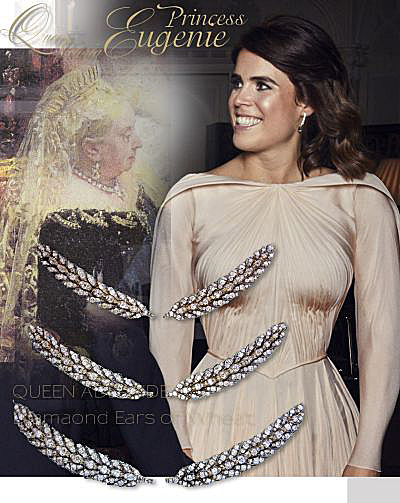
Princess Eugenie also wore a hair slide belonging to Her Majesty The Queen, the Wheat-Ear Brooches.| Tiara Ears of Wheat in diamondsGreville Diamond and Emerald Kokoshnik Tiara | Princess Eugenie Royal Wedding
Mrs. „Ronnie“ Greville courtship the Mountbattens and the Duke and Duchess of York, who became King George VI and Queen Elizabeth, and in fact, both are honeymooned at Polesden Lacy. Among her friends she numbered Edward VII, Queen Mary, George VI and Queen Elizabeth, Queen Ena, Sir Ernest Cassel, the Rothschild and Mussolini. She lived of tumultuous historic events, as the halcyon years of the Edwardian era, the Roaring 20s, the Depression, two World Wars, and the London Blitz.
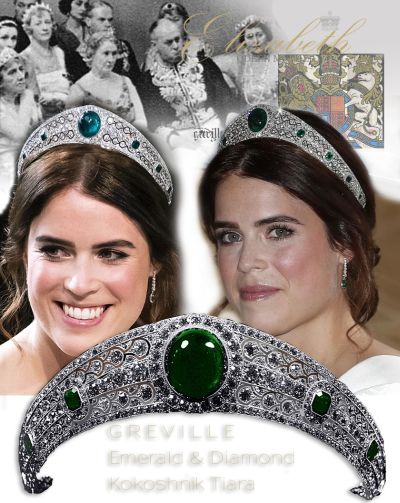
QUEEN MOTHER’S JUWEL CASKET – Greville Diamond Necklace Collier Boucheron | Her Majesty the Queen Mother wearing the five row necklace, also a gift of Mrs Greville
Royal Sapphires |Wedding Gifts & Presents| Duchess of York | Sapphires Jewels of Queen Elizabeth the Queen Mother
Princess Margaret’s Royal Sapphires and Diamond Brooch | Lady Sarah Snowdon-Chatto
Sunburst Diamond Brooch Pendant | Duchess of York | Royal Engagement Gifts & Presents | Jewels Queen Mother England
Pearl and diamond sautoir of pearls diamond side-pieces, diamond triangular endpiece and pearl drop| Marriage – The gift of Citizens of London
Pearl and diamond platinum sautoir necklace, emerald and diamond tassel | Royal Jewels | Wedding gift of the Countess of Strathmore
Wedding Gifts & Royal Presents| Duchess of York | Jewels of Queen Elizabeth the Queen Mother England
Diamond Spray Brooch | Royal Jewels Queen Mother |England British Royal Family| Princess Margaret Countess Snowdon
Art deco leaf brooch with Sapphire, diamond, emerald, amethyst and ruby | Cartier | Royal Jewels England
Diamond Gifts for the Royal Family 8.55ct solitaire marquise diamond was presented to Queen Elizabeth| England
Greville Diamond earrings and pearshaped Diamond pendants| England Royal Jewels
Greville Emerald and Diamond Koskoshnik|Boucheron Tiara | Royal Wedding Princess Eugenie England| Jewels of Queen Elizabeth the Queen Mother
Queen Victoria’s Household Diamond Jubilee Diamond and tear-drop Pearl Brooch| Royal Historic Jewelry
Diamond Jubilee Sapphire Brooch | Queen Victoria | British Royal Jewels
The Diamond Jubilee Bracelet| Royal Imperial Jewels of Queen Victoria
The Diamond Fringe Brooch| Royal Jewels | Queen Elizabeth The Queen Mother
Queen Victoria’s Diamond Fringe Brooch| Royal Imperial Jewelry | Königin Victoria’s Diamantbrosche
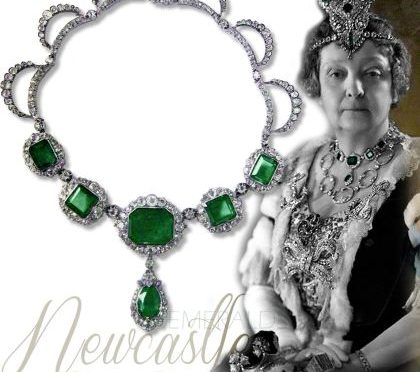
Queen Victoria’s Emerald Jewels |Royal Jewel History | Königin Victoria’s Smaragd Schmuck
Royal Weddings| England U.K British Royals | Hochzeiten im englischen Königshaus
Russian Diamond and Sapphire Brooch | Presented to Queen Victoria on her diamond jubilee
Russia, Royalty & the Romanovs
Victoria Melita of Hesse, Grand Duke Serge & Grand Duchess Elizabeth, Prince & Princess Louis of Battenberg