Archiv der Kategorie: Frankreich | France

Frankreich France history Royal Jewellery & Aristocratic Jewels antique jewellery historian Orleans Bourbon Napoleon Bonaparte princejean comte de paris comtesse deparis royaltéfrançaise dauphinedefrance maison royale de france frenchroyalty frenchroyalfamily royalbride royalmarriage royal royals royalty
maisondefrance familleroyale comtedeparis countessofparis orleans crownjewels frenchcrownjewels
Joyaux de la couronne de France French Crown jewels, Empress Eugenie, imperatrice,
aubert, joaillier de la Reine Marie-Antoinette

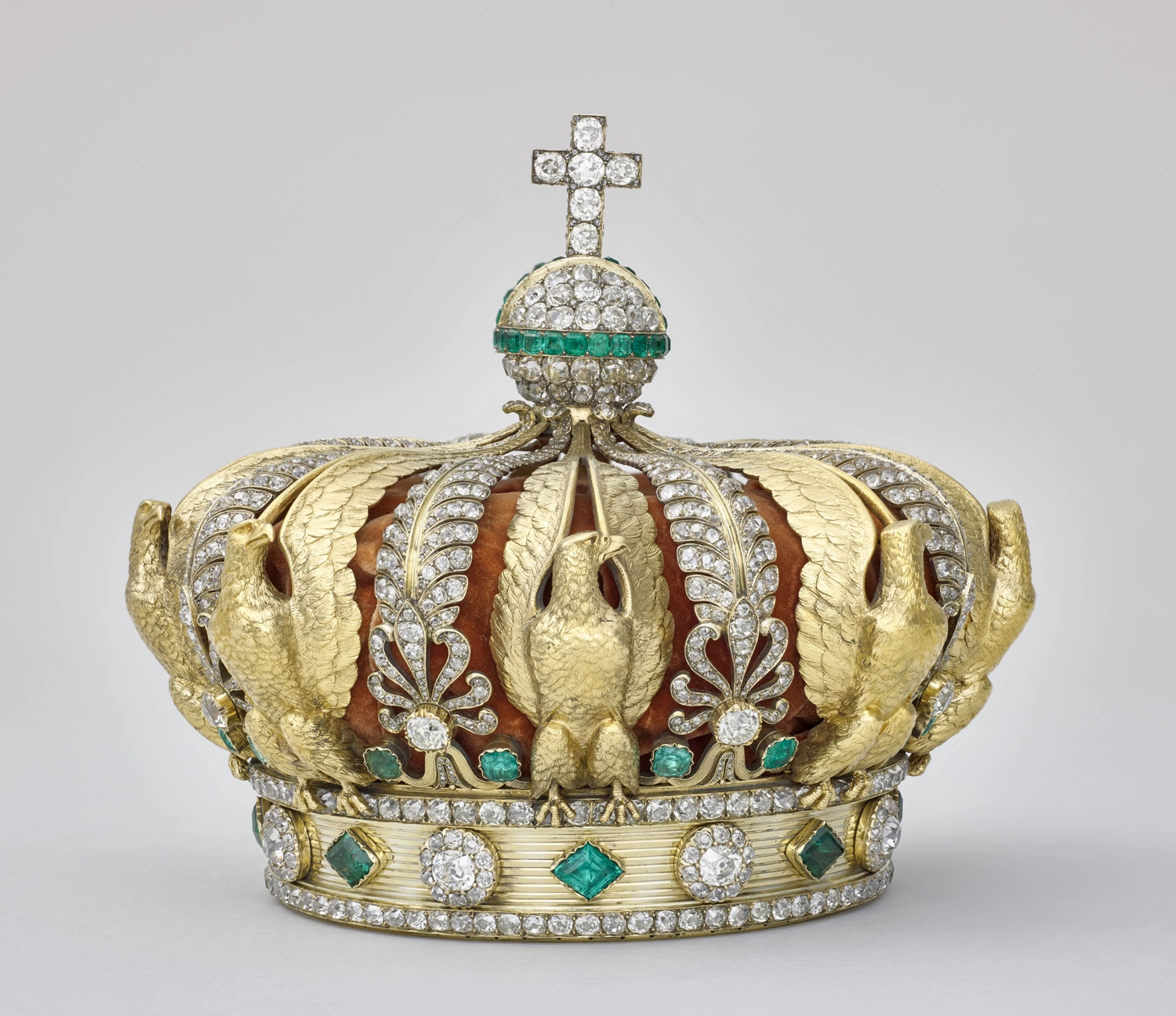
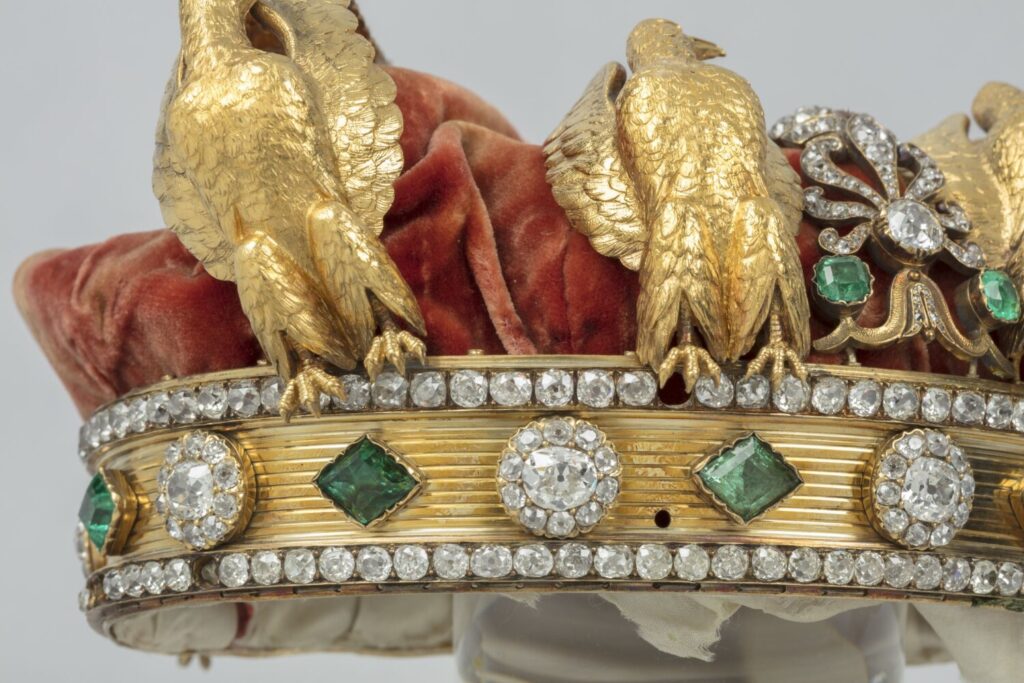
The Crown of Empress Eugénie of France


Crown of Empress Eugenie of France
Restauration de la Couronne de l'impératrice Eugénie de France - Musée du Louvre
Crown of Empress Eugenie Restauration
de la Couronne de l’impératrice Eugénie Musée du Louvre – Département des Objets d’art

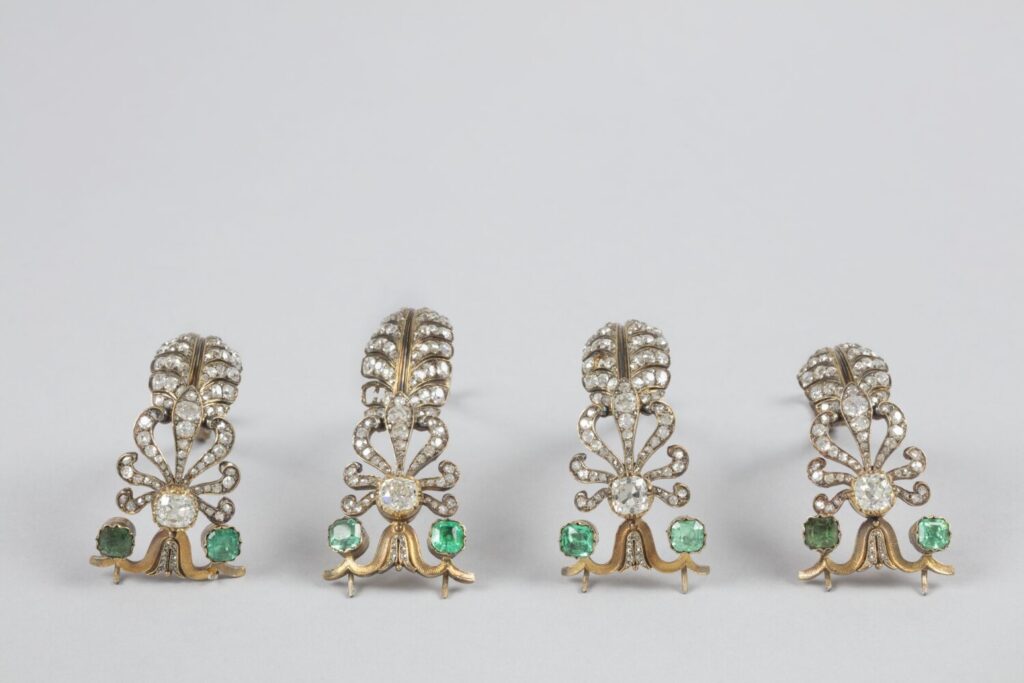
Found at the foot of the Galerie d’Apollon, the Crown of Empress Eugénie narrowly escaped complete destruction after falling from its display on 19 October 2025 during the violent incident at the Louvre Museum. One element of a diamond-and-emerald palmette was discovered not far from the window in which the crown had been exhibited in the Galerie d’Apollon.

Although the crown suffered severe crushing and was found to be significantly deformed, it retained its near-complete structural integrity, making a full restoration possible.

Crown of Empress Eugenie of France
Restauration de la Couronne de l'impératrice Eugénie de France - Musée du Louvre
Crown of Empress Eugenie of France
Restauration de la Couronne de l’impératrice Eugénie de France – Musée du Louvre

Initial Official Assessment – 20 October 2025

Seized by the Judicial Police for investigation, the crown was transferred on 20 October 2025 to the Department of Decorative Arts. A first official assessment was carried out by Olivier Gabet, Director of the Department, together with Anne Dion, Deputy Director and curator responsible for this section of the collections.

The following observations were recorded:

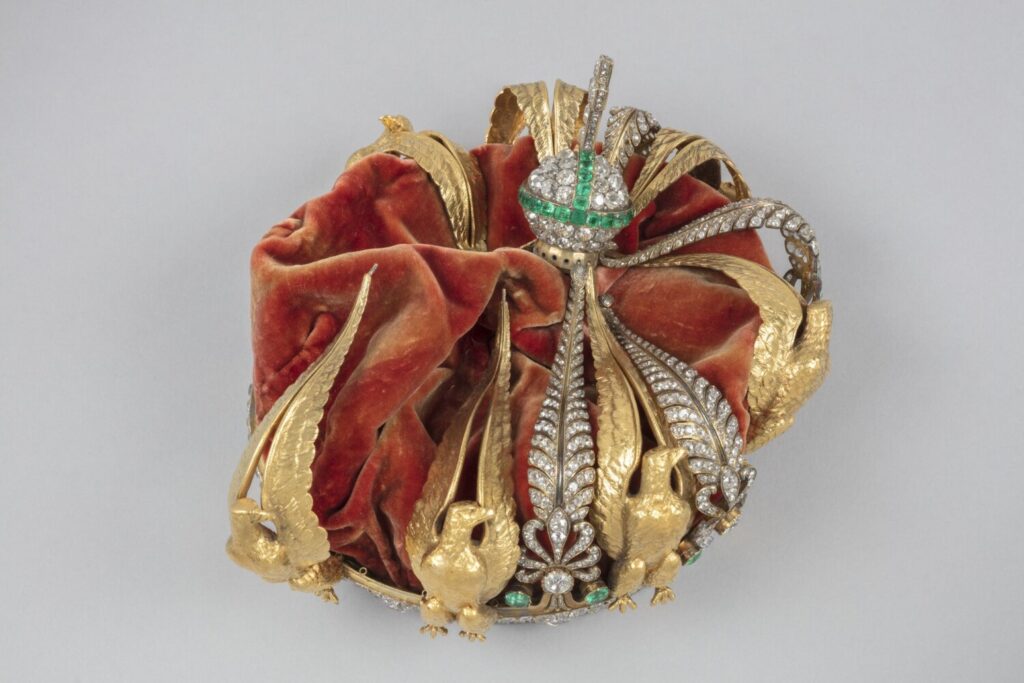
  • The crown, whose structure is light and flexible, suffered deformation, most likely caused by the tension exerted while it was forced through the relatively narrow window opening. This constraint resulted in the separation of the crown’s arches, one of which was already lost in the gallery. A subsequent violent impact caused further crushing of the structure.
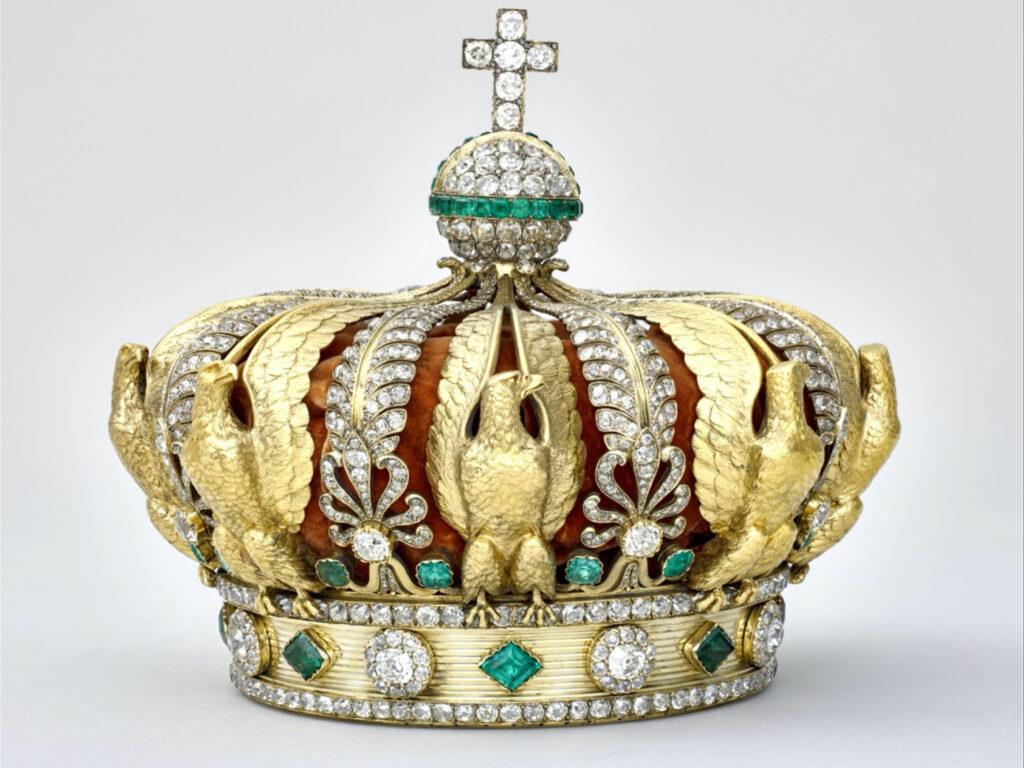
  • Originally, the crown comprised eight diamond-and-emerald palmettes, alternating with eight gold eagles. Today, only one element is missing. All palmettes have been recovered, including four that were detached from the frame, some of them deformed.
  • The orb of diamonds and emeralds remains intact and fully integrated into the structure of the crown, with no loss of elements.
  • Originally composed of 56 emeralds, the crown still retains them all. Of the 1,354 diamonds, only about a dozen very small stones are missing from the perimeter of the base, while nine have become detached but remain preserved.

Although the overall form of the crown has been altered, almost all of its original components survive. Only a single decorative element is missing. The crown can therefore be fully restored without reconstruction or replacement, through a careful reshaping of its framework.
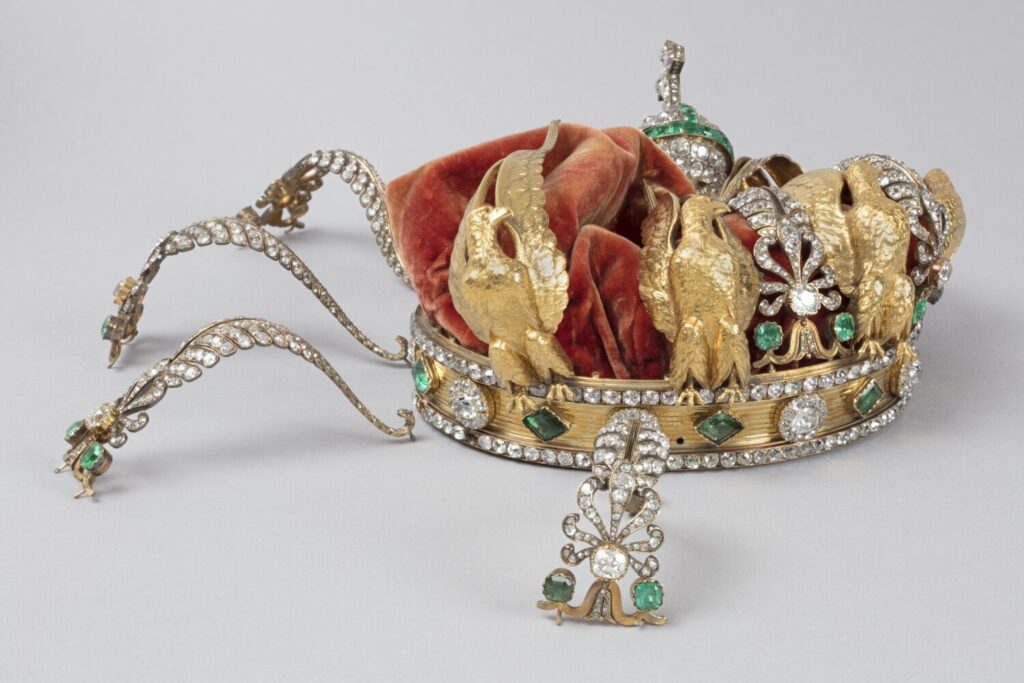
Crown of Empress Eugenie  Restauration
de la Couronne de l'impératrice Eugénie
Crown of Empress Eugenie of France
Restauration de la Couronne de l’impératrice Eugénie de France – Musée du Louvre

The Restoration Process and the Advisory Committee

As with all works held in the French national collections, the restoration of the crown will be entrusted to an accredited conservator, selected through a competitive process in accordance with the Heritage Code, Museum Law, and Public Procurement Code. Detailed and highly technical reports will be prepared in this context.

Given the exceptional and symbolic nature of this restoration, and the unique character of the object itself, the work of the selected conservator will be accompanied by an advisory committee of experts, whose role will be to provide independent guidance on both restoration decisions and methodology.

Chaired by Laurence des Cars, President and Director of the Louvre Museum, the committee will consist of the following members:

  • Anne Dion, Deputy Director of the Department of Decorative Arts, Louvre Museum
  • Michèle Heuzé, jewellery and gem historian
  • Anaïs Alchus, curator of Second Empire decorative arts, Musée d’Orsay
  • François Farges, mineralogist and professor at the National Museum of Natural History
  • Emmanuel Plé, head of the historic metals workshop, decorative arts sector, C2RMF
  • Olivier Gabet, Director of the Department of Decorative Arts, Louvre Museum

In addition, a representative from each of the five historic French jewellery houses—Mellerio, Chaumet, Cartier, Boucheron, and Van Cleef & Arpels—will be invited to participate, particularly senior workshop heads and master craftsmen whose houses are historically linked to the Crown Diamonds.
Crown of Empress Eugenie  Restauration
de la Couronne de l'impératrice Eugénie
Crown of Empress Eugenie of France
Restauration de la Couronne de l’impératrice Eugénie de France – Musée du Louvre

Immediately following the incident of 19 October 2025 and the recovery of the crown, each of these houses expressed their wish to support the restoration of this iconic object. The Louvre Museum extends its sincere thanks to these exceptional houses for their commitment and for sharing their expertise.


History of the Crown of Empress Eugénie

In preparation for the Exposition Universelle of 1855, Napoleon III commissioned the jeweller of the Emperor, Alexandre Gabriel Lemonnier, to create two crowns: one for himself and one for the Empress. For this prestigious project, Lemonnier collaborated with several specialists. The sculptor Gilbert (1816–1891) was likely responsible for modelling the long-winged eagles that form the arches of the crown, alternating with diamond palmettes. The jeweller Pierre Maheu (1807–1866) was engaged as workshop director, while Devin, Inspector of the Crown Diamonds, oversaw the selection and arrangement of the stones.

When exhibited in 1855, contemporary commentators described the Empress’s crown as “lighter and clearer” than that of the Emperor, while still possessing sufficient ceremonial dignity (Arnoux, 1856).

After the fall of the Empire, the Civil List was liquidated. Because Napoleon III had enriched the Crown Diamonds collection at his own expense, the crown was returned to Empress Eugénie in 1875, following his death. This restitution saved the crown from destruction, unlike the Emperor’s crown, which was dismantled in 1887 when the Crown Diamonds were ordered to be sold by the Third Republic.
Crown of Empress Eugenie  Restauration
de la Couronne de l'impératrice Eugénie de France
Crown of Empress Eugenie Restauration
de la Couronne de l’impératrice Eugénie de France

In 1920, Empress Eugénie bequeathed the crown to Princess Marie-Clotilde Napoléon, Countess of Witt, her niece and goddaughter. The Louvre Museum acquired it in 1988.
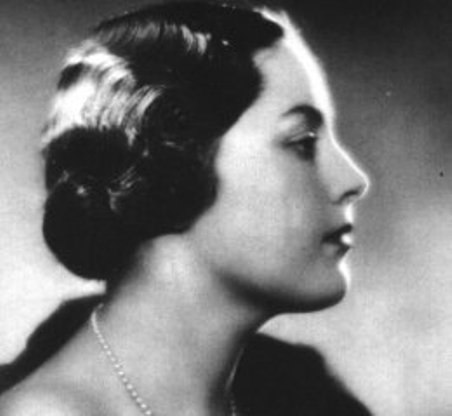
 Princess Marie-Clotilde Napoléon, Countess of Witt
Princess Marie-Clotilde Napoléon, Countess of Witt

Although it was never used for a coronation—and may never have been worn, as Empress Eugénie was never crowned—the Crown of Empress Eugénie stands today, alongside the Crown of Louis XV and the so-called Crown of Charlemagne, as one of the very few surviving historic French crowns.


Die Krone der Kaiserin Eugénie

4. Februar 2026

Am Fuß der Apollo-Galerie aufgefunden, entging die Krone der Kaiserin Eugénie am 19. Oktober 2025 nur knapp der vollständigen Zerstörung, nachdem sie bei dem gewaltsamen Vorfall im Louvre-Museum aus ihrer Vitrine gestürzt war. Ein Element einer Palmette aus Diamanten und Smaragden wurde unweit des Fensters entdeckt, in dem die Krone in der Galerie d’Apollon ausgestellt gewesen war.

Obwohl die Krone eine massive Quetschung erlitt und stark deformiert aufgefunden wurde, blieb ihre nahezu vollständige strukturelle Integrität erhalten. Dies macht eine vollständige Restaurierung möglich.


Erste staatliche Begutachtung – 20. Oktober 2025

Nach der Sicherstellung durch die Kriminalpolizei wurde die Krone am 20. Oktober 2025 an die Abteilung für Kunstgegenstände übergeben. Dort erfolgte eine erste offizielle Zustandsaufnahme durch Olivier Gabet, Direktor der Abteilung, gemeinsam mit Anne Dion, stellvertretende Direktorin und zuständige Kuratorin.

Dabei wurden folgende Punkte festgestellt:

  • Die Krone, deren Aufbau leicht und flexibel ist, wurde insbesondere durch die Spannung beim Herausziehen durch den relativ schmalen Fensterschlitz deformiert. Diese Belastung führte zur Trennung der Kronbögen, von denen einer bereits in der Galerie verloren ging. Ein weiterer heftiger Aufprall verursachte anschließend eine zusätzliche Quetschung der Krone.
  • Ursprünglich bestand die Krone aus acht Palmetten aus Diamanten und Smaragden, die sich mit acht goldenen Adlern abwechselten. Heute fehlt lediglich ein Element. Sämtliche Palmetten wurden geborgen, darunter vier, die sich vom Rahmen gelöst hatten und teilweise deformiert sind.
  • Die Kugel aus Diamanten und Smaragden ist vollständig intakt und weiterhin fest in die Struktur der Krone integriert.
  • Die Krone bestand ursprünglich aus 56 Smaragden und trägt sie noch immer vollständig. Von den 1.354 Diamanten fehlen lediglich rund ein Dutzend sehr kleiner Steine aus dem Randbereich der Basis; neun weitere haben sich gelöst, sind jedoch erhalten.

Auch wenn die Form der Krone verändert wurde, sind nahezu alle ursprünglichen Bestandteile noch vorhanden. Es fehlt lediglich ein dekoratives Element. Eine vollständige Restaurierung ohne Rekonstruktion oder Ersatz ist daher möglich; erforderlich ist vor allem eine Neuausrichtung und Stabilisierung des Rahmens.


Die Restaurierung und der beratende Ausschuss

Wie bei allen Werken der französischen Nationalmuseen wird die Restaurierung der Krone einem zugelassenen Restaurator anvertraut, der im Rahmen eines Wettbewerbs ausgewählt wird. Dabei werden die Vorgaben des Kulturerbekodex, des Museumsgesetzes und des öffentlichen Vergaberechts eingehalten. In diesem Zusammenhang werden detaillierte und technisch fundierte Gutachten erstellt.

Angesichts des außergewöhnlichen symbolischen Charakters dieser Restaurierung und der Einzigartigkeit des Objekts wird die Arbeit des Restaurators von einem beratenden Ausschuss aus Fachleuten begleitet, der unabhängig Empfehlungen zur Restaurierung und Methodik geben wird.

Den Vorsitz führt Laurence des Cars, Präsidentin und Direktorin des Louvre-Museums. Dem Ausschuss gehören an:

  • Anne Dion, stellvertretende Direktorin der Abteilung für Kunstgegenstände, Louvre
  • Michèle Heuzé, Schmuck- und Juwelenhistorikerin
  • Anaïs Alchus, Kuratorin für dekorative Künste des Zweiten Kaiserreichs, Musée d’Orsay
  • François Farges, Mineraloge und Professor am Nationalmuseum für Naturgeschichte
  • Emmanuel Plé, Leiter der Werkstatt für historische Metalle, C2RMF
  • Olivier Gabet, Direktor der Abteilung für Kunstgegenstände, Louvre

Ergänzend wird jeweils ein Vertreter der fünf historischen französischen Schmuckhäuser Mellerio, Chaumet, Cartier, Boucheron und Van Cleef & Arpels eingeladen, insbesondere Werkstattleiter und Meister ihres Fachs, deren Häuser historisch eng mit den Juwelen der Krone verbunden sind.

Unmittelbar nach dem Vorfall vom 19. Oktober 2025 und der Bergung der Krone bekundeten alle fünf Häuser ihren Wunsch, die Restaurierung dieses ikonischen Werkes zu unterstützen. Das Louvre-Museum dankt ihnen ausdrücklich für ihre Bereitschaft und den Beitrag ihrer fachlichen Expertise.


Geschichte der Krone der Kaiserin Eugénie

Im Hinblick auf die Weltausstellung von 1855 beauftragte Napoleon III. den Juwelier des Kaisers, Alexandre Gabriel Lemonnier, mit der Anfertigung zweier Kronen – einer für den Kaiser und einer für die Kaiserin. Für diese prestigeträchtige Aufgabe zog Lemonnier mehrere Spezialisten hinzu. Der Bildhauer Gilbert (1816–1891) war vermutlich für die Modellierung der langflügeligen Adler verantwortlich, die die Kronbögen bilden und sich mit Diamantpalmetten abwechseln. Pierre Maheu (1807–1866) fungierte als Werkstattleiter, während Devin, Inspektor der Kronjuwelen, die Auswahl und Anordnung der Steine überwachte.

Zeitgenössische Berichte zur Ausstellung von 1855 beschrieben die Krone der Kaiserin als „leichter und klarer“ als die des Kaisers, bei zugleich ausreichender feierlicher Wirkung (Arnoux, 1856).

Nach dem Sturz des Kaiserreichs wurde die Zivilliste aufgelöst. Da Napoleon III. die Sammlung der Kronjuwelen teilweise aus eigenen Mitteln erweitert hatte, wurde die Krone nach seinem Tod 1875 an Kaiserin Eugénie zurückgegeben. Diese Rückgabe bewahrte sie vor der Zerstörung, die 1887 die Krone des Kaisers traf, als die Kronjuwelen unter der Dritten Republik verkauft wurden.

1920 vermachte Kaiserin Eugénie die Krone ihrer Patentochter Prinzessin Marie-Clotilde Napoléon, Gräfin von Witt. Das Louvre-Museum erwarb das bedeutende Objekt schließlich 1988.

Auch wenn die Krone nie für eine Krönung verwendet wurde – Kaiserin Eugénie wurde nie gekrönt und hat sie möglicherweise nie getragen – gehört sie heute neben der Krone Ludwigs XV. und der sogenannten Krone Karls des Großen zu den wenigen erhaltenen historischen Kronen Frankreichs.
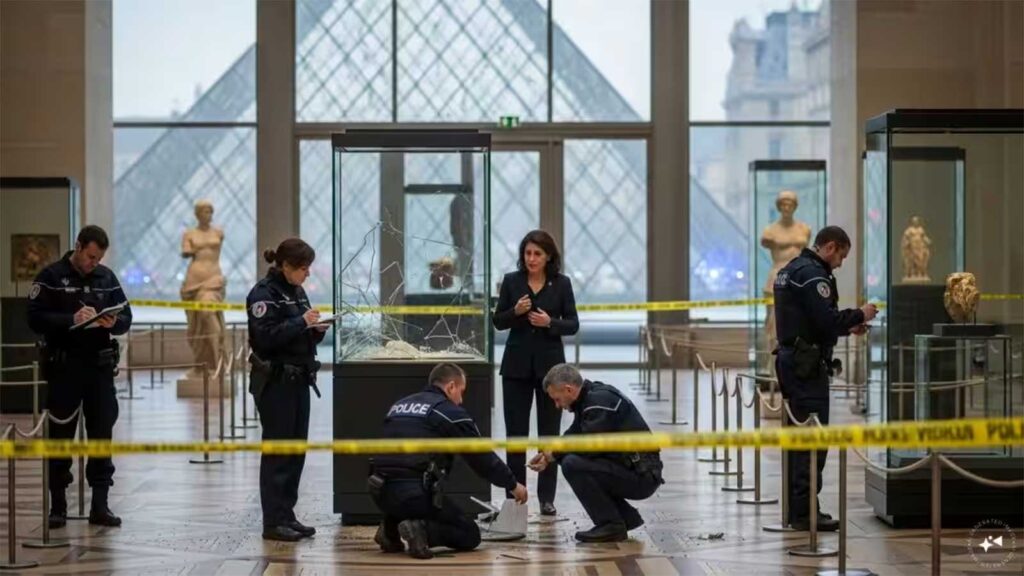
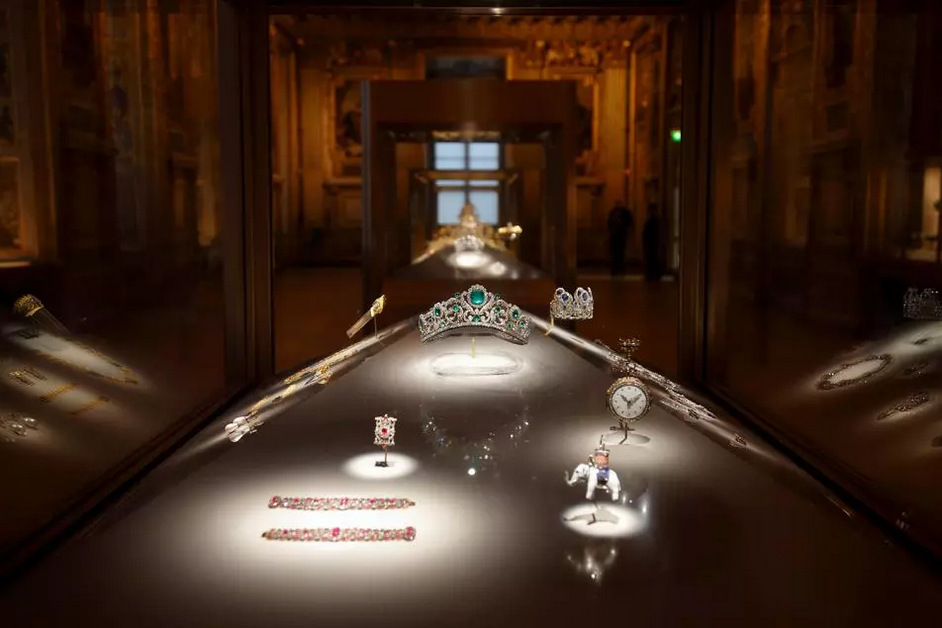
Robbery at the Louvre Museum in Paris this morning, targeting the Apollo Gallery

 Robbery at the Louvre Museum in Paris this morning, targeting the Apollo Gallery

Three masked thieves broke into the Louvre Museum in Paris this morning, targeting the Apollo Gallery. Nine pieces of jewelry were reportedly stolen; the value is still being assessed.

robbery Louvre Museum -The French Crown Jewels Room 705, Denon Wing, Left 1 Robbery Louvre Museum -The French Crown Jewels
Robbery Louvre Museum -The French Crown Jewels Room 705, Denon Wing, Left 1 des joyaux de la Couronne de France
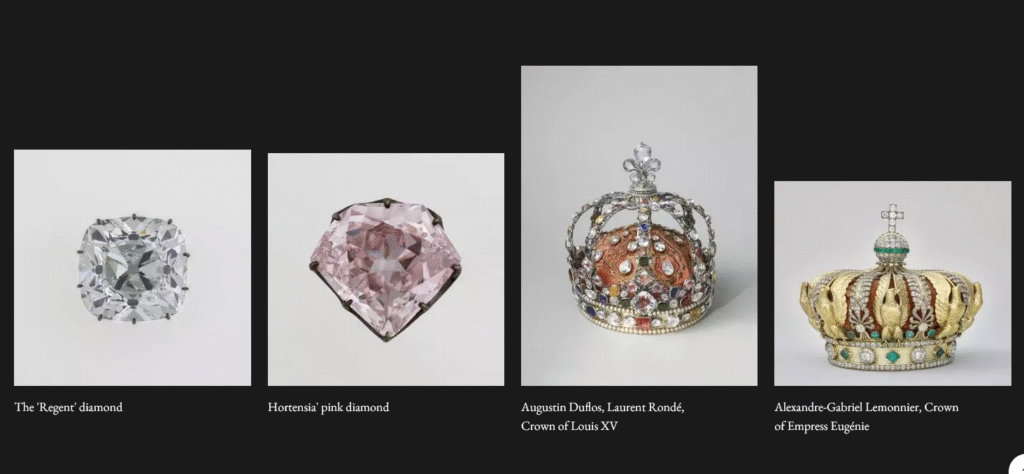
Robbery Louvre Museum -The French Crown Jewels  Museum de Louvre Après avoir brisé des vitres à l’aide d’une disqueuse, deux hommes ont pénétré à l’intérieur. Ils se sont attaqués aux deux premières galeries : celle de Napoléon et celle des Souverains français. Au total, les voleurs auraient raflé neuf pièces de la collection de bijoux de Napoléon et de l’impératrice : collier, broche, diadème… Toutefois, le fameux Régent, le plus gros diamant de la collection pesant plus de 140 carats, n’a pas été subtilisé. Le préjudice est en cours d’évaluation à partir des photos des pièces manquantes.
Robbery Louvre Museum -The French Crown Jewels
Robbery Louvre Museum -The French Crown Jewels  Museum de Louvre
Robbery Louvre Museum -The French Crown Jewels Museum de Louvre However, the famous Régent, the largest diamond in the collection weighing more than 140 carats, was not stolen. Two thieves posed as workers – one of the nine stolen jewels recovered

According to our information, there were four criminals in total: two disguised as workers wearing yellow vests on a gondola, while the other two waited on TMax scooters. In total, nine jewels were stolen, but one have already been recovered,the crown of Empress Eugénie, see on the top right..
, but two have already been recovered, including the crown of Empress Eugénie, see on the top right.  Empress Eugenie's crown - crown jewels france
Die Krone der Kaiserin Eugénie wurde von dem Goldschmied Alexandre-Gabriel Lemonnier anlässlich der Weltausstellung von 1855 geschaffen
But two have already been recovered, including the crown of Empress Eugénie, ChatGPT:
The crown of Empress Eugénie was created by the goldsmith Alexandre-Gabriel Lemonnier on the occasion of the 1855 Exposition Universelle (World Exhibition).

As reported by French media, nine pieces of jewelry from the collection of Napoleon and the Empress have been stolen: a necklace, a brooch, a tiara, and more (d’une parure, d’un collier, de boucles d’oreilles, de deux couronnes – dont celle de l’impératrice Eugénie retrouvée brisée – et d’une broche.). The total value of the loss has yet to be determined. According to Interior Minister Laurent Nuñez, the stolen jewels are of “inestimable value.” The thieves broke into the display cases titled “Bijoux Napoléon” and “Bijoux des souverains” in the Galerie d’Apollon and emptied them completely.

For the French, their sense of cultural identity is deeply rooted in their historic leadership in the world of luxury — a realm where artistry and refinement define national pride. Jewelry, fashion, gastronomy, wine, and champagne are not merely industries, but expressions of a cultural ideal that unites beauty, excellence, and tradition.

This was my answer in the interview with Radio WDR3-5 on 20. October 2025


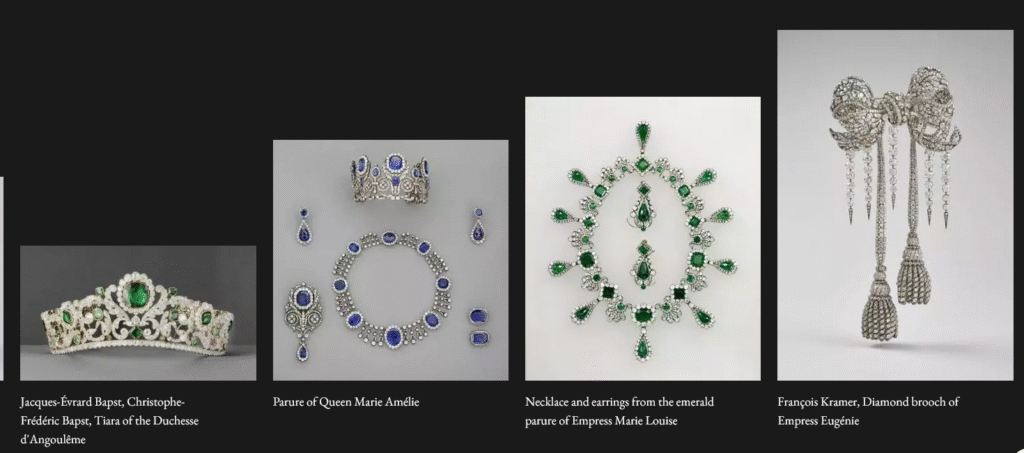
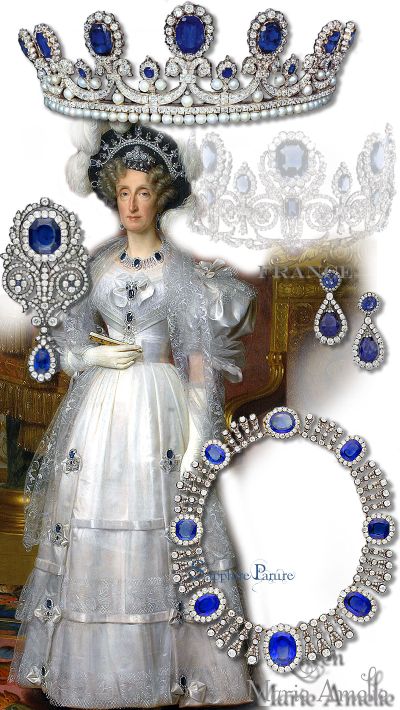
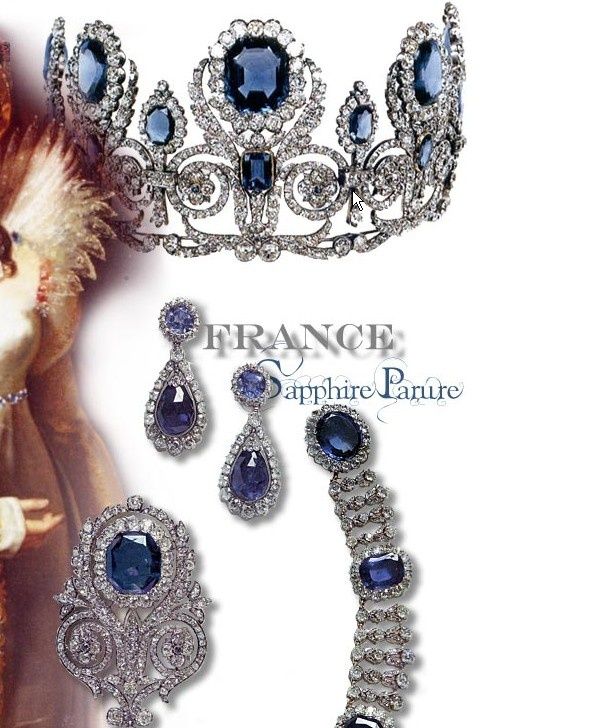
– du diadème de la parure de la reine Marie-Amélie et de la Reine Hortense. Saphir de Ceylan et diamant composent cette pièce de 6,2 cm de hauteur et 10,7 cm de largeur. Un bijou qui a été porté par la reine Hortense, la fille de Joséphine de Beauharnais, première épouse de Napoléon, puis par Marie-Amélie de Bourbon-Siciles, épouse de Louis-Philippe.

du collier de la parure de saphirs de la reine Marie-Amélie et de la Reine Hortense, de la boucle d’oreille, d’une paire de la parure de saphirs de la reine Marie-Amélie et de la Reine Hortense,

– du collier de la parure de saphirs de la reine Marie-Amélie et de la Reine Hortense et de la boucle d’oreille de la parure de saphirs de la reine Marie-Amélie et de la Reine Hortense. Cette parure a été modifiée au gré de ses détentrices. Elle est demeurée propriété de la branche d’Orléans jusqu’en 1985. A noter que ni le nom du commanditaire ni celui du joaillier ne sont connus. On retrouve trace de cette parure dans un courrier du duc d’Orléans, futur Louis-Philippe, adressé à Hortense de Beauharnais, afin que le premier en fasse l’acquisition. Il est possible que l’impératrice Joséphine ait légué le bijou à sa fille Hortense. La légende familiale évoque même une thèse invérifiable : la parure aurait appartenu par le passé à Marie-Antoinette.

 du collier de la parure de saphirs de la reine Marie-Amélie et de la Reine Hortense et de la boucle d’oreille de la parure de saphirs de la reine Marie-Amélie et de la Reine Hortense. Cette parure a été modifiée au gré de ses détentrices. Elle est demeurée propriété de la branche d’Orléans jusqu’en 1985. A noter que ni le nom du commanditaire ni celui du joaillier ne sont connus. On retrouve trace de cette parure dans un courrier du duc d’Orléans, futur Louis-Philippe, adressé à Hortense de Beauharnais, afin que le premier en fasse l’acquisition. Il est possible que l’impératrice Joséphine ait légué le bijou à sa fille Hortense. La légende familiale évoque même une thèse invérifiable : la parure aurait appartenu par le passé à Marie-Antoinette.

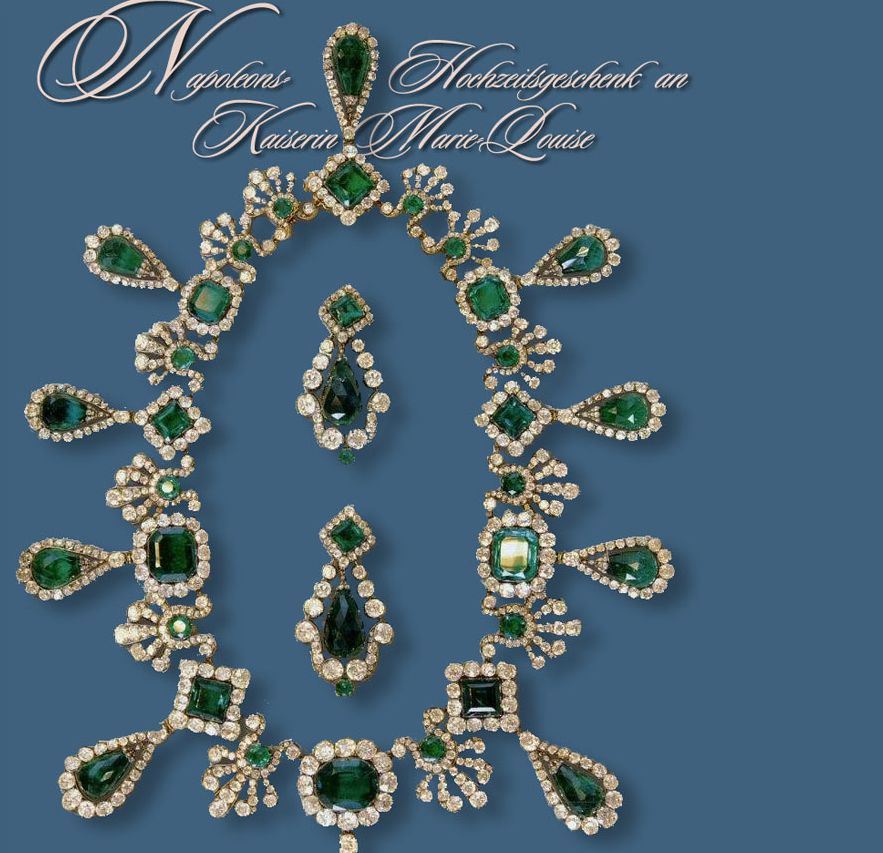
– Du collier en émeraudes et d’une paire de boucles d’oreilles en émeraudes de la parure de Marie-Louise. Il s’agit d’un cadeau offert par Napoléon à sa seconde épouse, autrichienne, en mars 1810. De secondes noces décidées après sa rupture avec Joséphine, qui ne pouvait lui offrir un héritier. Le collier compte pas moins de 32 émeraudes, dont 10 en poire et 1 138 diamants. C’est l’oeuvre du joaillier François-Régnault Nitot.

Du collier en émeraudes et d’une paire de boucles d’oreilles en émeraudes de la parure de Marie-Louise. Il s’agit d’un cadeau offert par Napoléon à sa seconde épouse, autrichienne, en mars 1810. De secondes noces décidées après sa rupture avec Joséphine, qui ne pouvait lui offrir un héritier. Le collier compte pas moins de 32 émeraudes, dont 10 en poire et 1 138 diamants. C’est l’oeuvre du joaillier François-Régnault Nitot.

– D’une broche dite broche reliquaire


Broche dite broche reliquaire
1855
Bapst, Paul-Alfred
Bapst, Paul-Alfred, Musée du Louvre, Département des Objets d’art du Moyen Age, de la Renaissance et des temps modernes, MV 1024

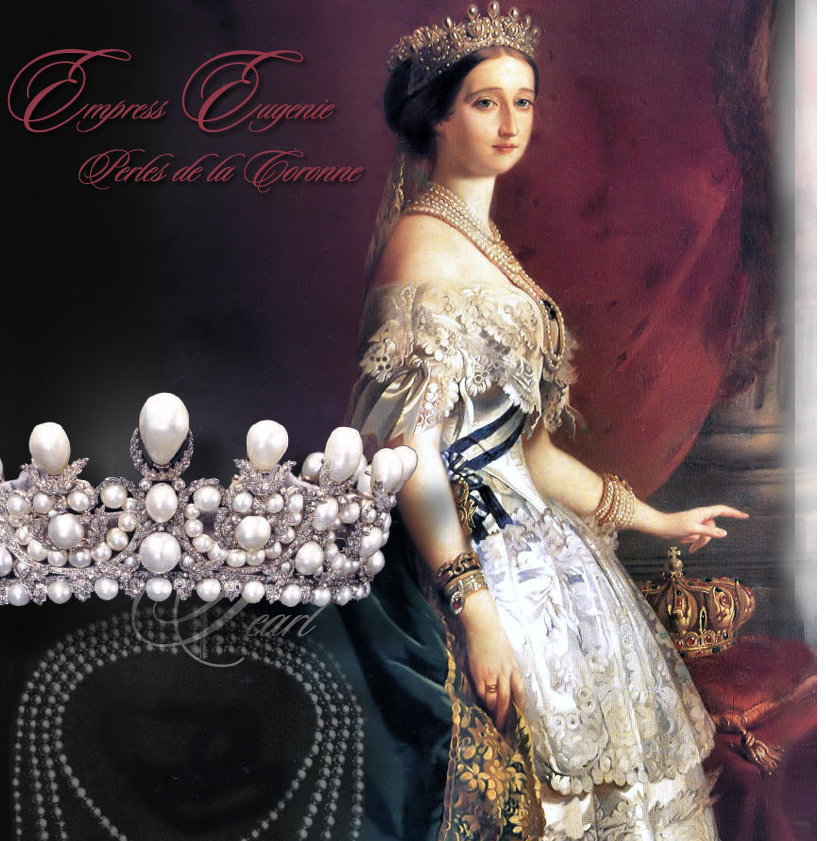
– D’un diadème de l’impératrice Eugénie. Epouse de Napoléon III, originaire d’Andalousie, Eugénie de Montijo est un personnage historique d’une grande complexité. Elle qui vouait un culte à Marie-Antoinette et Joséphine a connu aussi bien le faste que les drames, notamment la mort de son fils unique tué par le Zoulous en 1879. En sa qualité de régente, elle est techniquement la dernière femme à avoir exercé en France les fonctions de chef d’Etat. On la disait frivole, a lancé la mode des robes à crinoline. Sensible aux malheurs des autres, elle a aussi créé les Fourneaux économiques, sorte d’ancêtres des Restos du Cœur.

- D’un diadème de l’impératrice Eugénie. Epouse de Napoléon III, originaire d’Andalousie, Eugénie de Montijo est un personnage historique d’une grande complexité. Elle qui vouait un culte à Marie-Antoinette et Joséphine a connu aussi bien le faste que les drames, notamment la mort de son fils unique tué par le Zoulous en 1879. En sa qualité de régente, elle est techniquement la dernière femme à avoir exercé en France les fonctions de chef d’Etat. On la disait frivole, a lancé la mode des robes à crinoline. Sensible aux malheurs des autres, elle a aussi créé les Fourneaux économiques, sorte d’ancêtres des Restos du Cœur.
– D’un diadème de l’impératrice Eugénie. Epouse de Napoléon III, originaire d’Andalousie, Eugénie de Montijo est un personnage historique d’une grande complexité. Elle qui vouait un culte à Marie-Antoinette et Joséphine a connu aussi bien le faste que les drames, notamment la mort de son fils unique tué par le Zoulous en 1879. En sa qualité de régente, elle est techniquement la dernière femme à avoir exercé en France les fonctions de chef d’Etat. On la disait frivole, a lancé la mode des robes à crinoline. Sensible aux malheurs des autres, elle a aussi créé les Fourneaux économiques, sorte d’ancêtres des Restos du Cœur.

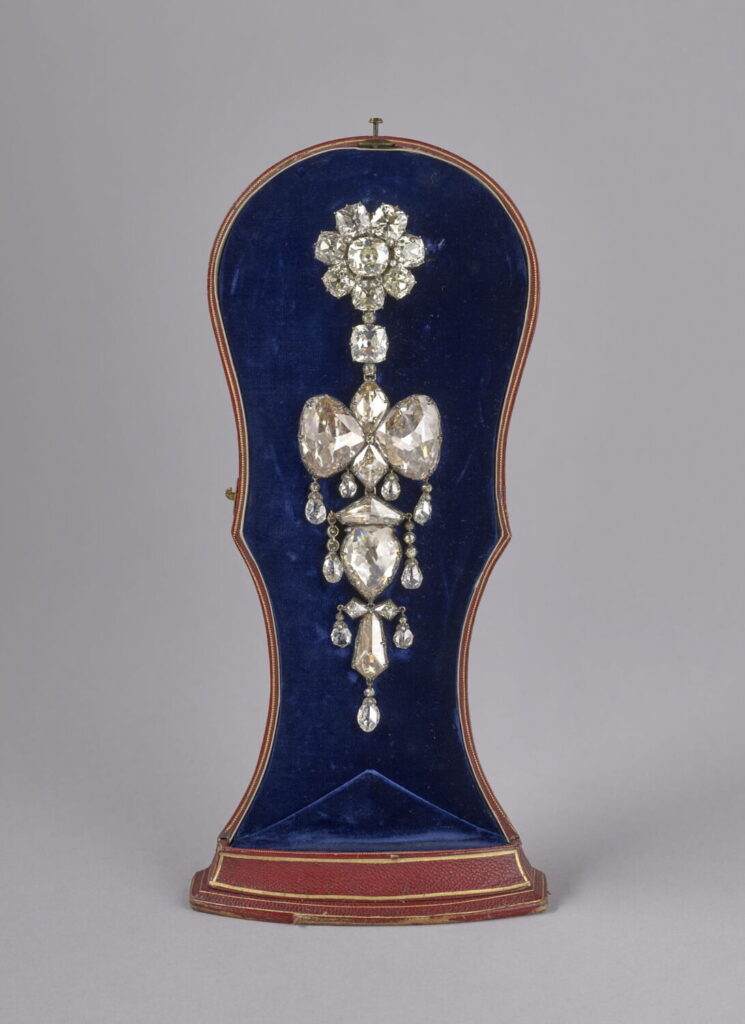
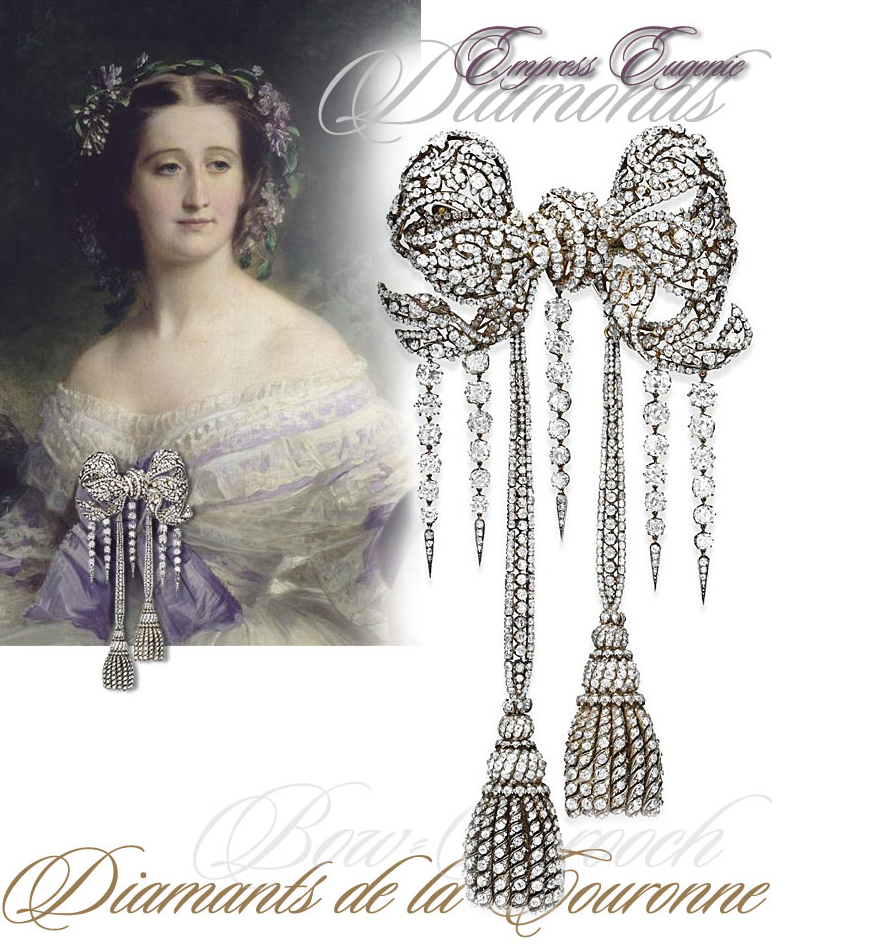
– D’un grand nœud de corsage de l’impératrice Eugénie (broche).

du grand nœud de corsage de l’impératrice Eugénie.and the grand corsage bow of Empress Eugénie.

Eight jewels were stolen, according to the latest report

According to the most recent statement issued by the Ministry of Culture, eight jewels were stolen from the Louvre. They include: the tiara from the parure of Queen Marie-Amélie and Queen Hortense; the necklace from the sapphire parure of Queen Marie-Amélie and Queen Hortense; one earring from the sapphire parure of Queen Marie-Amélie and Queen Hortense; the emerald necklace from the parure of Empress Marie-Louise; the pair of emerald earrings from the parure of Marie-Louise; the so-called reliquary brooch; the tiara of Empress Eugénie; and the grand corsage bow of Empress Eugénie.

The jewels stolen from the Louvre lie at the very heart of France’s history — treasures of royal splendor where taste, ambition, and craftsmanship existed in perfect harmony. They did not merely adorn; they helped define both the French identity and the very ideals of jewelry itself. Each piece was thoroughly documented, making it almost inconceivable that they will ever be seen whole again. What has been lost is not only their beauty, but also a shared cultural inheritance — a reflection of how a nation once expressed its genius through grace and proportion. These jewels are national treasures, a testament to France’s history, its passion for gemstones, and the art of jewelry — creations whose worth far transcends their material value, and whose integrity makes them impossible to sell intact.

Devante de Corsage – The Empress Eugenie Tassel Bow Brooch | Nancy Astor’s Jewels

Nancy Astor, Lady Astor, British Royal Jewels - diamond brooch, diamond tiara, diamond jewels, histioric Jewellery, Nancy Astors Jewels, Important Antique Old Mine Diamond Bow Brooch. Formerly Property of Caroline Astor. Sold for $258,500.

More of the Diamants De La Couronne >>

Feuilles de Groseillier Diamant Parure | Diamants | Joyaux de la Couronne France |Diamants de la Couronne de France

4 Perles Broches Brillants | Joyaux de la Couronne France |Diamants de la Couronne de France

2 Bracelets with Brilliants & Pearls | Empress Eugenie| French Crown Jewels|Diamants de la Couronne de France

Pair of Great Shoulder Knot Brooches with Diamonds | Diamants de la Couronne de France| French Crown Jewels

Empress Eugénie – Jewels Anchor Diamond Brooches Empress Eugénie – Jewel History France | Anker Broschen Kaiserin Eugenie von Frankreich

Diamants bleu | Zwei Anker mit geheimnisvollen Diamanten der Kaiserin Eugénie

Broché rubis perles et diamants Eugénie | Brosche mit drei Tropfenperlen, Rubinen und Diamanten der Kaiserin Eugénie

Three pearl and diamond fringe pendants composed of large stones | Broché rubis perles et diamants Eugénie brooch| later in the possession of the Mis Ernest G Raphael nee Sassoon

Couronnette Perles et Brillants | Joyaux de la Couronne France |Diamants de la Couronne de France | French Crown Jewels

Devant de Corsage-Brooch| Bow Brooch with Fringes and Diamonds |French Crown Jewels Empress Eugenie Grand noeud de corsage de l’impératrice Eugénie Histoire des diamants de la Couronne de France

Countess of Beauchamp | Royal Imperial Jewels of Lady Lettice Grosvenor| Bow Diamond Stomacher Empress Eugenie

Empress Josephine’s Pearl Parure | Imperial Pearl Comb, Pearl Necklace, Pearl Bandeau and Pearl Tiara | France Beauharnais Leuchtenberg

The Imperial Pearls of Empress Josephine of France| Royal Jewel History
Pearls Tiara Diadem Bandeau Pearlstrings Empress Josephine Joyaux de l'Imperatrice Josephine|Empress Jospehine Jewels |French historic Jewelry Napoleons Erben in Bayern   Die Herzöge von Leuchtenberg Joséphine's Jewelry Collection
The Imperial Pearls of Empress Josephine of France| Royal Jewel History
Pearls Tiara Diadem Bandeau Pearlstrings Empress Josephine
|Empress Josephine Jewels |French historic Jewelry

Pearls Tiara Diadem Bandeau Pearl strings Empress Josephine Joyaux de l’Imperatrice Josephine|Empress Josephine’s Jewels |French historic Jewelry

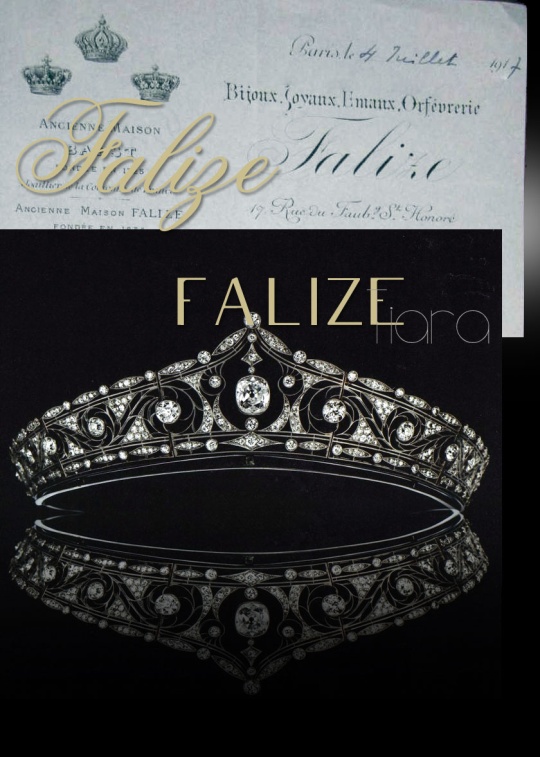
Falize Diamond Tiara 1911 | Platinum Open Scroll Diadem| Kokoshnik

Open scroll tiara Maison Falize Paris |Platinum Diadem Tiara of Diamonds - 1911 Kokoshnik of Diamonds Royal Diademe| France Open scroll tiara made of Platinum in millegrain, diamond in 1911 from Andre Falize. The tiara is outlined by an openwork border composed of collet set diamonds between narrow pointed ovals meeting at an elongated lozenge shape in the centre of the base and rising to an apex at the top in the kokoshnik style. In the curvelinear centre, there is alarge cushion sahped old-cut brilliant weighing approximatly 4carats, flanked by smaller circular cut stones and to each side an openwork and pave set design of arabeques each terminating in around a brilliant-cut diamond.
Open scroll tiara Maison Falize Paris |Platinum Diadem Tiara of Diamonds – 1911 Kokoshnik of Diamonds Royal Diademe| France

Open scroll tiara Maison Falize Paris |Platinum Diadem Tiara of Diamonds – 1911 Kokoshnik of Diamonds Royal Diademe| France

Learn more about the original design of the Brunei Diamond Kokoshnik…..

Emerald and Diamond Brooch Princess Maria Francisca of Orleans – Duchess of Braganca | Royal Imperial Wedding Gift

Emerald Brooch Princess Maria Francisca of Orleans - Duchess of Braganca - Portugal royal family, royal wedding, emerald jewels brazil, wedding gift to Francisca HRH D. Duarte Nuno de Bragança mit SAIR D. Maria Francisca de Orleans e Bragança
Emerald Brooch Princess Maria Francisca of Orleans – Duchess of Braganca

Infanta Maria Francisca of Portugal, Duchess of Coimbra, wore an historic emerald brooch in her hair for the dinner following her wedding to Duarte de Sousa Araújo Martins at her parent’s home in Sintra, Portugal on 7 October 2023.
The important emerald and diamond brooch belonged to her grandmother, Princess Maria Francisca of Orleans-Braganza, above in the picture. It was a wedding gift in October 1942 when she married in PETRÓPOLIS – BRASILIA, from her family.

The Emerald brooch was now, without the two pear shaped pendants.

Infanta Maria Francisca of Braganza, Duchess of Coimbra wedding jewels - Portugal Royal Wedding - Emerald Earrings Emerald and Diamond brooch - Braganca Maria Francisca de Bragance et Duarte de Sousa Araújo Martins

Infanta Maria Francisca, the Duchess of Coimbra, also wore a pair of emerald and diamond earrings for the reception that belonged to her Princess Maria Francisca of Orleans.

The diamond from her engagement ring was taken from these earrings and the groom replaced it and one on the other earring with emeralds, see the details in the story before.

Ruby Diamond Wreath Spray Brooch Tiara | Empress Josephine Imperial France | Ruby Parure Jewels

the first posting of this jewels is from the year 2007…the ruby and diamond brooch, wearable as wreath diadem….

Ruby Diamond Wreath brooch Diadem Empress Josephine of France | Imperial Jewels History Royaltiaras Rubytiaras historictiaras napoleonic tiaras tiara diadem tiare diademe joyas Joséphine's Jewelry Collection

Rubin Diamant – Schmuck der Kaiserin Josephine von Frankreich >>

Broche de laurier en rubis et diamonts de L`imperatrice Josephine „spray Beauharnais“ XIXe siècle >>

,Ruby Diamond Wreath brooch Diadem Empress Josephine of France | Imperial Jewels History Royaltiaras Rubytiaras historictiaras napoleonic tiaras neoclassical movement, the laurel became a popular motif in head ornaments in the early nineteenth century. Like victorious warriors in Greek and Roman times, Napoleon chose it for his imperial crown as a symbol of his power, while Joséphine also adopted it to display her sovereign status, wearing a laurel-leaf tiara for the coronation. Nitot appropriated the classical symbol in turn, creating harmoniously symmetrical arrangements that were characteristic of the imperial jewels. The tiara was the centerpiece of the sumptuous ceremonial parures supplied by the jeweler, the crown that drew the eye, focused and raised people's gazes, and transfigured and deified the wearer. In this parure, depicted with precision by Regnault, the empress's tiara features two large laurel branches studded with diamonds that joined above the forehead, over a floral band set with splendid emeralds, a type of naturalistic composition typical of the Empire style jewellery belonging to Empress Joséphine
Ruby Diamond Wreath brooch Diadem Empress Josephine of France | Imperial Jewels History

Spray Brooch of Diamonds |Imperial Jewelry Empress Josephine of France| Diamant Devante de Corsage Queen Hortense de Beauharnais- L`imperatrice Josephine

Mellerio dits Meller Krone Crown | St Michel

Saint Michael’s Krone von Mont Saint Michel,

mellerio dits Meller mellerio-meller-tiare crown, diadem,diademe, tiaras, mellerio tiaras,mellerio dits meller diademe, diademas

wurde von Mellerio-Meller in der Rue de la Paix in Paris angefertigt, die große Spezialisten für religiöse Gegenstände war und einst am Quai Voltaire in Paris seine Werkstatt hatte.

Es ist die Krone des Heiligen Michel, die sich in Mont Saint Michel befindet.

Diese Krone ist aus vergoldendem Messing. Auf dieser Krone befinden sich Topase, Diamanten, Amethyste, Rubine und Aquamarine.

Diese Krone hat die Form eines Helmvisiers, geschmückt mit zehn silbernen Muscheln über einem Band, das zwischen zwei Spitzen das „Quis ut Deus“ trägt. Das Gehäuse und die Spitzen bestehen aus versilbertem Messing.

Es trägt das lateinische Motto des Heiligen Michael: Benedicte dominum omnes angeli ejus potentes virtute. : Princeps angelorum.

Mellerio orfèvre Paris 1878.

Diese erste Krone aus Gold, Vermeil und Edelsteinen wurde 1877 von Pater Robert des Prémontrés bei Mellerio dits Meller bestellt.

Laut der historischen Akte handelt es sich um das Faksimile der Krone des Heiligen Michael, das auf der Weltausstellung 1878 gezeigt und im Jahr 1906er gestohlen worden war.

Allein die abgenommene Krone, ein wahres Kunstwerk Mellerios , stellte einen materiellen Wert von mindestens einer halben Million dar.

Spray Brooch of Diamonds |Imperial Jewelry Empress Josephine of France| Diamant Devante de Corsage

Imperial historical jewellery

Hortense Diadem | Diamant Tiara Hortense Queen of Holland |Prinzessin Doña Blanca de Borbón, Infanta of Spain | Archduchess of Austria
 hydrangeas  diamondbrooch  chaumet  chaumetjewelry  floraljewelry  floraljewellery royaljewels  royaljewellery  royaljewelry  royalfamilies  hortensebonaparte  napoleonbonaparte
Empress Josephine - Imperatrice Josephine 
 royaldiamonds  royalbrooch   historicaljewelry  historicaljewellery
Spray Brooch of Diamonds |Imperial Jewelry Empress Josephine of France| Diamant Devante de Corsage

Update the website from the year 2006/2020

Hortense Diadem | Diamant Tiara Hortense Queen of Holland |Prinzessin Doña Blanca de Borbón, Infanta of Spain | Archduchess of Austria
hydrangeas diamondbrooch chaumet chaumetjewelry floraljewelry floraljewellery royaljewels royaljewellery royaljewelry royalfamilies hortensebonaparte napoleonbonaparte, hydrangea flower heads, hydrangea, hydrangea diadem, tiare, diademas
Hortense Diadem | Diamant Tiara Hortense Queen of Holland |Prinzessin Doña Blanca de Borbón, Infanta of Spain | Archduchess of Austria

Spray Brooch of Diamonds |Imperial Jewelry Empress Josephine of France| Diamant Devante de Corsage Queen Hortense de Beauharnais- L`imperatrice Josephine

Hortense Diadem | Diamant Tiara Hortense Queen of Holland |Prinzessin Doña Blanca de Borbón, Infanta of Spain | Archduchess of Austria

Diamond Tiara Chaumet |Comtesse d’Ormesson Lattice Kokoshnik| Countess Wladimir Ormesson | Noble Aristocratic Diadem

Diamond Tiara Chaumet Comtesse d’Ormesson Lattice Kokoshnik| Countess Wladimir Ormesson | Noble Aristocratic Diadem

Diamond Tiara Chaumet Comtesse d'Ormesson Lattice Kokoshnik| Countess Wladimir Ormesson | Noble Aristocratic Diadem
Diamond Tiara Chaumet Comtesse d’Ormesson Lattice Kokoshnik probably with sapphire and diamonds changeable, Art Deco Sapphire and Diamond Sautoir| Countess Wladimir Ormesson | Noble Aristocratic Diadem| History