

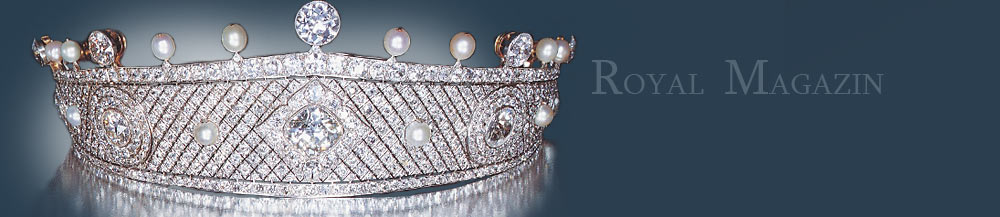
On June 9th, 1921, an extraordinary couple exchanged vows in a church in Copenhagen, creating a wedding that defied convention and captured the attention of the world. This was no ordinary union, and the circumstances surrounding it were far from ordinary. The bride, Her Royal Highness Princess Margrethe of Denmark, was the daughter of Prince Waldemar of Denmark, himself the youngest son of King Christian IX of Denmark, and Princess Marie of Orléans. The groom, His Royal Highness Prince René of Bourbon-Parma, hailed from a Catholic family, and their wedding took place in the Catholic Sacred Heart of Jesus church, despite the Protestant background of the Danish royal family.
Princess Margrethe’s upbringing was unique, as she was raised in the Catholic faith despite being a member of the Protestant Danish Royal Family. This was due to her mother’s French royal lineage. When Prince Waldemar and Princess Marie married in 1885, it was decided that their sons would be raised as Protestants, while their daughters would be raised as Catholics. Princess Margrethe happened to be the only daughter born from this Protestant-Catholic union.

Born in September 1895, Princess Margrethe received the names Margrethe Françoise Louise Marie. Her baptism took place in her parents‘ home two days after her birth, followed by a grander christening ceremony witnessed by family members and public representatives, befitting her status as the granddaughter of the King of Denmark.
Tragedy struck at a young age when Princess Margrethe’s mother passed away in 1909, leaving her motherless at the age of 10. Prince René’s background was equally noteworthy, with his father being the Duke of Parma and his mother born an Infanta of Portugal. He came from a large family, with half-siblings and siblings, including the famous last Empress of Austria, Zita. His brother Felix married the Grand Duchess of Luxembourg, and one of his half-sister Marie-Louise , married Prince Ferdinand I of Bulgaria.
The announcement of the royal engagement on March 11th came as a surprise to many, including those close to Prince Valdemar’s family. However, there were indications that some preparations had been made prior to the announcement. Prince René, accompanied by his brothers, had arrived the day before to meet with Princess Margrethe’s family. The engagement was celebrated at a birthday reception and luncheon for the Danish Crown Prince, where the rest of the family had the opportunity to meet the groom-to-be. Various private dinners were hosted by Prince Waldemar and the Queen Dowager, providing further opportunities for the families to bond and celebrate the upcoming union.
Pre-wedding events continued in the days leading up to the wedding, following the tradition of Royal weddings of that era. Guests arrived, and festivities commenced, including a grand dinner and ball hosted by Prince Waldemar at Bernsdorff Palace. The Royal guests, along with Princess Margrethe’s friends, enjoyed the enchanting evening adorned in elegant attire, captured in a photograph that immortalized the moment.
The photograph revealed a display of tiaras and jewelry, worn by the distinguished guests. Details regarding the specific events and their tiara usage were scarce due to the private nature of these occasions.
The wedding day arrived on June 9th, 1921, with preparations taking place at Bernsdorff Palace. The exterior was decorated with greenery, Danish flags, and the initials of the couple, creating a picturesque scene. Inside the church of the Sacred Heart of Jesus, invited guests, including representatives from official authorities, courtiers, and members of the Danish Catholic community, filled the pews. The church itself was adorned with a tasteful and impactful decoration scheme, featuring palms, ivy, rhododendrons, and hydrangeas.
Floral crosses representing both the Danish and French flags adorned the altar.
The Royal guests arrived at the church and were received by the Marshal of the Court, Chamberlain W. Rothe, and other dignitaries. The procession, led by the King and Queen, Prince René and his mother the Duchess of Parma, the Queen Dowager, and other Royal family members, made their way down the aisle to their designated seats. The anticipation grew as the moment approached for the bride and her father to make their entrance. Princess Margrethe, radiating joy, walked beside her father, her magnificent lace train held in place by a wreath of myrtle and orange flowers, accentuated by a delicate diamond tiara, a gift from the groom.
Following the church ceremony, the Royal family returned to Amalienborg, where a luncheon was hosted in their honor. The guests, who had received invitations, extended their congratulations to the newly weds and enjoyed a sumptuous meal accompanied by music and Danish and French melodies. The grandeur of the occasion was enhanced by the beautifully decorated tables adorned with pink roses and the sparkling crystal used for the dining experience.
Outside the palace, crowds of people had gathered, eagerly awaiting a glimpse of the newly weds. Princess Margrethe and Prince René made a balcony appearance, waving to the enthusiastic crowd, before returning inside to continue the luncheon. The celebrations concluded with the departure of the couple, bidding farewell to their family members, and embarking on their journey together. As they left, well-wishers showered them with rice and flowers, adding to the joyful atmosphere.
The wedding of Princess Margrethe and Prince René was a remarkable event that captured the imagination of the public. It defied expectations and highlighted the union of two individuals from different backgrounds and faiths. The day was filled with love, joy, and a sense of unity, as the Royal families and their guests came together to celebrate this extraordinary marriage.
more about the wedding gift and royal jewels of the bride:
the first posting of this jewels is from the year 2007…the ruby and diamond brooch, wearable as wreath diadem….


Dieser atemberaubende Kronleuchter stammt aus Königsberg und wurde um 1650 hergestellt. Er besteht aus feinstem Bernstein und besitzt zwölf Kerzen, die ein warmes und magisches Licht erzeugen. Weltweit gibt es nur zwei weitere Kronleuchter dieser Art, und sie werden beide im Schloss Rosenborg in Kopenhagen aufbewahrt. Der Kronleuchter der SPSG ist jedoch das einzige Exemplar, dessen Arme vollständig aus dem kostbaren Bernstein gefertigt sind.
Ursprünglich gehörte der Kronleuchter zur Sammlung von Baron Mayer Amschel de Rothschild (1818–1874) und wurde 1977 von der West-Berliner Schlösserverwaltung bei einer Auktion bei Sotheby’s erworben. Um ihn in seinen heutigen Glanz zurückzuversetzen, wurden umfangreiche Restaurierungsmaßnahmen durchgeführt. Von 1983 bis 2001 hing der Kronleuchter im Schloss Charlottenburg, bevor er in den Depots der SPSG aufbewahrt wurde, bis er nun endlich im Schlossmuseum Oranienburg seinen verdienten Platz gefunden hat.
Der Bernsteinkronleuchter ist ein beeindruckendes Zeugnis der Bernsteintradition des Hauses Brandenburg-Preußen. In der Frühen Neuzeit wurden viele Kunstobjekte aus diesem seltenen Material gesammelt und verschenkt. Berühmt ist dabei das Bernsteinzimmer, das König Friedrich Wilhelm I. von Preußen (1688-1740) Zar Peter „dem Großen“ von Russland (1672-1725) überreichte. Auch Kronleuchter aus Bernstein waren hochgeschätzte Kunstwerke und wurden als diplomatische Geschenke überreicht.
Der Kronleuchter im Schlossmuseum Oranienburg wurde vom flämischen Messingkronleuchter des 17. Jahrhunderts inspiriert. Er besteht aus einer zentralen Eisenstange mit verschiedenen Segmenten, in die geschwungene Arme und Verzierungen eingefügt sind. Das Highlight ist eine heraldische Adlerfigur als Krönung. Beim Bernsteinkronleuchter wurden dieselben Elemente verwendet: Die Schaftelemente, die Mittelkugel und die große Abschlusskugel sind alle aus gebogenen Bernsteinplättchen gefertigt. Die Oberflächen sind kunstvoll verziert mit Reliefs von Ranken, Blättern, Früchten und Vögeln. Die Arme des Kronleuchters sind tierähnlich gestaltet und mit gravierten Schuppen verziert. Sie sind durch stilisierte Weinreben und transparenten Bernstein verbunden, auf dem Imperatoren-Köpfe, Halbfiguren, Vögel und Früchte prachtvoll dargestellt sind.
Die Stiftung Preußische Schlösser und Gärten Berlin-Brandenburg (SPSG) hat beschlossen, dieses kostbare Kunstwerk der Öffentlichkeit dauerhaft zugänglich zu machen.
The wedding gift from Queen Mary to her daughter in law – Princess Marina of Greece, Duchess of Kent in 1934 and one of the principal presents was:
Rectangular diamond brooch with a ruby and diamond bow ornament diagonally across it>>
The brooch was not seen later in public, but Queen Mary was a collector of interesting jewels. Sometimes from her family or other heirlooms.
I believe the Duchess of Kent sold the brooch later without the double ruby bow, after the early death of the Duke of Kent, when she needs money, back to the royal family.
It is very similar to the brooch which was worn by Camilla, the Queen Consort at Royal Ascot 2023 and before at Christmas 2022 Sandringham.

When she was bridesmaid in 1934 on the wedding of Princess Marina of Greece and Prince Georg of Great Britain, the Duke and Duchess of Kent.
The bridesmaids, in white crêpe marocain, were all wearing the dainty brooches, with the initial of the bride M+G
and bridegroom entwined, that had been the bridegroom’s gift, to them, and white bandeau.

Lady Mary Cambridge;
Princess Elisabeth of York, later Queen Elizabeth II;
Princess Iris of Mountbatten
Princess Juliana of the Netherlands;

Grand Duchess Kira of Russia;
Princess Eugenie of Greece
Princess Catherine of Greece
Princess Irene of Greece
Auguste Amalie Beauharnais| Herzogin von Leuchtenberg |Imperial Emeralds History

Auguste Amalie war die älteste Tochter des Königs Maximilian I. Joseph von Bayern (1756–1825) und der Prinzessin Auguste Wilhelmine von Hessen-Darmstadt (1765–1796). Sie war im Januar 1806 mit dem Vizekönig von Italien Eugène de Beauharnais (1781–1824), dem zukünftigen Herzog von Leuchtenberg und Fürsten von Eichstätt, verheiratet. Eugène war der Sohn der Kaiserin Josephine (1763–1814), der ersten Ehefrau von Napoleon I. (1769–1821). Sieben Kinder wurden in diese Verbindung geboren, darunter
Prinzessin Josephine die spätere Königin von Schweden und Amelia, geboren am 31. Juli 1812 und würde Kaiser Don Petro heiraten. Peter I. von Brasilien (1798–1834) im August 1829.
Saint Michael’s Krone von Mont Saint Michel,

wurde von Mellerio-Meller in der Rue de la Paix in Paris angefertigt, die große Spezialisten für religiöse Gegenstände war und einst am Quai Voltaire in Paris seine Werkstatt hatte.
Es ist die Krone des Heiligen Michel, die sich in Mont Saint Michel befindet.
Diese Krone ist aus vergoldendem Messing. Auf dieser Krone befinden sich Topase, Diamanten, Amethyste, Rubine und Aquamarine.
Diese Krone hat die Form eines Helmvisiers, geschmückt mit zehn silbernen Muscheln über einem Band, das zwischen zwei Spitzen das „Quis ut Deus“ trägt. Das Gehäuse und die Spitzen bestehen aus versilbertem Messing.
Es trägt das lateinische Motto des Heiligen Michael: Benedicte dominum omnes angeli ejus potentes virtute. : Princeps angelorum.
Mellerio orfèvre Paris 1878.
Diese erste Krone aus Gold, Vermeil und Edelsteinen wurde 1877 von Pater Robert des Prémontrés bei Mellerio dits Meller bestellt.
Laut der historischen Akte handelt es sich um das Faksimile der Krone des Heiligen Michael, das auf der Weltausstellung 1878 gezeigt und im Jahr 1906er gestohlen worden war.
Allein die abgenommene Krone, ein wahres Kunstwerk Mellerios , stellte einen materiellen Wert von mindestens einer halben Million dar.
Archival records give an idea of the gift. In addition, the inventory in 1838 showed that on January 2, 1842, the following was delivered to the jeweler Bolin from the Diamond Room of the Winter Palace: „Diamonds in the pieces (unset) of paper available from the converted units. Four diamonds weighing 3 Karat (a tiara with pearls to use January 2, 1842), the same polished 64 ‚/ short. From this lot polished faces of the same weight 22 ‚/ 32 fold on a tiara with pearls January 2, 1842, from the bodice with Pearls. A diamond weighing 1 3/32 times from the range. Purchased for a tiara with pearls January 2, 1842″ * notes 423
Nevertheless, the legendary diamond tiara, made in 1842, including diamonds , was worth 87,478 rubles. 424 *notes Corresp.Bolin;Zimin

siehe A.Zimin Buch Geschenke des Zaren AlexanderII 2013
The exquisite „Grand Duchess Vladimir tiara,“ a cherished adornment frequently graced upon the late Queen Elizabeth II of Great Britain, holds a captivating historical narrative. Delving into the annals of time, we discover that this regal treasure’s lineage traces back to an era imbued with imperial splendor.
Originally procured by Queen Elizabeth’s illustrious grandmother, Queen Mary, the tiara was acquired in 1921 from none other than the daughter of Grand Duchess Maria Pavlovna of Russia. This acquisition came to pass subsequent to the clandestine removal of the tiara from the tumultuous grips of revolutionary Russia. Long-held assumptions suggested that it had been bestowed upon Maria as a wedding gift during her union with Grand Duke Vladimir in 1874.
However, the Grand Duchess Vladimir tiara, it turns out, is steeped in an even more venerable history. Imbued with an air of aristocracy, this magnificent artifact was, in fact, crafted three decades prior, in a bygone era.
Its inception took place during a momentous occasion when the illustrious Princess of Hessen by Rhine, the future Empress Maria Alexandrovna, bestowed upon the world their firstborn son, Grand Duke Nicholas Alexandrovich Romanov, in the year 1843. It was made by the court jeweller Bolin.
Though Nikolay’s earthly sojourn was brief, the tiara continued its journey through time. Following the passing of Empress Maria in 1880, this resplendent crown of diamonds and pearls gracefully transitioned into the possession of her third son, the esteemed Grand Duke Vladimir. A testament to its enduring allure, the tiara underwent a subtle transformation in 1924, facilitated by the deft hands of Queen Mary. Adorned with the renowned Cambridge emerald pear shaped pedants, the tiara now stands as a resplendent amalgamation of precious gemstones, an irrefutable symbol of regal refinement.
Thus, the captivating tale of the „Grand Duchess Vladimir tiara“ weaves a tapestry of nobility and historical intrigue. Through its many custodians and transformations, this timeless artifact has transcended eras, gracefully adorning the heads of queens and captivating the hearts of all who gaze upon its majestic splendor.
Maria Alexandrovna (Russian: Мария Александровна), born Princess Wilhelmine Marie of Hesse and by Rhine (8 August 1824 – 3 June 1880), was Empress of Russia as the first wife of Emperor Alexander II.
Marie was the legal daughter of Ludwig II, Grand Duke of Hesse, and Princess Wilhelmine of Baden. Marie was only 14 years old when Tsesarevich Alexander Nikolaevich fell in love with her while he was traveling to Western Europe. She arrived in Russia in September 1840 and converted to the Eastern Orthodox Church under the name Maria Alexandrovna, when she married Alexander the following April.
Maria was known for her intellect. However, she suffered from tuberculosis from 1863 and spent long stays in southern Europe to avoid harsh winters, which worsened after the death of her eldest son Nicholas Alexandrovich. She was also the mother of Marie Alexandrovna, the Duchess of Edinburgh and Saxe-Coburg, her only surviving daughter.


