Imperial Winter Egg |Faberge


Provenienz des Fabergé – Wintereis (1913–2025)

(basierend auf den historischen Aufzeichnungen, Auktionskatalogen Christie’s/Sotheby’s/Wartski und der üblichen Sekundärliteratur)
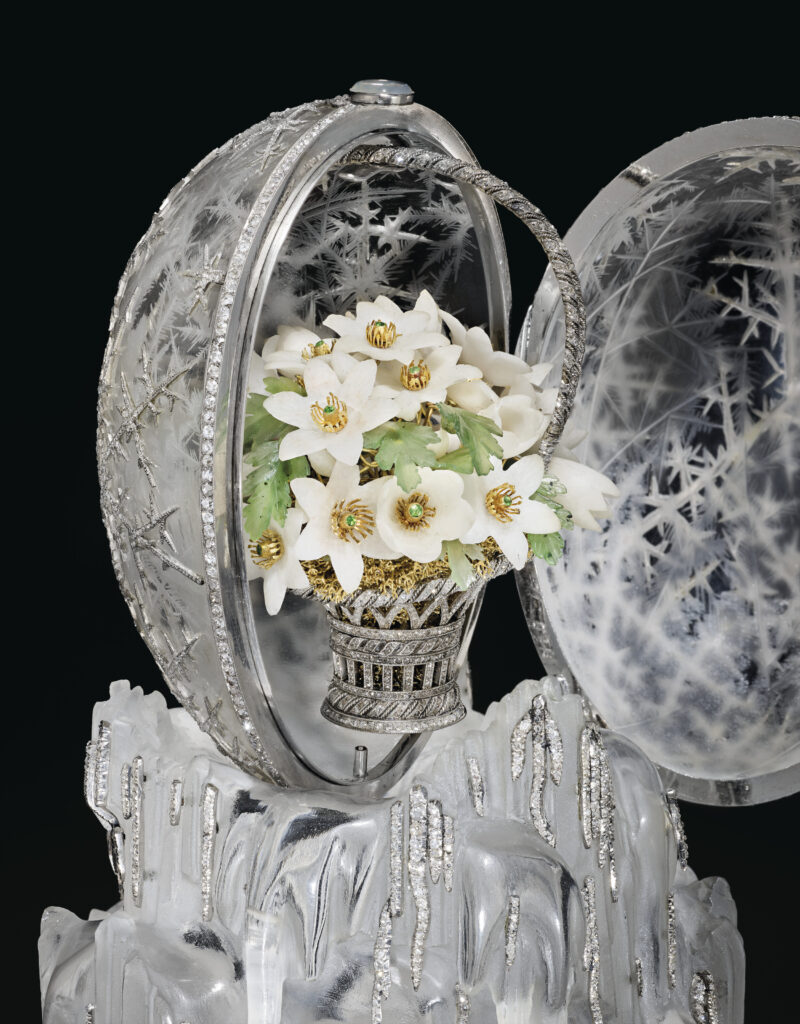

A MAGNIFICENT AND HIGHLY IMPORTANT IMPERIAL WINTER EGG
Fabergé, Entwurf Alma Theresia Pihl – Werkstatt Albert Holmström, St. Petersburg, 1913

Das Winterei von 1913 gehört zu den ungewöhnlichsten Kreationen der kaiserlichen Fabergé-Werkstätten. Die Komplexität, die technische Meisterschaft und die poetische Umsetzung des Themas „Schnee, Eis und Frühjahr“ machen es zu einem absoluten Höhepunkt des Hofjuweliers.

Das Ei

Material: Bergkristall, innen fein mattiert und mit einem Frost-Dekor graviert.

Außen: mit rosenschnitt-besetzten Platin-Schneeflocken und platinmontierten Diamantbordüren appliziert.

Die vertikale Ornamentik verbirgt die Scharniermechanik.

Bekrönt von einem Mondstein-Kabinett, datiert 1913.

Der Sockel

Modelliert als Block schmelzenden Eises aus Bergkristall.

Überzogen mit Diamant-Platin-Rinnsalen, die die Tauwirkung verstärken.

Ein zentraler Platin-Zapfen stabilisiert das Ei.

Die „Überraschung“

Der Innenmechanismus trägt einen zarten, doppelt gehänkelten Platin-Korb, vollständig besetzt mit Rosenschliffdiamanten.
Darin:

Holzanemonen aus weißem Quarz,

goldene Staubgefäße,

Blätter aus Nephrit,

im Blütenzentrum Demantoid-Granate,

eingebettet in Goldmoos.

Der Boden der Überraschung ist graviert: FABERGÉ 1913.

Maße

Ei mit Sockel: 14,2 cm (5 ⅝ in.)

Überraschung: 8,2 cm (3 ¼ in.)
A MAGNIFICENT AND HIGHLY IMPORTANT IMPERIAL WINTER EGG
Fabergé, Entwurf Alma Theresia Pihl – Werkstatt Albert Holmström, St. Petersburg, 1913

Das Winterei von 1913 gehört zu den ungewöhnlichsten Kreationen der kaiserlichen Fabergé-Werkstätten. Die Komplexität, die technische Meisterschaft und die poetische Umsetzung des Themas „Schnee, Eis und Frühjahr“ machen es zu einem absoluten Höhepunkt des Hofjuweliers.


IMPERIAL WINTER EGG
Fabergé, Entwurf Alma Theresia Pihl – Werkstatt Albert Holmström, St. Petersburg, 1913

Das Winterei von 1913 gehört zu den ungewöhnlichsten Kreationen der kaiserlichen Fabergé-Werkstätten. Die Komplexität, die technische Meisterschaft und die poetische Umsetzung des Themas „Schnee, Eis und Frühjahr“ machen es zu einem absoluten Höhepunkt des Hofjuweliers.

Das Ei

  • Material: Bergkristall, innen fein mattiert und mit einem Frost-Dekor graviert.
  • Außen: mit rosenschnitt-besetzten Platin-Schneeflocken und platinmontierten Diamantbordüren appliziert.
  • Die vertikale Ornamentik verbirgt die Scharniermechanik.
  • Bekrönt von einem gravierten Mondstein Cabochon, datiert 1913.

Der Sockel

  • Modelliert als schmelzender Eisblock aus Bergkristall.
  • Überzogen mit Diamant Rinnsalen aus Platin, die die Tauwirkung verstärken.
  • Ein zentraler Platin-Zapfen stabilisiert das Ei.

Die „Überraschung“

Der Innenmechanismus trägt einen zarten, doppelt gebänderter Platin-Korb, vollständig besetzt mit Rosenschliffdiamanten.
Darin:

  • Anemonen aus weißem Quarz,
  • goldene Staubgefäße,
  • Blätter aus Nephrit,
  • im Blütenzentrum Demantoid-Granate,
  • eingebettet in Goldmoos.

Der Boden der Überraschung ist graviert: FABERGÉ 1913.

Maße

Überraschung: 8,2 cm (3 ¼ in.)

Ei mit Sockel: 14,2 cm (5 ⅝ in.)

1913
Kommissioniert von Kaiser Nikolaus II. als Ostergeschenk für seine Mutter Zarinmutter Maria Fjodorowna.
St. Petersburg, 13. April 1913. Preis 24.600 Rubel.

1913–1917
Privatsammlung der Zarinmutter, Anitschkow-Palast, St. Petersburg.

September 1917
Vom Provisorischen Gouvernement zur Kreml-Waffenkammer überführt.

1922
Durch die Sonderkommission für Schmuckwerte ausgewählt und an Gokhran, Moskau, übergeben.

1929–1933
Von Wartski, London, in der sowjetischen Verkaufsperiode erworben (Preis £450).

1934
Erworben von Napier Sturt, 3rd Baron Alington (Preis £1.500).

1934–1948
Sammlung Sir Bernard Eckstein.

1949
Nachfolgerverkauf: Sotheby’s London, 8. Februar 1949, Lot 128 (Preis £1.870).
Erworben für die Sammlung Arthur Bryan Ledbrook.

1974
Nach dessen Tod im Besitz eines Trusts.

1994
Christie’s Genf, 16. November 1994, Lot 464.
Zuschlag CHF 7.263.500 — Weltrekord für Fabergé.

2002
Christie’s New York, 19. April 2002, Lot 150.
Zuschlag $9.579.500 — erneuter Weltrekord.

ab 2002 (inoffiziell)
Zuschlag an Sheikh Saud bin Mohammed Al-Thani (Qatar).
Gerüchte seit Jahren: Werk möglicherweise nie bezahlt und nie abgeholt → Christie’s verbleibt wirtschaftlicher Eigentümer.

2025
Christie’s London, 2. Dez. 2025, Lot 7.
GBP 22,895,000 Verkauf als Teil einer „Princely Collection“

THE IMPERIAL WINTER EGG BY FABERGÉ (1913)

A Masterpiece of Alma Theresia Pihl and the Holmström Workshop
St Petersburg, 1913

Commissioned by Emperor Nicholas II as his Easter gift to his mother, the Dowager Empress Maria Feodorovna, the Imperial Winter Egg stands among the most poetic and technically sophisticated creations of Carl Fabergé’s ateliers. Conceived by the young designer Alma Theresia Pihl and executed in the celebrated workshop of Albert Holmström, it is a triumph of imagination, virtuosity and symbolic refinement.

Description of the Egg

Carved from a single block of rock crystal, the egg reveals a delicately frosted interior, suggesting winter light caught beneath a thin layer of ice. The exterior is adorned with a constellation of platinum snowflakes set with rose-cut diamonds and two vertical diamond-set borders cleverly disguising the hinge. At its apex sits a cabochon moonstone engraved with the date 1913, a subtle reminder of the Romanov tercentenary.

The Base

The egg rests upon a sculptural block of melting ice, also carved in rock crystal, its surface enlivened with flowing platinum rivulets set with rose-cut diamonds. A central platinum pin rises from the base to support the egg with absolute precision.

The Surprise

Suspended within is one of the most enchanting surprises in the Fabergé oeuvre:
a double-handled trelliswork basket in platinum, entirely pavé-set with rose-cut diamonds. It overflows with lifelike wood anemones carved from white quartz, each with gold wire stamens and a demantoid garnet at its centre. The leaves, rendered in exquisitely shaped nephrite, emerge from a bed of finely modelled gold moss.
The base of the basket is engraved ‘FABERGÉ 1913’.
Measurements

  • Egg with base: 14.2 cm (5 5/8 in.) high
  • Surprise: 8.2 cm (3 1/4 in.) high

Provenance

  • 1913: Commissioned by Emperor Nicholas II and presented to the Dowager Empress Maria Feodorovna.
  • 1913–1917: Anichkov Palace, St Petersburg.
  • 1917: Transferred by the Provisional Government to the Kremlin Armoury for safekeeping.
  • 1922: Selected by the Special Commission and transferred to Gokhran.
  • 1929–1933: Acquired by Wartski, London (£450).
  • 1934: Purchased by Napier Sturt, 3rd Baron Alington (£1,500).
  • 1934–1948: Collection of Sir Bernard Eckstein.
  • 1949: Sotheby’s London, 8 February, Lot 128 (£1,870), acquired by Arthur Bryan Ledbrook.
  • 1994: Property of a Trust; Christie’s Geneva, 16 November, Lot 464 (CHF 7,263,500 – world record for Fabergé).
  • 2002: Christie’s New York, 19 April, Lot 150 ($9,579,500 – world record for Fabergé).
  • After 2002: Attributed to the collection of Sheikh Saud bin Mohammed Al-Thani (He became one of the most voracious contemporary art buyers around the turn of the Millennium, serving as Qatar’s chief cultural patron. Sheikh Saud bin Mohammed Al-Thani is believed to have spent close to £1 billion on art acquisitions before facing allegations of misusing public funds in 2005; he died nine years later, in exile, at the age of just 48. Persistent rumours suggest that the Winter Egg was never collected from Christie’s — nor fully paid for — and that the auction house may now be offering it in order to recover the funds it advanced at the time of the 2002 sale.)
  • 2025: sold again at Christie’s London as part of a “Princely Collection” GBP 22,895,000

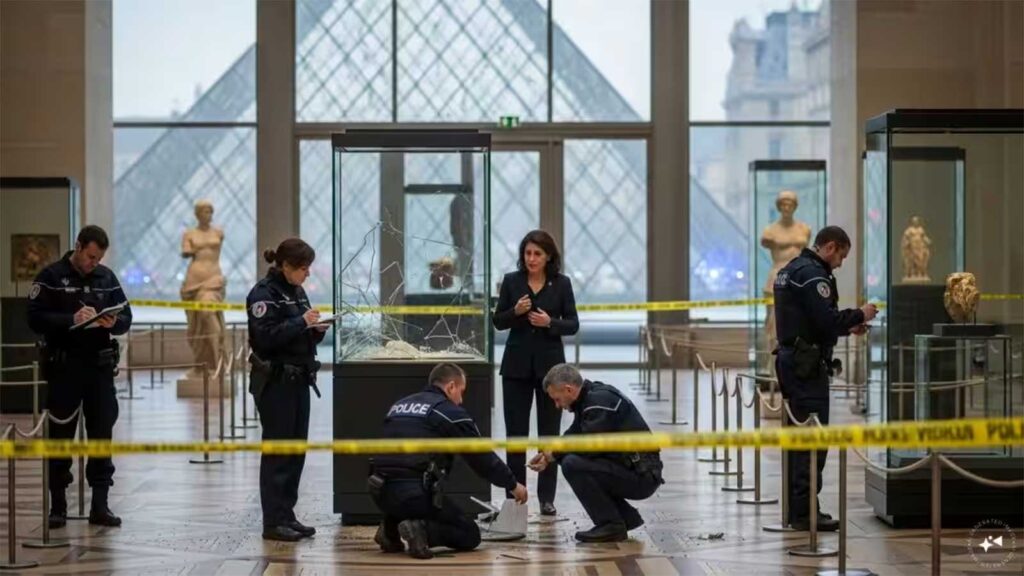
Robbery at the Louvre Museum in Paris this morning, targeting the Apollo Gallery

 Robbery at the Louvre Museum in Paris this morning, targeting the Apollo Gallery

Three masked thieves broke into the Louvre Museum in Paris this morning, targeting the Apollo Gallery. Nine pieces of jewelry were reportedly stolen; the value is still being assessed.
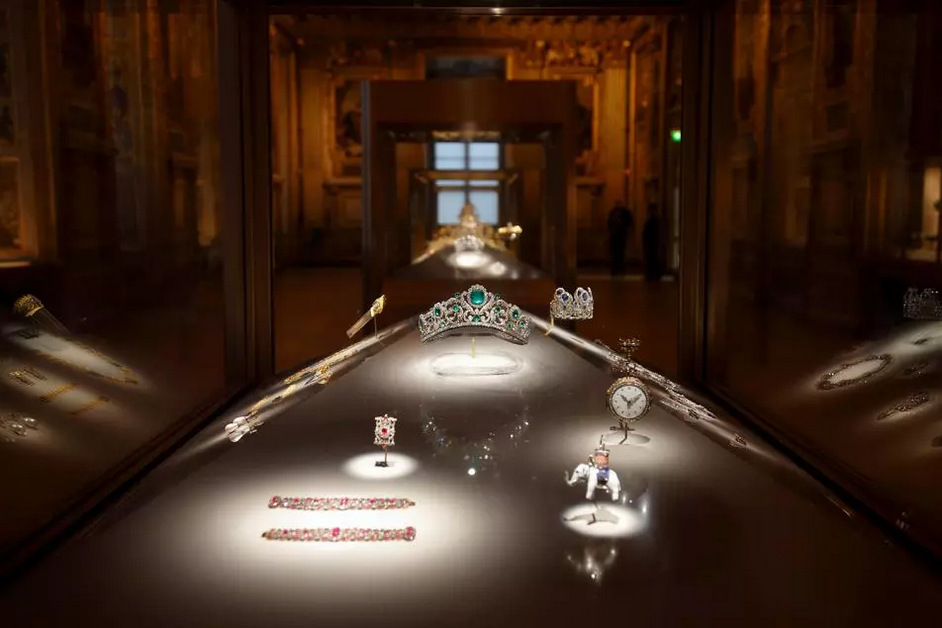
robbery Louvre Museum -The French Crown Jewels Room 705, Denon Wing, Left 1 Robbery Louvre Museum -The French Crown Jewels
Robbery Louvre Museum -The French Crown Jewels Room 705, Denon Wing, Left 1 des joyaux de la Couronne de France
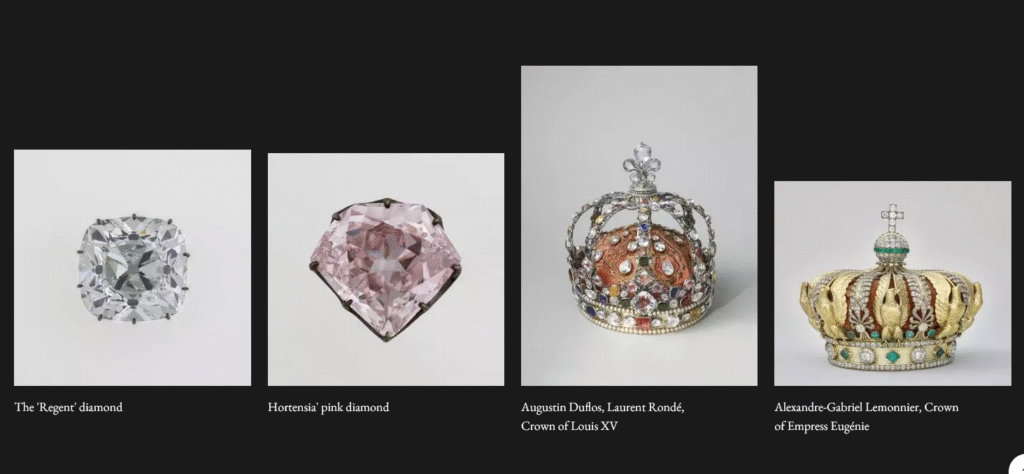
Robbery Louvre Museum -The French Crown Jewels  Museum de Louvre Après avoir brisé des vitres à l’aide d’une disqueuse, deux hommes ont pénétré à l’intérieur. Ils se sont attaqués aux deux premières galeries : celle de Napoléon et celle des Souverains français. Au total, les voleurs auraient raflé neuf pièces de la collection de bijoux de Napoléon et de l’impératrice : collier, broche, diadème… Toutefois, le fameux Régent, le plus gros diamant de la collection pesant plus de 140 carats, n’a pas été subtilisé. Le préjudice est en cours d’évaluation à partir des photos des pièces manquantes.
Robbery Louvre Museum -The French Crown Jewels
Robbery Louvre Museum -The French Crown Jewels  Museum de Louvre
Robbery Louvre Museum -The French Crown Jewels Museum de Louvre However, the famous Régent, the largest diamond in the collection weighing more than 140 carats, was not stolen. Two thieves posed as workers – one of the nine stolen jewels recovered

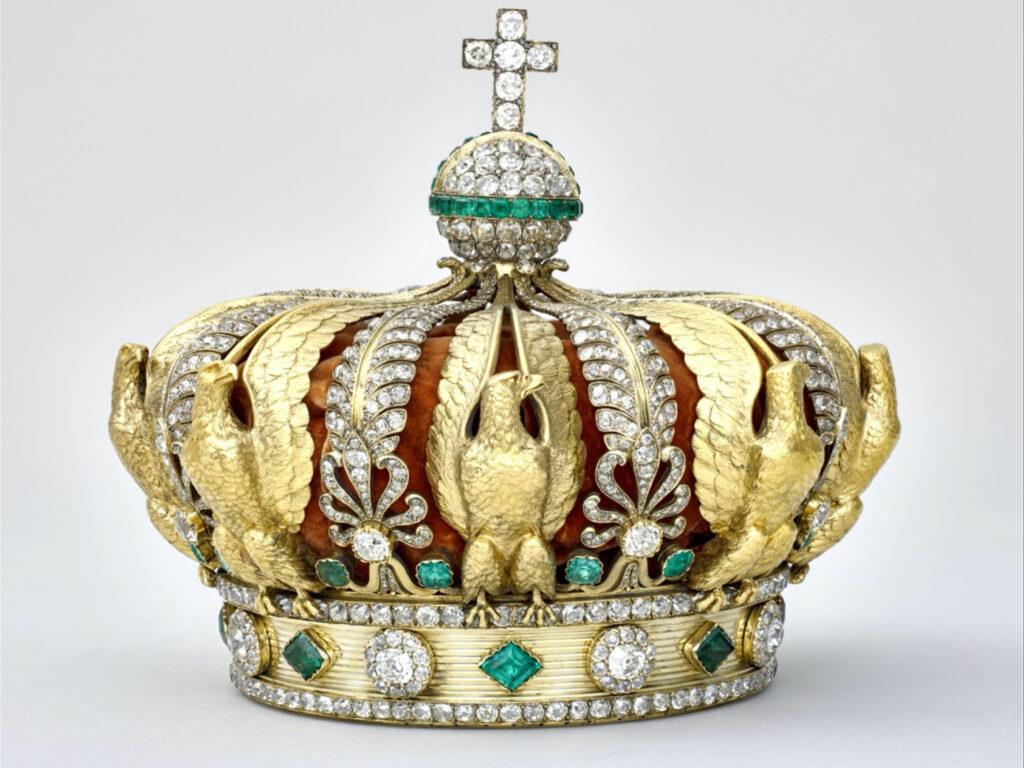
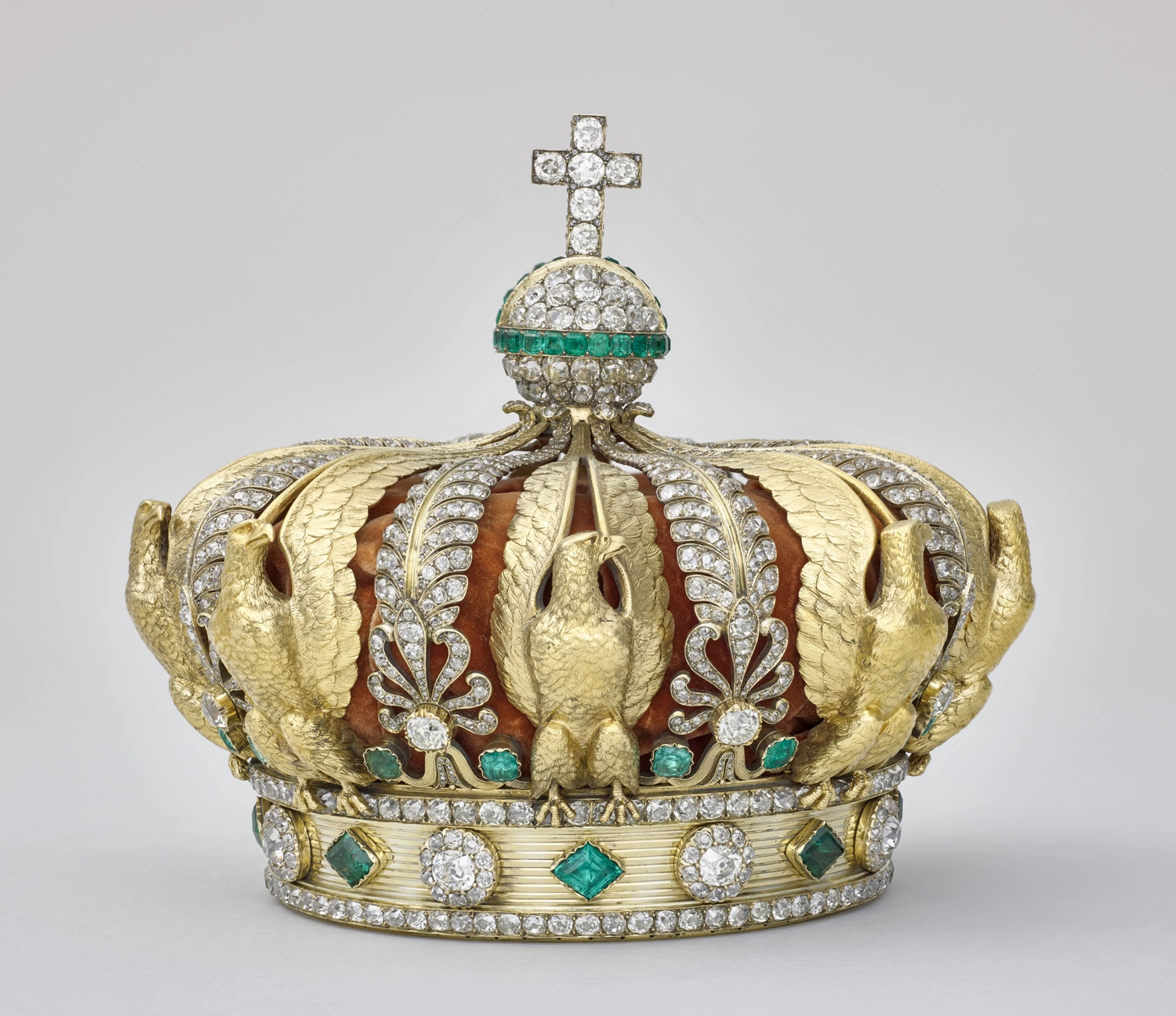
According to our information, there were four criminals in total: two disguised as workers wearing yellow vests on a gondola, while the other two waited on TMax scooters. In total, nine jewels were stolen, but one have already been recovered,the crown of Empress Eugénie, see on the top right..
, but two have already been recovered, including the crown of Empress Eugénie, see on the top right.  Empress Eugenie's crown - crown jewels france
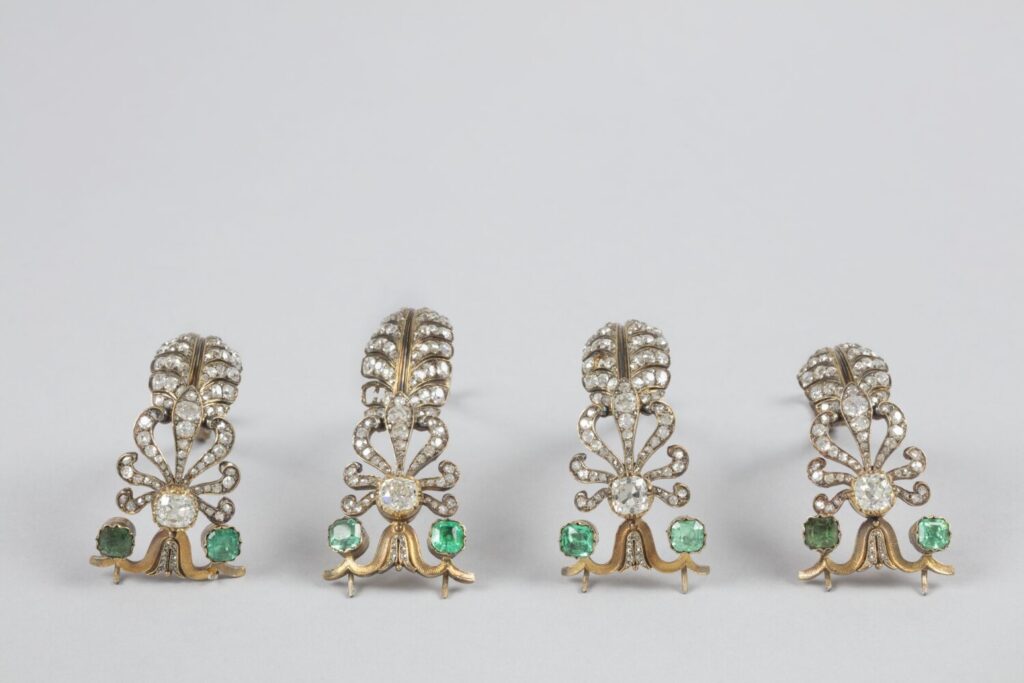
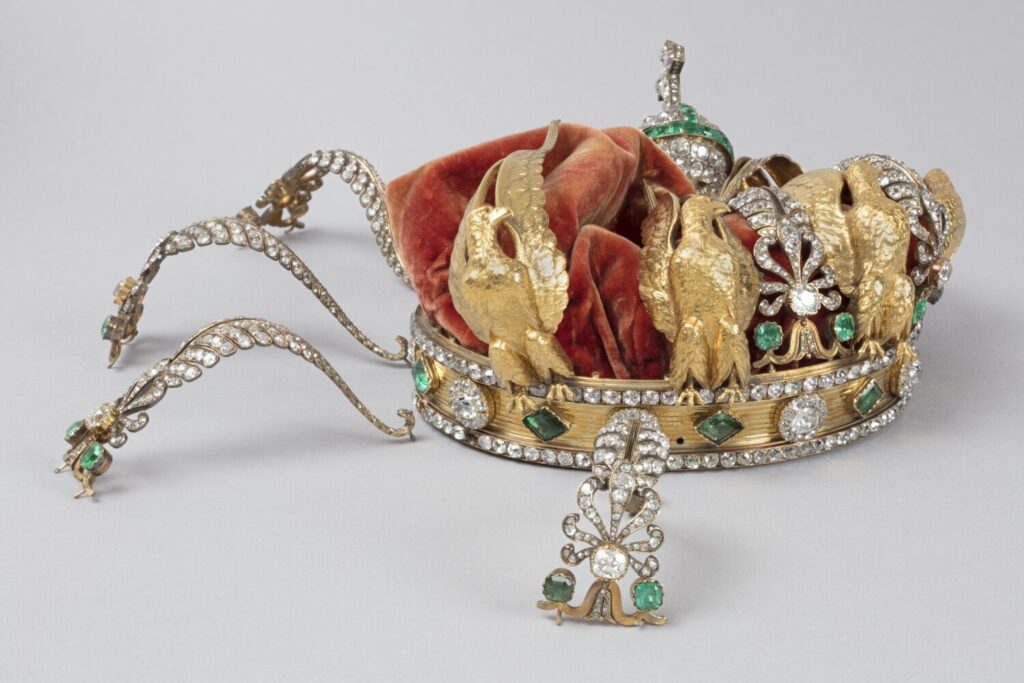
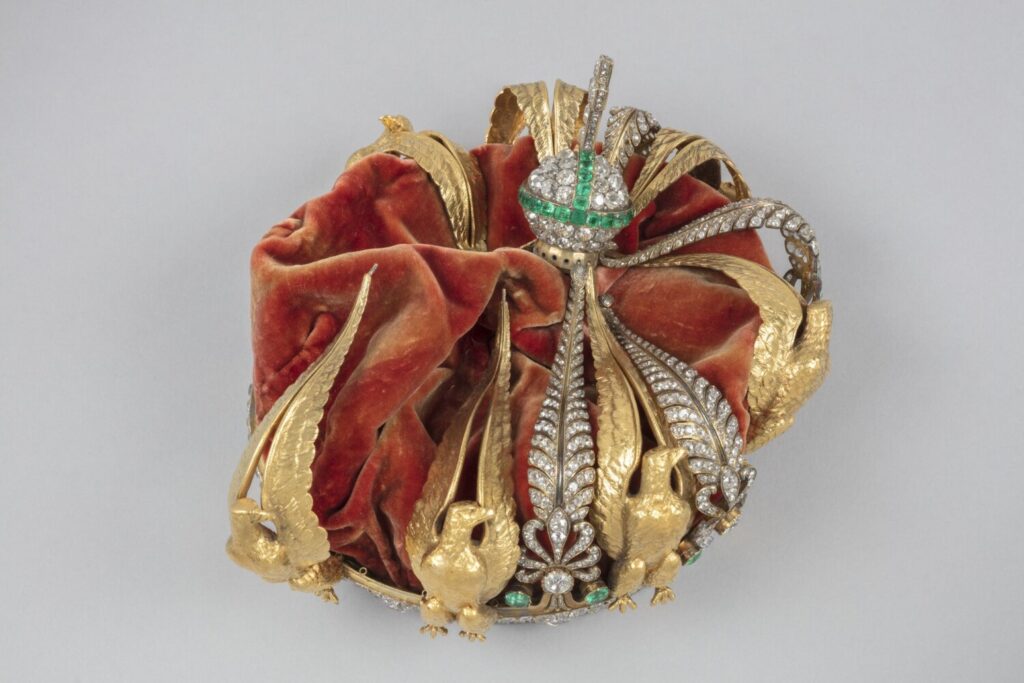
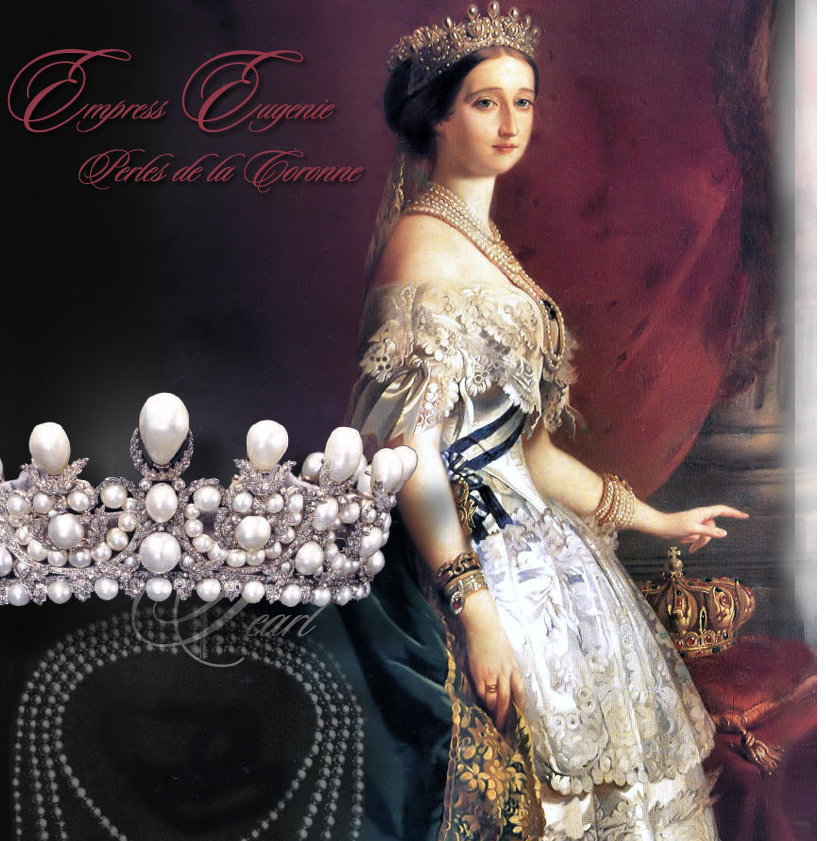
Die Krone der Kaiserin Eugénie wurde von dem Goldschmied Alexandre-Gabriel Lemonnier anlässlich der Weltausstellung von 1855 geschaffen
But two have already been recovered, including the crown of Empress Eugénie, ChatGPT:
The crown of Empress Eugénie was created by the goldsmith Alexandre-Gabriel Lemonnier on the occasion of the 1855 Exposition Universelle (World Exhibition).

As reported by French media, nine pieces of jewelry from the collection of Napoleon and the Empress have been stolen: a necklace, a brooch, a tiara, and more (d’une parure, d’un collier, de boucles d’oreilles, de deux couronnes – dont celle de l’impératrice Eugénie retrouvée brisée – et d’une broche.). The total value of the loss has yet to be determined. According to Interior Minister Laurent Nuñez, the stolen jewels are of “inestimable value.” The thieves broke into the display cases titled “Bijoux Napoléon” and “Bijoux des souverains” in the Galerie d’Apollon and emptied them completely.

For the French, their sense of cultural identity is deeply rooted in their historic leadership in the world of luxury — a realm where artistry and refinement define national pride. Jewelry, fashion, gastronomy, wine, and champagne are not merely industries, but expressions of a cultural ideal that unites beauty, excellence, and tradition.

This was my answer in the interview with Radio WDR3-5 on 20. October 2025
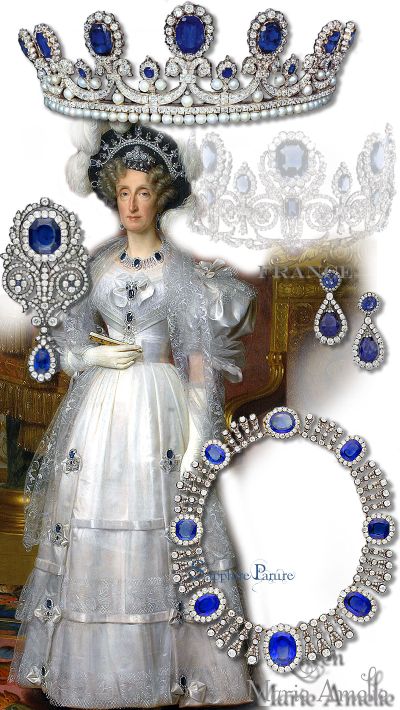

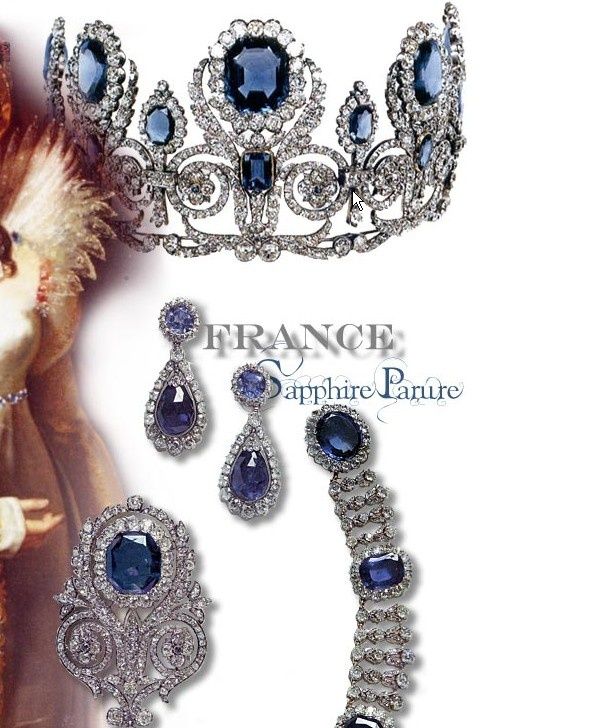
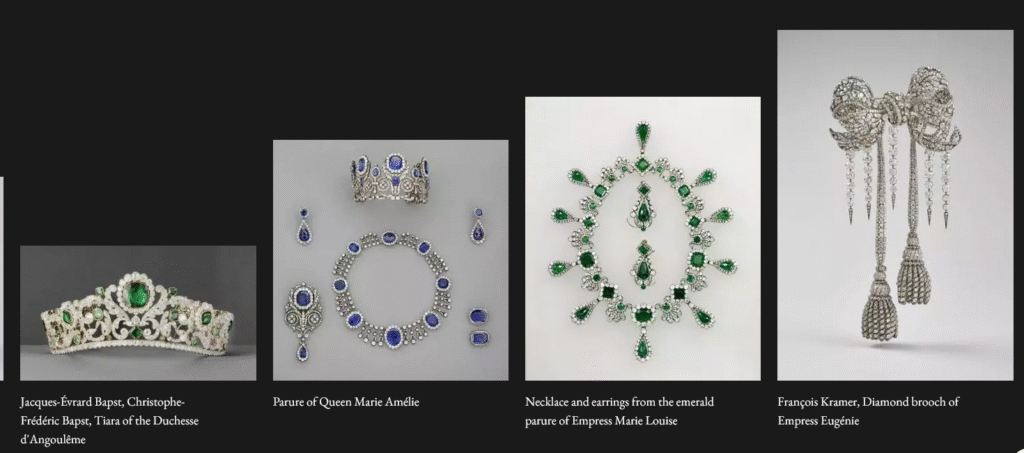
– du diadème de la parure de la reine Marie-Amélie et de la Reine Hortense. Saphir de Ceylan et diamant composent cette pièce de 6,2 cm de hauteur et 10,7 cm de largeur. Un bijou qui a été porté par la reine Hortense, la fille de Joséphine de Beauharnais, première épouse de Napoléon, puis par Marie-Amélie de Bourbon-Siciles, épouse de Louis-Philippe.

du collier de la parure de saphirs de la reine Marie-Amélie et de la Reine Hortense, de la boucle d’oreille, d’une paire de la parure de saphirs de la reine Marie-Amélie et de la Reine Hortense,

– du collier de la parure de saphirs de la reine Marie-Amélie et de la Reine Hortense et de la boucle d’oreille de la parure de saphirs de la reine Marie-Amélie et de la Reine Hortense. Cette parure a été modifiée au gré de ses détentrices. Elle est demeurée propriété de la branche d’Orléans jusqu’en 1985. A noter que ni le nom du commanditaire ni celui du joaillier ne sont connus. On retrouve trace de cette parure dans un courrier du duc d’Orléans, futur Louis-Philippe, adressé à Hortense de Beauharnais, afin que le premier en fasse l’acquisition. Il est possible que l’impératrice Joséphine ait légué le bijou à sa fille Hortense. La légende familiale évoque même une thèse invérifiable : la parure aurait appartenu par le passé à Marie-Antoinette.

 du collier de la parure de saphirs de la reine Marie-Amélie et de la Reine Hortense et de la boucle d’oreille de la parure de saphirs de la reine Marie-Amélie et de la Reine Hortense. Cette parure a été modifiée au gré de ses détentrices. Elle est demeurée propriété de la branche d’Orléans jusqu’en 1985. A noter que ni le nom du commanditaire ni celui du joaillier ne sont connus. On retrouve trace de cette parure dans un courrier du duc d’Orléans, futur Louis-Philippe, adressé à Hortense de Beauharnais, afin que le premier en fasse l’acquisition. Il est possible que l’impératrice Joséphine ait légué le bijou à sa fille Hortense. La légende familiale évoque même une thèse invérifiable : la parure aurait appartenu par le passé à Marie-Antoinette.

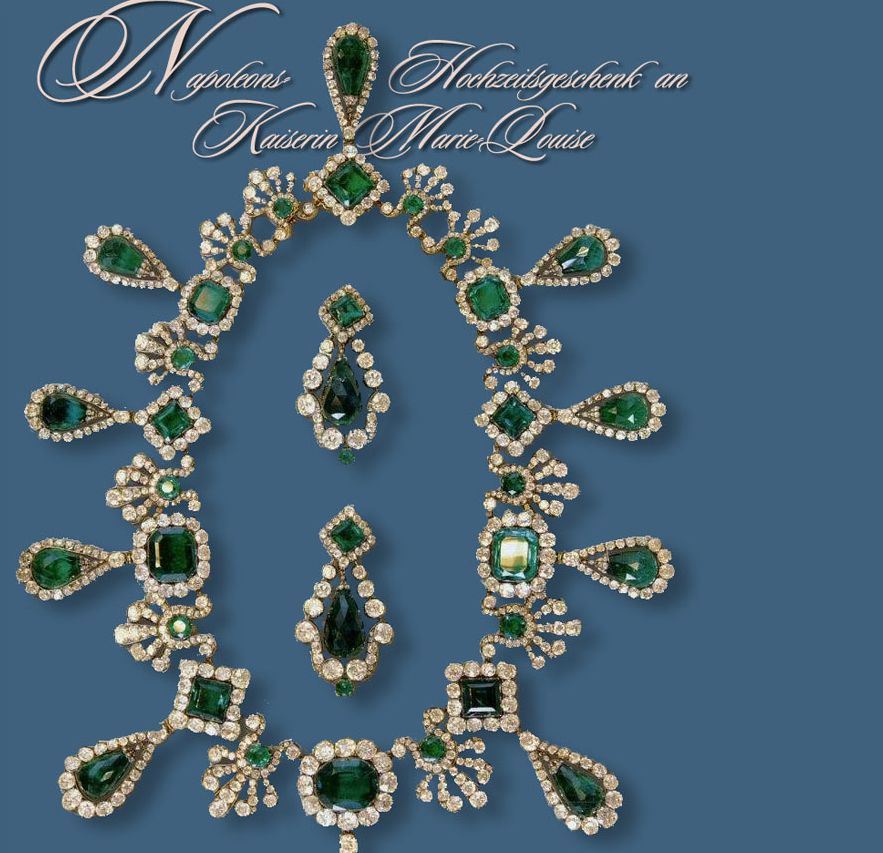
– Du collier en émeraudes et d’une paire de boucles d’oreilles en émeraudes de la parure de Marie-Louise. Il s’agit d’un cadeau offert par Napoléon à sa seconde épouse, autrichienne, en mars 1810. De secondes noces décidées après sa rupture avec Joséphine, qui ne pouvait lui offrir un héritier. Le collier compte pas moins de 32 émeraudes, dont 10 en poire et 1 138 diamants. C’est l’oeuvre du joaillier François-Régnault Nitot.

Du collier en émeraudes et d’une paire de boucles d’oreilles en émeraudes de la parure de Marie-Louise. Il s’agit d’un cadeau offert par Napoléon à sa seconde épouse, autrichienne, en mars 1810. De secondes noces décidées après sa rupture avec Joséphine, qui ne pouvait lui offrir un héritier. Le collier compte pas moins de 32 émeraudes, dont 10 en poire et 1 138 diamants. C’est l’oeuvre du joaillier François-Régnault Nitot.

– D’une broche dite broche reliquaire


Broche dite broche reliquaire
1855
Bapst, Paul-Alfred
Bapst, Paul-Alfred, Musée du Louvre, Département des Objets d’art du Moyen Age, de la Renaissance et des temps modernes, MV 1024

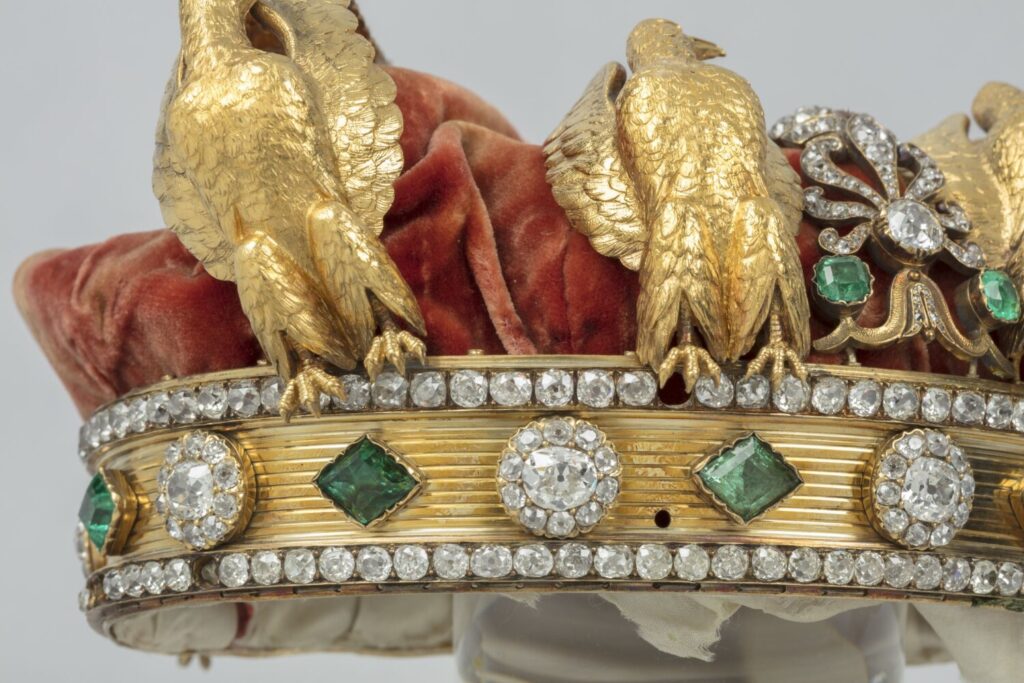
– D’un diadème de l’impératrice Eugénie. Epouse de Napoléon III, originaire d’Andalousie, Eugénie de Montijo est un personnage historique d’une grande complexité. Elle qui vouait un culte à Marie-Antoinette et Joséphine a connu aussi bien le faste que les drames, notamment la mort de son fils unique tué par le Zoulous en 1879. En sa qualité de régente, elle est techniquement la dernière femme à avoir exercé en France les fonctions de chef d’Etat. On la disait frivole, a lancé la mode des robes à crinoline. Sensible aux malheurs des autres, elle a aussi créé les Fourneaux économiques, sorte d’ancêtres des Restos du Cœur.

- D’un diadème de l’impératrice Eugénie. Epouse de Napoléon III, originaire d’Andalousie, Eugénie de Montijo est un personnage historique d’une grande complexité. Elle qui vouait un culte à Marie-Antoinette et Joséphine a connu aussi bien le faste que les drames, notamment la mort de son fils unique tué par le Zoulous en 1879. En sa qualité de régente, elle est techniquement la dernière femme à avoir exercé en France les fonctions de chef d’Etat. On la disait frivole, a lancé la mode des robes à crinoline. Sensible aux malheurs des autres, elle a aussi créé les Fourneaux économiques, sorte d’ancêtres des Restos du Cœur.
– D’un diadème de l’impératrice Eugénie. Epouse de Napoléon III, originaire d’Andalousie, Eugénie de Montijo est un personnage historique d’une grande complexité. Elle qui vouait un culte à Marie-Antoinette et Joséphine a connu aussi bien le faste que les drames, notamment la mort de son fils unique tué par le Zoulous en 1879. En sa qualité de régente, elle est techniquement la dernière femme à avoir exercé en France les fonctions de chef d’Etat. On la disait frivole, a lancé la mode des robes à crinoline. Sensible aux malheurs des autres, elle a aussi créé les Fourneaux économiques, sorte d’ancêtres des Restos du Cœur.

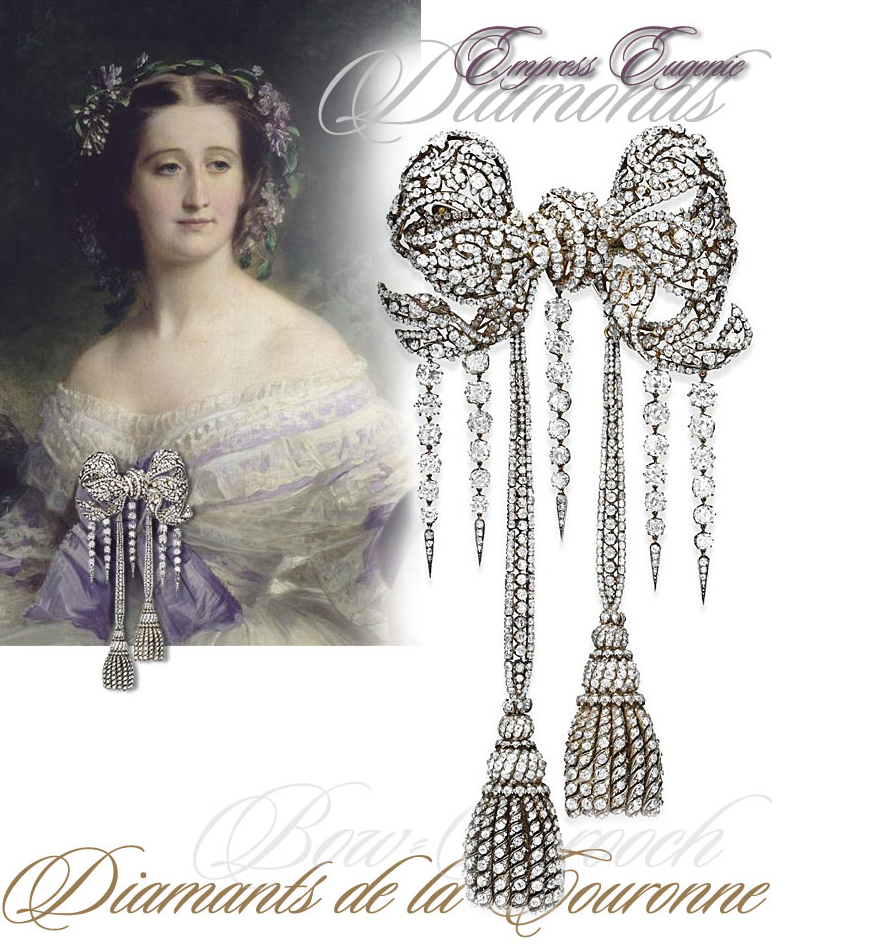
– D’un grand nœud de corsage de l’impératrice Eugénie (broche).

du grand nœud de corsage de l’impératrice Eugénie.and the grand corsage bow of Empress Eugénie.

Eight jewels were stolen, according to the latest report

According to the most recent statement issued by the Ministry of Culture, eight jewels were stolen from the Louvre. They include: the tiara from the parure of Queen Marie-Amélie and Queen Hortense; the necklace from the sapphire parure of Queen Marie-Amélie and Queen Hortense; one earring from the sapphire parure of Queen Marie-Amélie and Queen Hortense; the emerald necklace from the parure of Empress Marie-Louise; the pair of emerald earrings from the parure of Marie-Louise; the so-called reliquary brooch; the tiara of Empress Eugénie; and the grand corsage bow of Empress Eugénie.

The jewels stolen from the Louvre lie at the very heart of France’s history — treasures of royal splendor where taste, ambition, and craftsmanship existed in perfect harmony. They did not merely adorn; they helped define both the French identity and the very ideals of jewelry itself. Each piece was thoroughly documented, making it almost inconceivable that they will ever be seen whole again. What has been lost is not only their beauty, but also a shared cultural inheritance — a reflection of how a nation once expressed its genius through grace and proportion. These jewels are national treasures, a testament to France’s history, its passion for gemstones, and the art of jewelry — creations whose worth far transcends their material value, and whose integrity makes them impossible to sell intact.

Princess Hortense de L’Espine de Croÿ| Impressive important Diamond Corsage Ornament made by Lalique for Vever |Stomacher Princesse Louis de Croÿ

Princess Hortense de L'Espine de Croÿ| Impressive important Diamond Corsage Ornament made by Lalique for Vever |Stomacher Princesse Louis de Croÿ German Royal Jewels The corsage ornament, signed Vever, is composed as an articulated branch, set throughout with cushion-shaped, circular- and rose-cut diamonds, the delicate flowerheads mounted en tremblant to catch the light with every movement. Executed in silver, yellow and pink gold, the jewel could be divided into three smaller brooches and accompanied by two detachable diamond caps — a hallmark of Parisian versatility and engineering in haute joaillerie of the period.
Princess Hortense de L’Espine de Croÿ| Impressive important Diamond Corsage Ornament made by Lalique for Vever |Stomacher Princesse Louis de Croÿ German Royal Jewels The corsage ornament, signed Vever, is composed as an articulated branch, set throughout with cushion-shaped, circular- and rose-cut diamonds, the delicate flowerheads mounted en tremblant to catch the light with every movement. A spray of cherry blossom set with diamonds….

Princess Hortense de L’Espine de Croÿ| Impressive important Diamond Corsage Ornament made by Lalique for Vever |Stomacher Princesse Louis de Croÿ German Royal Jewels

Countess of Airlie| Diamond Pearl Tiara| British Noble Aristocratic Tiaras Royal Jewel History| 1886 Wedding Gifts

The Pearl and Diamond Tiara of The Late Dowager Countess of Airlie

Airlie tiara - ivy and daisy diamond pearl tiara - Countess of Airlies tiara, Countess of Airlie| Diamond Pearl Tiara| British Noble Aristocratic Tiaras Royal Jewel History| 1886 Wedding Gifts  The Pearl and Diamond Tiara of The Late Dowager Countess of Airlie
Airlie tiara – ivy and daisy diamond pearl tiara – Countess of Airlies tiara | Diamond Pearl Tiara| British Noble Aristocratic Tiaras Royal Jewel History| 1886 Wedding Gifts

Countess of Airlie| Diamond Pearl Tiara| British Noble Aristocratic Tiaras Royal Jewel History| 1886 Wedding Gifts

 virginia-countess-airlie-pearl-diamond-tiara-diadem-ogilvy Virginia Fortune Ryan Ogilvy, Dowager Countess of Airlie -  Airlie Tiara - multi-strand pearl choker, with a mid 19th century diamond clasp  brooch jewels british royal jewels Virginia Fortune Ryan Ogilvy, Dowager Countess of Airlie lady in waiting of the Queen
Virginia Fortune Ryan Ogilvy, Dowager Countess of Airlie – Airlie Tiara | multi-strand pearl choker, with a mid 19th century diamond clasp brooch jewels british royal jewels lady in waiting of the Queen

AMERICAN BRIDE FOR LORD OGILVY • 1952 The crowd seen at a society wedding since the War gathered in Parliament Square Iondon, on Thursday, far the wedding of Lord Ogilvy, eldest son of the Earl and Countess of his American bride. The wedding was the Queen Mother, Princess Margaret and the Duke and Duchess of Gloucester. The 86-year-old Dowager Countess Airlie, who has been Lady of the Bedchamber to Queen Mary for 50 years, travelled south from Angus for the wedding. The thousands of guests included a number of Americans and also tenants and employees from Cortachy.

The 19-year-old bride, Miss Virginia Ryan, daughter of Mr J. B. Ryan. Newport. Rhode Island, the American industrialist, and granddaughter Mr Otto Kahn, the millionaire banker, wore gown of ivory satin and her matching Juliet cap had bunches of real orange blossom Her kilted page was the groom’s nephew, young Mark Tennent and among the eight bridesmaids in full-skirted white tulle frocks with Ogilvy tartan sashes, headdresses and bouquets of lilies of the valley and gentians, was Miss Davinia Lloyd, niece of the groom. The Hon. Angus Ogilvy was best man to his brother. The Royal guests were received by the Earl of Airlie Pipers of the 2nd Battalion Scots Guards which the bridegroom has served, played “The Bonnie Hooso Airlie.” The honeymoon being spent in Paris and America. A bonfire was lit at Corlachy as part of the wedding celebrations.

Record crowd greets Lord Ogilvy’s bride Looking very young and petite in her voluminous gown of white satin, Miss Virginia Ryan, the 19-year-old American bride of Lord Ogilvy, met a vociferous welcome from the crowds lining Parliament Square when she arrived at St Margaret’s, Westminster, yesterday in soft October sunshine. Some of the sightseers had been waiting for seven hours. The police estimated it was the largest gathering seen at a society wedding since pre-war days. The bride paused for a moment, and then with a smile made her way into the church on the arm of her father, Mr John Barry Ryan, Newport, Rhode Island, U.S.A. KISS FOR PAGE Just inside the church door waited her page and train bearer, Master Mark Tennant, in a kilt of the Ogilvy tartan. She stooped to give him a quick kiss before taking her position in the bridal retinue. A few minutes previously the Queen Mother, in black velvet, accompanied by Princess Margaret, had arrived. They and the Duke and Duchess of Gloucester and the Earl and Countess of Athlone were received by the bridegroom’s parents, the Earl and Countess of Airlie. Princess Margaret wore a tightly-waisted and full-skirted coat of ruby velvet. Her little cap of deep blue velvet matched her dress. The Duchess Gloucester had chosen ashpink with a mink tie.

BRIDE’S DRESS The bride’s four-yard train swept out from a wide skirt. A tiny bud bodice had an off the-shoulder fichu neckline, and tucked into its folds was a diamond brooch in the form of the Scots Guards badge, a gift from the bridegroom. I Round her neck was a strand of pearls, once her grandmother’s, and lent for the occasion.
The bride’s long white tulle and Brussels lace veil fell from a white satin Juliet cap, with clusters of orange blossoms the sides Her bouquet was of lilies-of-the-valley and “ snowflakes “ made from petals of white carnations mounted on slender white stems. It was an all-white wedding, relieved with touches of blue and the Ogilvy tartan. BUSTLE BOWS Two grown-up bridesmaids, Miss Elizabeth Crew-Pole and Miss Romana von Hofmannstahl, wore dresses of tulle. Their billowing skirts fell from white moire bodices finished with swathed hip draperies and enormous bustle bows at the back. They carried bouquets of lilies-of-thevalley and deep blue gentian. Four little girls, Misses Davina Lloyd, the 1 groom’s niece; Caroline Little from America, Arabella von Hofmannstahl, and Juliet Harvey, were in ground-length full-skirted dresses of tulle sashed with tartan. All had wreath headdresses of • tightlyl packed white blossoms, and wore the groom’s gift, gold link bracelets. Each link being a letter to spell the wearer’s name. GROOM’S GRANDMOTHER The Dowager Countess of Airlie, grandmother of the groom, and one of Queen Mary’s closest friends, made the journey to London to attend the wedding. She had been Lady of the Bed-Chamber to Queen Mary for 50 years. Among those who attended were members of the staff and tenant farmers from the bridegroom’s home in Angus, and the two Misses Bruce, Kirriemuir, who sit on welfare committees with his mother. A party from Dundee included Lord Provost Black and the Provost (Mrs R. H. Botsford) and Sir Garnet Wilson. Lord Provost Sir John Ure Primrose, Perth, also was there. NINE USHERS In the church masses of white chrysanthemums and the first arum lilies of the season stood at the ends of the pews. The ceremony was by Canon Smythe, St Margaret’s, and Rev. R. Whiteford, padre the 2nd Scots Guards, in which the bridegroom served. His brother, the Hon. Angus Ogilvy, was best man. Another brother, the Hon. James Ogilvy, was an usher, with the bride’s brother, Mr John Barry Rvan. Lloyd, Mr John Marriott, Mr Donald Ryari, Major the Hon. Bruce Ogilvy, Mr lan Tennant, Commander the Hon. Roger Coke, and Major Peter Balfour. PIPED OUT The ceremony over, the bride and groom, both rather pale, clutched each other’s hands and made their way slowly to the pavement to the crash of the wedding bells and the strains of Scots Guards pipers, who played The Bonnie Hoose o‘ Airlie.“ Then came the Royal guests escorted by the Earl and Countess of Airlie, followed by the bride’s parents. The. bride’s mother held the wedding reception at the Hill Street house of her sister, Lady Macriott. The honeymoon is being spent in Paris. For her going-awav costume the bride chose an ensemble of roval blue.

World Harmony Diamond Flower Brooch | Diamond Edelweiss| Ship launch Duchess of Kent

flower-brooch-world harmony-tanker-ship-launch-edelweiss-diamond-brooch-duchess-of-kent World  Harmony Ship Launch - Diamond Flower Brooch in the shape of a Edelweiss - 1954 - Marina Duchess of Kent - Diamond Brooch - british royal jewels - u.k-duchess of kent - duchess of kent flower brooch - Niarchos Tanker
World Harmony Ship Launch – Diamond Flower Brooch in the shape of a Edelweiss – 1954 – Marina Duchess of Kent

The Duchess of Kent’s Diamond Edelweiss Brooch | Ship launch of World Harmony Tanker | British Royal Jewels

Bracelet of Diamonds | RoyaL Wedding present to Princess Louise Duchess of Argyll from the Town of Windsor

Katherine Duchess of Kent wore it as choker center and another flower from the on the wrist

The royal wedding of Princess Marie Caroline of Liechtenstein

The royal wedding of Princess Marie Caroline and Leopoldo Maduro Vollmer.

Royal Wedding Announcement

Daughter of Hereditary Prince Alois and Hereditary Princess Sophie, Princess Marie Caroline is the first of her siblings to marry.
Her Serene Highness will wed Leopoldo Maduro Vollmer on Saturday, 30 August 2025 at 11:00 in Vaduz Cathedral.
The Mass will be celebrated by Bishop Benno Elbs.
Family, friends, and representatives of the Principality will attend, with a reception at Vaduz Castle.
The ceremony and reception are private. Well-wishers are welcome outside the cathedral to witness the couple’s arrival and departure.

The royal wedding of Princess Marie Caroline of Liechtenstein Wedding of Princess Marie Caroline of Liechtenstein
The royal wedding of Princess Marie Caroline of Liechtenstein

Wedding tiara – Princess Marie Caroline of Liechtenstein- wearing the family’s historic diamond fringe tiara. A family heirloom of Princess Maria Theresa of Braganza Infanta of Portugal – Archduchess of Austria | Liechtenstein Fringe Tiara Diadem

Wedding tiara Princess Marie Caroline of Liechtenstein-the only daughter of Hereditary Prince Alois and Hereditary Princess Sophie-marries Leopoldo Maduro Vollmer, wearing the family’s historic diamond fringe tiara. A family heirloom of Princess Maria Theresa of Braganza Infanta of Portugal - Archduchess of Austria.  Liechtenstein Fringe Tiara Diadem wedding tiara
Wedding tiara – Princess Marie Caroline of Liechtenstein-the only daughter of Hereditary Prince Alois and Hereditary Princess Sophie-marries Leopoldo Maduro Vollmer, wearing the family’s historic diamond fringe tiara. A family heirloom of Princess Maria Theresa of Braganza Infanta of Portugal – Archduchess of Austria. Liechtenstein Fringe Tiara Diadem
Fürstenhaus Liechtenstein vollmer-wedding by iconolcash photography Fürstenhaus Liechtenstein - Wedding of Princess Marie Caroline of Liechtenstein -Prinzessin   von und zu Liechtenstein Prinzessin Marie Caroline von und zu Liechtenstein mit Leopoldo Maduro Vollmer Das Kleid der studierten Modedesignerin stammt von einem Italienischen Designer. Die Prinzessin trug ein weißes Kleid mit Off-Shoulder-Schnitt, zudem war es mit zarten Stickereien und Trompetenärmeln versehen. Bei der Zeremonie
Kirchliche Trauung Prinzessin Marie Caroline am 30. August 2025 in Vaduz Bilder: Fürstenhaus Liechtenstein/Iconoclash Photography – Teresa Mareni & Daniel Bachler Fürstenhochzeit

The Family of the Princess at the church: her Father and Mother and three brothers Joseph Wenzel, Georg and Nikolaus; her grandfathers Prince Hans-Adam II and Duke Max Emanuel in Bavaria ; her aunt Duchess Marie-Caroline in Bavaria Duchess of Württemberg and Elisabeth Duchess in Bavaria and husband Mr. Terberger; her aunt Anna in Bayern and spouse Freiherr Andreas von Maltzan; her uncle Prince Maximilian and Princess Angela, with their son, Prince Alfons; her aunt and uncle, Princess Tatjana von Liechtenstein and Philipp von Lattorff; Prince Hans-Adam’s brothers Princes Philipp and Nikolaus with their wives Isabelle and Margaretha; Philipp and Isabelle’s sons, Princes Alexander and Rudolf, with their wives, Princesses Astrid and Tilsim; Nikolaus and Margaretha’s three children, Princess Maria-Anunciata, Princess Marie-Astrid and Prince Josef-Emanuel with their spouses Emanuele Musini, Ralph Worthington V and Princess Maria Claudia; Duke Franz of Bavaria and his partner Thomas Greinwald; Prince Sebastian of Luxembourg; the Duke and Duchess of Noto (Prince Jaime and Princess Charlotte of the Two Sicilies); Prince Henri and Princess Gabriella of Bourbon-Parma; and Count Franz-Clemens and Countess Stephanie of Waldburg-Zeil-Hohenems with their daughter Leonie and son-in-law Count Caspar von Matuschka; Countess Arco-Zinneberg Archduchess of Austria;Princess Luisa Maria of Belgium; Princess Nora of Liechtenstein , Countess of Rietberg , Marchioness Dowager of Mariño the sister of Hans Adam II of Liechtenstein and her daughter María Teresa Sartorius y de Liechtenstein;Prince Rudolf Ferdinand of Liechtenstein , Count of Rietberg and his wife Princess İlhan of Liechtenstein , Countess of Rietberg born İlhan Tılsım Tanberk the son of Prince Phillip and Princess Isabelle of Liechtenstein the Count and Countess of Ritberg;Duke Phillipp of Wuerttemberg and his sister Mathilde Duchess of Wuerttemberg – Princess of Waldburg-Zeil-Trauchburg and his sons and daughters;Prince Paul Clemens of Sachsen-Gessaphe, Georg and Stephanie von Khevenhüller-Metsch, Maximilian and Sophie d’Andigne.the Prince and Princess of Quadt, Count Maximilian and Countess Marie von Schaffgotsch; the Duchess of Medinacelli;Count Nikolaus of Königsegg-Aulendorf, Hereditary Count Philipp of Königsegg-Aulendorf; Princess Christina of Hohenlohe-Ohringen with her husband, Jan-Gisbert Schultze;

The witnesses of HRH Princess Marie Caroline were Countess Giorgiana von und zu Arco-Zinneberg, Fiona Feichtinger Bär, Countess Livia von Wilczek, and Duchess Pauline of Württemberg. Leopoldo Maduro Vollmer chose the following four witnesses: José Manuel Artiles, Count Constantin du Boisbaudry, Prince Wenceslas de Nassau, and Tarek Plaza.

Princess Elisabeth Amalie of Liechtenstein’s Wedding Jewels | Diamond Riviere

Hochzeit Erzherzogin Elisabeth Amalie von Österreich | Prinzessin von und zu Liechtenstein | Köchert Juwelen Kaisergeschenke  Rivière / Riviere, Köchert, Habsburg jewels, Belle Époque bridal jewels, Vienna 1903, imperial wedding gifts, ruby and diamond agraffe, modular diadem, Liechtenstein royal collection. #diamonds 
 #diamondriviere #diamondbrooch #brooch #necklace #jewellery #jewelry
Hochzeit Erzherzogin Elisabeth Amalie von Österreich | Prinzessin von und zu Liechtenstein | Köchert Juwelen Rivière / Riviere, Köchert,Both belong to the central narrative around the diamond riviere worn with the collar. The Köchert Imperial Wedding Gift List from Emperor Joseph

Hochzeit Erzherzogin Elisabeth Amalie von Österreich | Prinzessin von und zu Liechtenstein | Köchert Juwelen Kaisergeschenke

n imperial wedding gift from Emperor Franz Joseph and crafted by court jeweller A.E. Köchert. She paired it with ruby-and-diamond pieces (including a classic agraffe) and a modular Liechtenstein diadem, creating a bridal look that balanced tradition with ingenious versatility.
I’ve reconstructed the gift list and jewels from contemporary source ruby
The collar is recorded as multi-row; the agraffe is ruby and diamond.

Elisabeth Amalie of Austria’s Diamond Riviere |Bridal Jewels – Royal Wedding Liechtenstein 1903

Countess Wilczek Anna Livia daughter of Archduchess Marie-Christine of Habsburg|Guggenberg von Riedhofen| Diamond Köchert Tiara

Countess Wilczek Anna Livia daughter of Archduchess Marie-Christine of Habsburg|Guggenberg von Riedhofen| Diamond Köchert Tiara Livia Guggenberg -"Countess Wilczek Anna Livia daughter of Archduchess Marie-Christine of Habsburg|Guggenberg von Riedhofen| Diamond Köchert Tiara anna livia countess wilczek,archduchessmaria josepha, emperor karl,Marie-Christine of habsburg,wedding tiara,köchert diadem,royal wedding tiaras,hochzeit,imperial,erzherzogin,archduchess,jewellery,royal jewels,Habsburger,schmuck,tiara,tiaras,diadem,diamant,koechert,diamonds,kaiserlich,karl,mutter,habsburg,schmuckankauf,archduchesse,monarchie,autriche,kaiserhaus,imperial,austria,royalty,royals,köchert,archduchess of austria,archduchess of habsburg,imperial family jewels,diamond tiara,köchert historic diademe,archduchess Ludmilla of Habsburg,erzherzoghaus,austria-ungay nobbles
Countess Wilczek Anna Livia daughter of Archduchess Marie-Christine of Habsburg|Guggenberg von Riedhofen| Diamond Köchert Tiara

Countess Wilczek Anna Livia daughter of Archduchess Marie-Christine of Habsburg|Guggenberg von Riedhofen| Diamond Köchert Tiara

Queen Olga of Greece Diamond Riviere and Pearl Stomacher

Diamond Festoon Stomacher with Pearls of Queen Olga of Greece| Jewels |Queen Olga of Greece’s Royal Diamond Star

Queen Olga of Greece |Royal Greek Jewels| Diamond Riviere Diamond Necklace|Diamond Kokoshnik Royal Jewels Queen Olga's diamond kokoshnik, Queen Olgas Pearlneklace
Queen Olga of Greece |Royal Greek Jewels| Diamond Riviere Diamond Necklace|Diamond Kokoshnik Royal Jewels

Queen Olga of Greece |Royal Greek Jewels| Diamond Riviere Diamond Necklace|Diamond Kokoshnik Royal Jewels

Duchess of York’s Pearth Thistle Diamond Brooch with Tay Pearls|Queen Elizabeth the Queen Mother of England Great Britain| Thistle Brooch Royal Jewel History

Duchess of York's Pearth Thistle Diamond Brooch with Tay Pearls|Queen Elizabeth the Queen Mother of England Great Britain| Thistle Brooch Royal Jewel History
Duchess of York’s Pearth Thistle Diamond Brooch with Tay Pearls|Queen Elizabeth the Queen Mother of England Great Britain| Thistle Brooch Royal Jewel History

Duchess of York Pearth Thistle Diamond Brooch with Tay Pearls|Queen Elizabeth the Queen Mother of England Great Britain| Thistle Brooch Royal Jewel History

Ships launch brooches presented to the Duchess of York diamond brooch set in the form of the Rose of York and launch of the H . M . S . York an old diamond brooch

Schmuck und Juwelen der Deutsche Fürstenhäuser | Royal Jewels – Historical Jewerly and Treasure of Royals and Aristocracy | bijoux historiques| исторические драгоценности