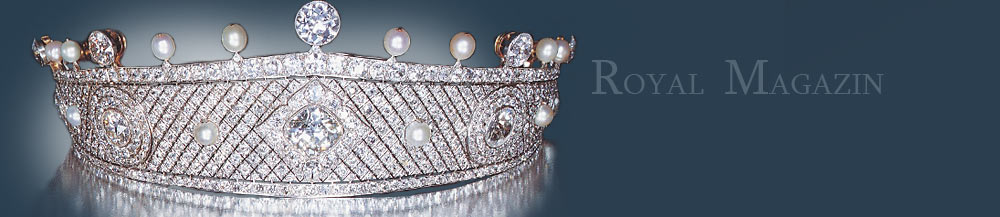
Archiv der Kategorie: Austria | Österreich | Habsburg Imperial and Royal
Das Haus Habsburg, auch als Haus Hapsburg bekannt, war eine der bedeutendsten königlichen Dynastien in Europa und spielte eine entscheidende Rolle in der Geschichte Österreichs und Ungarns. Die Habsburger stiegen im Laufe der Jahrhunderte zu einer der mächtigsten königlichen Familien auf und regierten über das Austro-Hungarian Empire, das auch als Donaumonarchie bekannt war.
austria archduke wedding, imperial weddings;archduchess wedding;
Die Geschichte des Hauses Habsburg reicht bis ins Mittelalter zurück, und es war vor allem die Hochzeit von Maximilian I. mit Maria von Burgund im Jahr 1477, die den Grundstein für die Ausdehnung des Habsburger Reiches legte. Unter Kaiser Karl V. erreichte das Habsburgerreich seine größte territoriale Ausdehnung, und es erstreckte sich über weite Teile Europas.
Die Habsburger waren nicht nur Monarchen, sondern auch wichtige Förderer der Künste und der Wissenschaften. Wien, die Hauptstadt des Habsburgerreiches, wurde zu einem Zentrum der Kultur und des intellektuellen Lebens. Der Wiener Hof, auch bekannt als der „Imperiale Hof“, war berühmt für seine Pracht und seinen Glanz.
Zu den prominenten Mitgliedern des Hauses Habsburg gehörten Erzherzöge und Erzherzoginnen, Kaiser und Kaiserinnen von Österreich und Ungarn. Die bekanntesten darunter sind Kaiserin Maria Theresia und Kaiser Franz Joseph I. sowie seine Frau Kaiserin Elisabeth, auch als „Sisi“ bekannt.
Die Habsburger trugen auch eine beeindruckende Sammlung von königlichem Schmuck, zusammen, in der Schatzkammer ist, noch ein kleiner Teil davon zu sehen . Diese wertvollen Schätze waren Zeugen der Pracht und des Reichtums der Habsburgermonarchie.
Die Geschichte der Habsburger endete mit dem Zusammenbruch des Austro-Hungarian Empire nach dem Ersten Weltkrieg. Die Monarchie wurde abgeschafft, und die Habsburger gingen ins Exil. Dennoch bleibt ihr Erbe in Österreich und Ungarn bis heute lebendig, und ihre Geschichte ist eng mit der Geschichte dieser Länder verknüpft.
Es gab auch eine bemerkenswerte königliche Hochzeit im Hause Habsburg, als Erzherzog Karl von Österreich und Prinzessin Zita von Bourbon-Parma heirateten. Dieses Ereignis war von großer Bedeutung für die Dynastie und markierte einen wichtigen Moment in der Geschichte der Habsburger.
Insgesamt ist das Haus Habsburg ein faszinierendes Kapitel in der Geschichte von Österreich und Ungarn, das mit Kaiserinnen, Kaisern, königlichem Schmuck und einer reichen monarchischen Tradition verbunden ist.Austria Österreich Habsburg Hapsburg Oesterreich Erzherzog Erzherzogin Royal Jewellery & Aristocratic Jewels Imperial Court Royalty Donaumonarchie,Archduke of Austria, Archduchess of Austria, Kaiser, Kaiserin von Österreich, Ungarn, Donaumonarchie,Vienna court,Wien, Monarchy, Imperialer Hof, Haus Habsburg, austro-hungarian empire, austrian hungarian empire,
emperorofaustria empressofaustria zitaofbourbonparma habsburg bourbonparma emperor empress austriahungary kaiserinzita kaiserkarl royal royals monarchy houseofhabsburg houseofbourbonparma austria royalfamily royalwedding royalbride monarchia, Viennese jewellery ateliers Köchert, Emil Biedermann and Moritz Hübner; imperoaustroungarico österreich royalwedding royals royalty realeza archduke archduchess of Austria, Erzherzogin von Österreich,Mariage d’Autriche; Mariage d‘ archiduchesse d’Autriche; royal wedding archduke, imperial wedding archduke, imperial wedding austria Archduchess. sotheby’s jewels imperial royal court Vienna 1900: An Imperial and Royal Collection magnificent ceremonial court jewels worn by the women of Europe’s elite and royal families “Presented together, their superior craftsmanship and exquisite design brilliantly showcase the style and grandeur of the Habsburg court and permit us a rich and fascinating glimpse into the private lives of these European ruling houses when the court of Vienna was at its most powerful and opulent.”
Le Trésor impérial Vienne, Bijoux de la Vienne impériale |Les joyaux royaux viennois
bijoux de la autrich impériale| L’imposant diadème | Joyaux de l’empire d’Autriche| diadème de archiduchesse d’autriche
Kinsky Jewels | Princess Kinsky – The Kinsky Honeysuckle Tiara dates back to the 19th-century and is made of honeysuckle motifs in diamond, silver and gold. The honeysuckle designs are surrounded by a halo of diamonds, and each element is separated by a vertical torch element. The original version is filled with scroll work, stutted with diamonds and single diamonds on a knife back setting, between the honeysuckle pedals.
Fürstin Kinsky – Fürstin Liechtenstein – Jewels Austria Hungary Princely Family
Kinsky Honeysuckle Tiara |The original version above in the sketch from the Archive of Köchert Vienna.
Fürstin Marie Aglaë von und zu Liechtenstein | Kinsky Honeysuckle Tiara – from the Princely Family of Liechtenstein
Princess Marie Astrid of Liechtenstein and her husband Ralph Wonthington married today at Duomo di Orbetello, Tuscany. The bride wore a gown with French sleeves and a V-neckline both in the front and in the back. But if something stood out about him, it was the embroidery that formed crisscross lines and geometric figures throughout the entire design. Great prominence also for the queue, which had to be carried by two of the guests to make it easier for Astrid to walk without much difficulty. And if the tail was long, the veil has not been short, several meters too and lit from the tiara, that element that can not be missing in any royal wedding.
Princess Astrid has chosen the Kinsky Honeysuckle Tiara, also one of the most important of the Liechtenstein royal family. The piece, made of diamonds set in gold and silver, belonged to Princess Marie Aglaë of Liechtenstein. More …
Princess Elisabeth Stirbey Bibesco Baroness Gerliczy |Parure with large Ruby and Diamond Tiara Ruby Diamond Ruby and Diamond Diademe| Royal WeddingHungary Royal Imperial Jewel History Magnate Garland style tiara
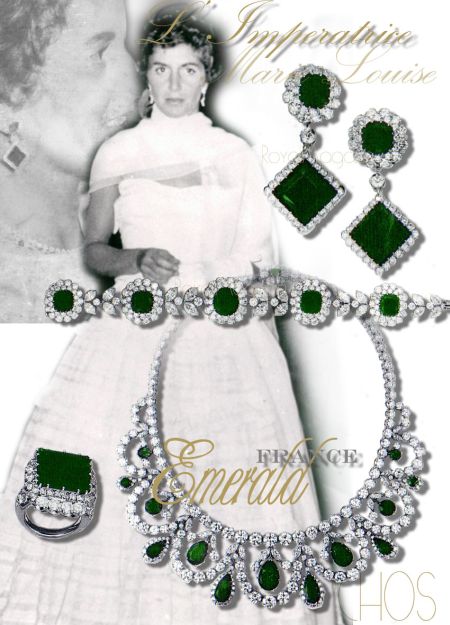
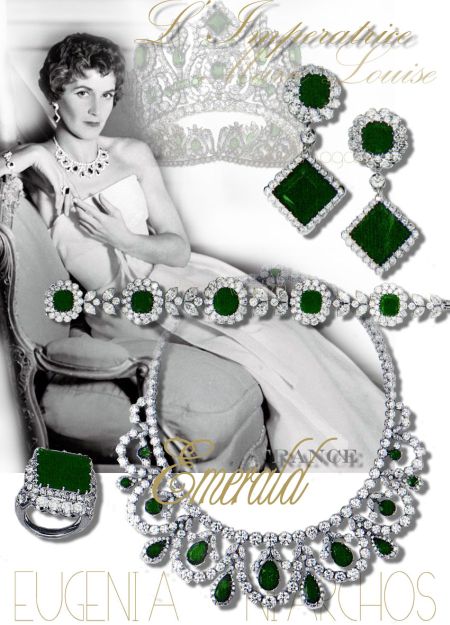
Van Cleef & Arpels worked the emeralds into a diamond necklace in platinum for Eugenia Niarchos, with largest pear shaped emeralds as the focal point.
The center stone of the tiara, weighing 12.04 cts, was reworked into a ring in platinum, see above.
For Eugenie Niarchos, two of the large quatrefoil emeralds were made into earrings – with a top of oval emeralds to hang in and out.
Furthermore, the large bracelet with five oval emeralds from the tiara, received a diamond frame in platinum and can be seen in the picture above and follow the link for more imperial history
Marie-Louise Imperiatrice of France, historic emeralds from the imperial Emerald tiara. Later owned by Mrs Stavros Niarchos, Eugenia Livarnos, Emerald Ring Emerald Necklace and Emerald Bracelet, Emerald Earrings, and Emerald earrings pendants, made in platinum from Van Cleef and Arpels.
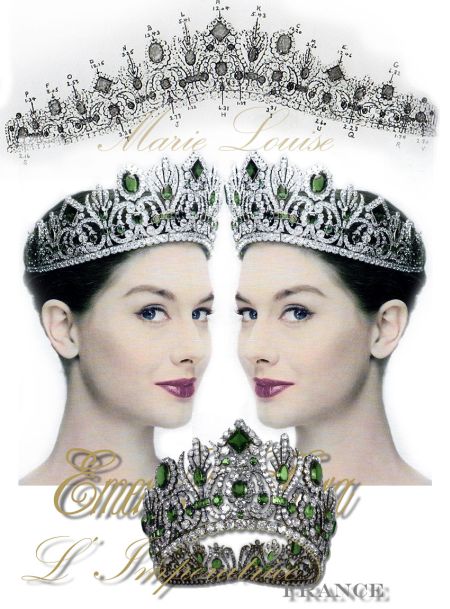
Marie Louise went to Vienna after the fall of Napoleon I and took with her her personal jewelery, including the emarald parure. The parure stayed in the Habsburg family until 1953. Then a Scandinavian decendant of the Habsburg family sold the diadem and kept the other pieces of the parure. They sold it to the famous Jewelhouse Van Cleef and Arpels.
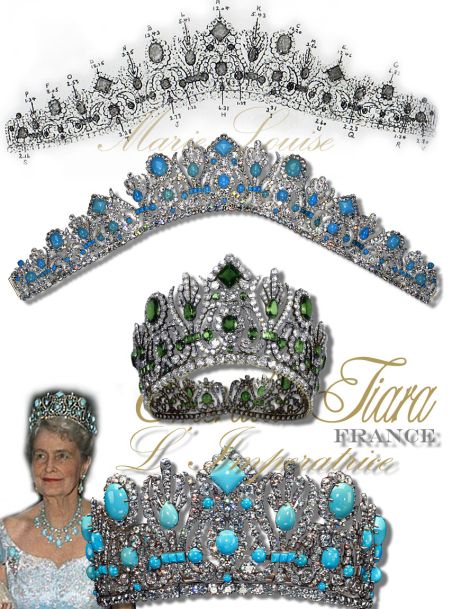
Van Cleef and Arpels VCA replaced the emeralds with turquoises and sold it to Mrs. Merriweather Post |Majorie Merriweather Post, is seen above,
They replaced the emeralds with turquoises and sold it to Mrs. Merriweather Post. Majorie Merriweather Post, is seen above, wearing the famous jewel. She donated the diadem to the Smithsonian Institution in 1966. See above in the pictures, update about the history
In 1946 the Parure crossed destroyed Europe, hidden in a harness. In fact, Archduke Karl Albrecht left the castle in Zywiec in southern Poland with his wife Archduchess Alice and their daughters on a rickety horse cart. Imprisoned by the Nazis and then persecuted by the Polish Communists, they were forced into exile. Crossing Poland, Germany and parts of Denmark, they finally managed to reach Sweden, the country of birth of Princess Alice. The hurriedly hidden jewels were her only valuables. The diamond and emerald parure – tiara, necklace, earrings and brooch found its way to Van Cleef & Arpels in New York at the beginning of 1953. The emeralds from Columbia, which are of considerable size, also have a well-known origin; Napoleon I gave them to his second wife, Empress Marie Luise, an Austrian Archduchess. The design above of the Napoleonic Tiara shows the original version and the emeralds in detail and their size, from left to right the top large emeralds have a weight of: 8.05ct, 12.15ct, 13.43ct, 12.04ct, 6.31ct, 13.20ct, 12.46ct, 6.82ct, the oval emeralds in the center 6.31ct The middle row and lower emeralds 2.16 ct, 1.34 ct, 2.59 ct, 3.25 ct, 2.77 ct, 5.41 ct, 1.32 ct; 1.39 ct, 5.43 ct; 3.50 ct, 3.31 ct, 2.60 ct, 2.23 ct, 1.34 ct, 2.80 ct. After her death in 1847, Marie-Louise bequeathed the Parure with the diadem, the emerald necklace, the emerald earrings and the emerald brooch to her Habsburg relatives.
Click on the link above, for more about the history – an update of the story….
Wild Roses Diamond Tiara Diadem Marylou Whitney on auction in December 2020
Wild Roses Diamond Tiara Diadem| Marylou Whitney Vanderbilt, imperial Rose wreath and leaves in diamond Tiara
The tiara of garland design, featuring floral and foliate motifs pavé-set with old mine, old European, pear, single and rose-cut diamonds, accented with cushion-cut and round rubies. The Silver-Topped Gold, Ruby and Diamond Tiara is offered for auction in 2020 by Sotheby’s
Nassau Sapphire and Diamond Tiara| Grand Duchess Adelaide Marie of Luxembourg | Archduchess Gabrielle of Habsburg| Wedding Princess Bourbon Parma| Erzherzogin Gabriella von Österreich Hochzeits Tiara
Zita Empress of Austria | Gift to the Archduchess Diamond Necklace from the Emperor Christening Otto von Habsburg christening present Zita Kaiserin von Österreich| Imperiale Juwelen -Taufgeschenk des Kaisers Franz Joseph anlässlich der Taufe von Erzherzog Otto von Habsburg
Schmuck und Juwelen der Deutsche Fürstenhäuser | Royal Jewels – Historical Jewerly and Treasure of Royals and Aristocracy | bijoux historiques| исторические драгоценности