England Great Britain U.K. United Kingdom of England Scotland Wales and Ireland English history Royal Jewellery & Aristocratic Jewels antique jewellery historian, Mountbatten, the Queen, crown jewels, Princess, windsor, house of windsor,
royal royalty royalfamily royaljewels diamond tiara queenvictoria duchess of york history england uk britain monarchy britishmonarchy britishroyals britishroyalfamily
Mit dem „Accient in Lieu“ -System können Briten – Steuerpflichtige wichtige Kunstwerke und andere Kulturgüter in öffentliches Eigentum überführen, während sie die Erbschaftssteuer oder eine ihrer früheren Formen zahlen.Der Steuerpflichtige erhält den vollen offenen Marktwert des Gegenstands, der dann einem öffentlichen Museum, Archiv oder einer Bibliothek zugewiesen wird. Dies wurde nun von dem Arts Council England für die Fife Tiara akzeptiert!
The Acceptance in Lieu scheme enables taxpayers to transfer important works of art and other heritage objects into public ownership while paying Inheritance Tax or one of its earlier forms. The taxpayer is given the full open market value of the item which is then allocated to a public museum, archive or library.
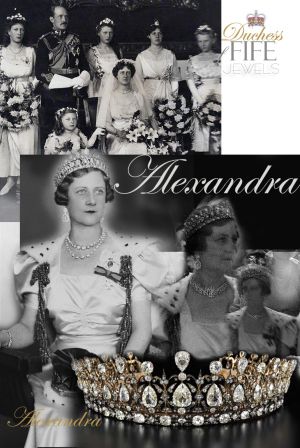
The tiara is then located in the Historic Royal Palaces (Kensington Palace) and the value was £1,400,000
source: Cultural Gifts Scheme & Acceptance in Lieu Annual Report 2016/17
To honor the platinum wedding anniversary – of today – of the royal bridal couple – I had add an oustandig marriage present – which the Queen was presented from King Farouk of Egypt – gold necklace with coins
A gold and earliest egyptian coins necklace with felsnar – was the interesting wedding gift given to Princess Elizabeth by King Farouk of Egypt – the egyptian necklace dating back to the third century and incorporation one of the earliest egyptian coins |Queen Elizabeth’s platinum wedding anniversary
Das Gemälde „Fürstin mit ihrem Sohn“ aus dem Besitz der britischen Königin befand sich bis zuletzt in einem schlechten Zustand. Unter anderem war die Holztafel zerbrochen . Es gelangte 1840 nach London. Der aus Gotha stammende Prinz Albert kaufte es im Auftrag seiner Frau – Queen Victoria. Sie schenkte es ihm dann zu Weihnachten.
Portrait of a Lady and her Son Cranach Cranach Saxony Electress and Son
Nun stellte sich heraus, dass das Portrait das verschollen geglaubte Orginal ist, Prof Heydenreich der TH Köln hat dies mit den neusten Mitteln feststellen können. Nach der Restaurierung war das Doppelportrait zuletzt im Düsseldorfer Kunstpalast zu sehen, die dortige Ausstellung vereinte rund 200 Cranach-Werke aus internationalen Sammlungen. Ab November ist der Cranach nun in Windsor Castle zu sehen….in neuem Glanz, wie zu erkennen!
Queen Victoria’s| 1840 Christmas Gift
The Royal Collection presented:
Newly attributed portrait by Lucas Cranach the Elder goes on display at Windsor Castle
The painting Portrait of a Lady and her son , c. 1510 – 40, recently discovered to be by the German master Lucas Cranach the Elder (1472 – 155 3) and his workshop goes on public display at Windsor Castle from Tuesday , 14 November
The painting was a Christmas gift from Queen Victoria to Prince Albert in 1840 and is part of the Royal Collection . The double portrait shows an unidentifie d consort of a Prince – electress of the Holy Roman Empire and her son, their hands clasped together. Although acquired by Queen Victoria as a work by the Renaissance artist, by the early 20th century the painting was considered to be the work of Franz Wolfgang Rohrich (1787 – 1834)
The composition has an intimacy which was thought to have been Rohrich’s invention and uncharacteristic of Cranach’s style. Rohrich was a prolific imitator of Cranach and p roduced over 40 versions of th is portrait . He sold them as original works by Cranach, and they can be found in collections all over Europe .
In collaboration with TH Köln ( the University of Applied Sciences, Cologne ) , Royal Collection Trust’s conservators and curator s examined the work ahead of its loan to the major exhibition Cranach der Alterer: Meister Marke Moderne at the Museum Kunstpalast , Düsseldorf in spring 2017.
Infrared reflect ography was used to look beneath the paint surface , revealing preliminary under drawing typical of Cranach’s work . Analysis o f the pigments, metal leaf and the application of paint provided further evidence that the portrait was a work of the 16th century.
Finally an x – ray of the painting revealed that a fibrous material had been used in the preparation of the panel. Analys is of similar fibres on other works by Cranach has identified them as tendons, and in one instance DNA analysis ha d shown them to be pigeon tendons. Sixteen th – century glue recipes often include d pigeon tendons to strengthen the mixture and counteract the n atural warping and splitting of the wood.
The evidence was reviewed by Professor Dr Gunnar Heydenreich of TH Köln , an expert on Lucas Cranach the Elder, who confirmed that the painting was an original work by the master from which it appears all later ve rsions derive. Court artist to the Saxon electors in Wittenberg, Lucas Cranach the Elder was one of the most important painter s of the German Reformation , a period marked by chang es in religion, philosophy, s cience and art .
Prince Albert was particularly interested in his work , and twelve paintings by Cranach and his workshop in the Royal Collection were acquired by the Prince Consort, several as gifts from Queen Victoria.
Emerald Jewellery the Duchess of Manchester | Jewels of Consuelo Montagu, Duchess of Manchester Emerald and Diamond Necklace |Duchess of Manchester | Consuelo Yznaga | Montagu | Vicountess Manderville Duchess of Manchester Diamond Jewels |Gilded Age Jewels
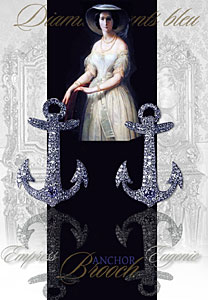
What’s about the diamond anchors of the Empress of France? Hatte die französiche Kaiserin Eugenie blaue Diamanten?
Hatte die französiche Kaiserin Eugenie blaue Diamanten?
Die Geschichte der spektakulären Diamant Broschen in Form von Stockankern oder Admiralitätsankern, waren Teil ihrer privaten Juwelen.
Als Symbol steht der Anker für die Treue, in der christlichen Symbolik für die Hoffnung.
Der untere Teil eines Ankers – die
Stockanker Ancre à jas : A : manille B : organeau C : jas D : verge E : bec F : patte G : diamant H : pelle
Verbindung zwischen den zwei Schaufeln nennt man in Frankreich „DIAMANT“ :
The fascinating history of Empress Eugenie’s jewellery…
Queen Ena in her wedding gown and later – in the painting, with all her royal attributes, not least her fleur de lys tiara which was given to her by the King in 1906 as a wedding present, made by the Madrid jeweller Ansorena.
On the left on top, Queen Sofia, wearing the Fleur de Lys Tiara .
Some days again, first time – Letizia Queen of Spain as the wife of King Felipe VI , with the regal diamond tiara.
The Crown Princess of the Hellenes got priceless jewels from her imperial family – interesting details about an Turquoise Parure with tiara, necklace, chocker, bracelets, stomacher, brooches…..
MerkeKing Humbert of Italy handed to the Emperor a splendid tiara of diamonds as a wedding present for Princess Sophie – described it as a magnificent specimen of Italian workmanship – probably the „C“ tiara which is pictured above and later worn by Princess Katherine of Greece and Denmark, Queen Sofía (born Princess Sophia of Greece and Denmark and later owned by Princess Irene of Greece, daughter of Queen Friederike of Greece.
The picture above is Queen Friederike’s large Diamond Scroll Tiara, it was also wearable as necklace. Queen Friederike sold it short before her death. King Humbert of Italy handed to the Emperor a splendid tiara of diamonds as a wedding present for Princess Sophie – described it as a magnificent specimen of Italian workmanship – probably the“C“ tiara which is pictured above and later worn by Princess Katherine of Greece and Denmark, Queen Sofía (born Princess Sophia of Greece and Denmark and later owned by Princess Irene of Greece, daughter of Queen Friederike of Greece.
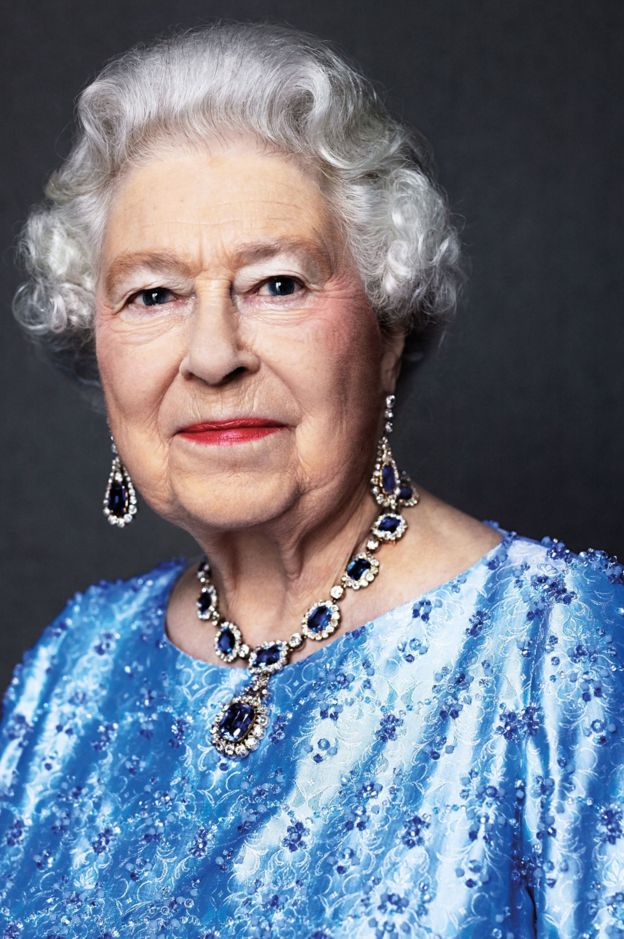
Today marks The Queen’s #SapphireJubilee – In London, royal gun salutes commemorated the occasion across the capital. A 41-gun salute was fired by the King’s Troop Royal Horse Artillery in Green Park at midday and a 62-gun salute by the Honourable Artillery Company was fired at the Tower of London at 13:00 GMT.
Sapphire Jubilee to Queen Elizabeth II, who became Queen on this day in 1952. In honour of her Sapphire Jubilee, we will have a look at all of the Queen’s sapphires.
Over the years, she has added to the gifts from her father with a tiara and a bracelet to complement the original jewellery:
Schmuck und Juwelen der Deutsche Fürstenhäuser | Royal Jewels – Historical Jewerly and Treasure of Royals and Aristocracy | bijoux historiques| исторические драгоценности