BELLE EPOQUE TURQUOISE AND DIAMOND BROOCHES
Cabochon turquoises, rose and old-cut diamonds, detachable brooch fttings, with interchangeable central collets and additional half-pearl fittings , 1910s, 11.0 cm and 5.2 cm, red Cartier case
Christie’s will be offered in Geneve Nov 2019 this jewelry $150,000-200,000
Duchess of Connaught, the third son of Queen Victoria married Princess Louise of Prussia. The Queen gave a magnificent diamond tiara, brilliants hanging down in sparkling peaks from a central wreath of brilliants of pure water in Indian style with emeralds.
On 2 March 1879 Queen Victoria recorded in her journal that she had told her son, Arthur, Duke of Connaught, she would give his wife to be, an Indian diadem. Then on 12 March 1879 Queen Victoria described showing her gifts to the bride and others, again referring to an Indian diadem.
The Duchess was pictured, with the royal tiara, only one time in 1893, see above, and give it later to her daughter Princess Patricia of Connaught.
In 1911, the Duke was appointed Governor General of Canada. Princess Patricia accompanied her parents to Canada, and she became popular there, on those occasion she wore her mothers wedding gift, the Indian diamond tiara as stomacher, without the center, of a movable ornament like a sarpech on top, with hanging emerald drop.
Sarpech, also known as an aigrette is a turban ornament that was worn by significant Hindu and Muslim princes.
Princess Patricia of Connaught | Indian Diadem of Diamonds and Emeralds | Stomacher Brooch Royal Jewel | Wedding Gift from Queen Victoria
She had her own jewels and tiaras for royal events, because , her mother’s precarious health meant the unmarried Patricia often step in for her mother, as vice-regal hostess, especially during the Duke of Connaught’s tenure as Canada’s governor general from 1911 to 1916.
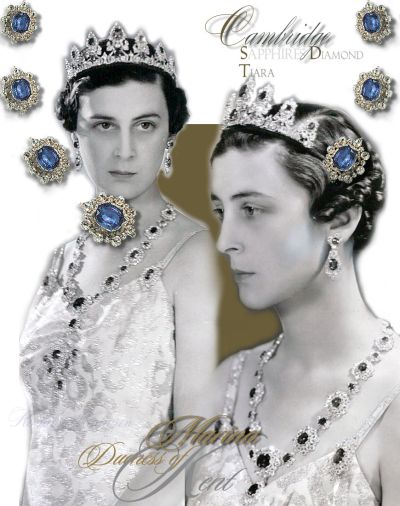
Marina Duchess of Kent | Historische Cambridge Saphir Parure
Die spannende Geschichte der Cambridge Saphire Garnitur.
Die historischen Saphire, bestehen aus einer Garnitur von:
Saphir Diamant Halsband, Saphir Diamant Broschen, Saphir Diamant Devante de Corsage, Saphir Diamant Armbänder, Saphir Diamant Diadem bzw Saphir Diamant Tiara sind im Besitz der Herzogin von Kent
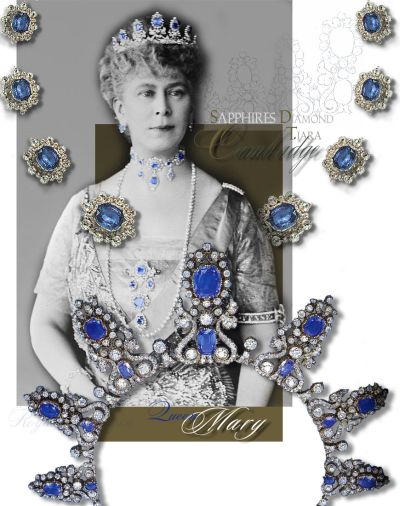
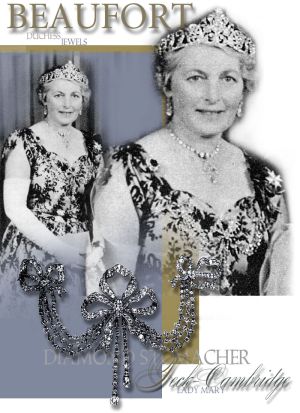
A parure of sapphire and diamond tiara, sapphire necklace, sapphire stomacher, sapphire earrings and two sapphire bracelets that the Duchess of Cambridge, Queen Mary’s grandmother, gave to her eldest daughter Augusta in 1843 when she married the Grand Duke of Mecklenburg-Strelitz.
Every famous jewel had a story, more about the Pearls |Duchess of Bedford Marchioness of Tavistock Historic Jewels
Duchess of Bedford | Famous Bedford Pearls, eight-row Pearl Necklace, Pear Pearls Earrings and Perl Stomacher| Important Jewels Nobel History Tavistock
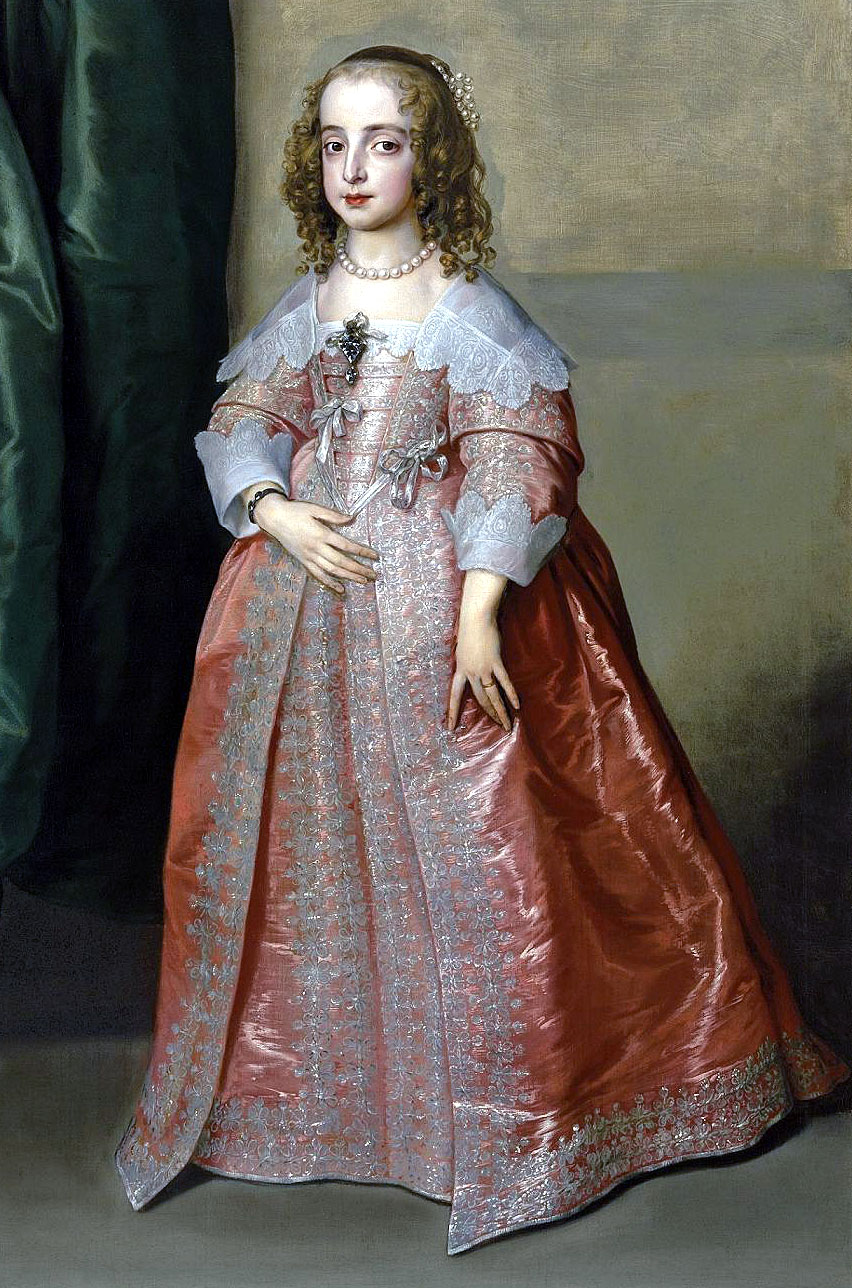
Mary Princess of Orange | England | Princess Mary’s Diamond Brooch
Princess Mary was born on 4 November 1631 at St. James’s Palace, the eldest daughter of King Charles I and Queen Henrietta Maria.
On 2 May 1641, at the age of nine, the kings daughter was married to William II, son of Frederick Henry, Prince of Orange and Amalia von Solms, at the Chapel Royal, Whitehall Palace.
Mary is shown wearing her wedding ring and the large diamond brooch given to her by her husband on 3 May 1641, the day after their marriage. A large pearl necklace and costly pearls in her hair, like a ribbon. A gem setted bracelet on the left.
Look at her spectacular coral gown, decorated with silver thread trim along its border, is thought to be similar to that worn for her wedding, rather than the cloth of silver-gold she wears. The apparent weight of the fabric, falling in broad, heavy folds, along with the bright highlights along the creases, suggest the fabric may have been cloth of silver. Shimmering highlights, applied in swift, cross-hatched strokes, were used as a form of shorthand by artists, mimicking the lustre of metallic threads as the textile caught the light. In accordance with the fashion of the period, her gown is open down the front, revealing a stiffened stomacher across the chest and a matching skirt beneath.
The ribbons, which would at one time have been functional, lacing the skirt and stomacher to the bodice, were applied purely as adornment. One ribbon, however has been pinned or stitched flat to disguise the seam between the bodice and skirt. The Princess’s brooch, the string of pearls and ribbons on her shimmering dress are rendered with remarkable precision and delicacy, characteristics that defined the artist’s finest late works.
She was baptized on the same day by William Laud, Bishop of London. Mary remained in England for a year after the marriage, eventually following her husband to Holland in 1642, accompanied by her mother and a train of four hundred courtiers. In March 1647, William II succeeded his father as Stadholder of the Dutch Republic and Mary became Princess of Orange. Her new position at court, however, caused conflict with her mother-in-law. The ill health which Frederick Henry had suffered between 1640 and his death in 1647 had meant that Amalia had effectively ruled as Regent and Stadtholder during this time. Mary’s appearance at court seems to have represented something of a challenge to her mother-in-law, with one of Mary’s ladies allegedly saying that ‘it was time the princess should run the country’, since Amalia had done so for so long. Source: christie’s
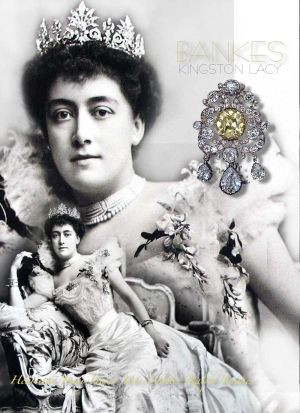
Henrietta Jenny Fraser |Mrs Walter Ralph Bankes after her marriage, with her palmetten ornament tiara, spray brooch, pearl necklaces and the large Benkes stomacher brooch.
The Bankes family have lived in Dorset since the 17th century and owned land in east Dorset and Purbeck, including Studland. During this time the Bankes were often considered one of the most powerful families in England, owning both the estates of Corfe Castle and Kingston Lacy. In 1981, when her son, John Ralph Bankes died, he left the 16,000 acre estate to the National Trust.
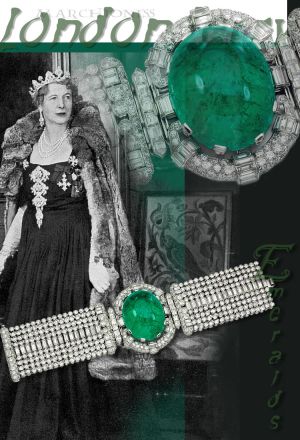
Emerald Diamond Bracelet | Marchioness of Londonderry historic Jewels
more about the hidden treasure of the Londonderry jewelry:
The emerald Corrigan bracelet, so named in the Mount Stewart archives was noted for its central emerald of immense size that was understood to have been acquired by Cartier directly from an Indian Maharajah….click on the link for more:
Famous Amethyst Imperial Amethysts -Necklace| Tsar Gems Romonov| Londonderry Jewels These Siberian amethysts were part of a present to Frances Anne, wife of the 3rd Marquess of Londonderry, in Vienna 1821 from Tsar Alexander I of Russia. He wanted to turn her head and gave her 14 of these highly rare and perfect Tsar-Amethysts.
Emerald Parure| Londonderry Jewels
A sumptuous parure of emeralds and diamonds, another gift to the beautiful Anne, Marchioness of Londonderry from Tsar Alexander I.
Coronation of King George VI and Queen Elizabeth in 1937 and the Coronation of Queen Elizabeth II in 1953 – as well as the royal weddings in 1936 and 1947 more about the story behind the royal jewelry>>
Schmuck und Juwelen der Deutsche Fürstenhäuser | Royal Jewels – Historical Jewerly and Treasure of Royals and Aristocracy | bijoux historiques| исторические драгоценности