Orleans Saphir Parure| Schmuck der Königin Marie Amelie von Frankreich |Maison Royal -Les saphirs de la famille de France

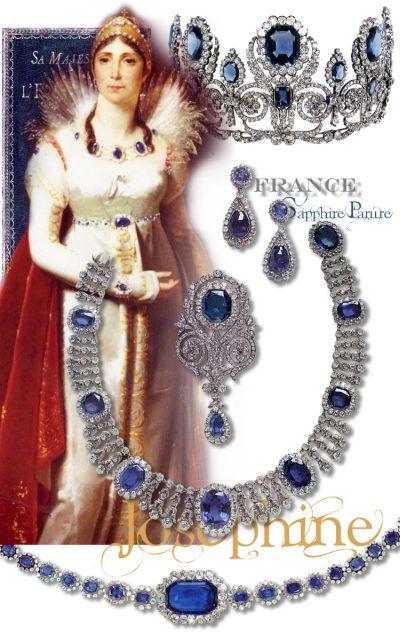
The ORLÉANS SAPPHIRE PARURE

Orleans Saphir Diamant Parure- Schmuck der Königin Marie Amelie von Frankreich|

Königlicher Schmuck und die Geschichte

Königlicher Schmuck und die Geschichte der Juwelen von Königin Marie Amelie….
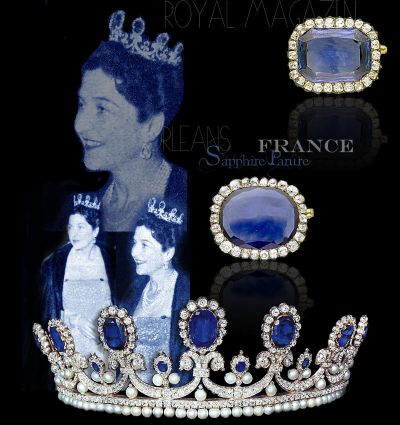
Royal Saphires Orleans | Imperial and Royal Sapphire Queen Marie Amelie of France | Marie Amelie Reine des Français Orleans Saphir Diamant Parure- Schmuck der Königin Marie Amelie von Frankreich|Königlicher Schmuck und die Geschichte The ORLÉANS SAPPHIRE PARURE includes an impressive tiara, a pair of earrings, three brooches and a necklace. All pieces are adorned with Ceylon sapphires in their natural state, i.e. not heated to change their colour as is done in jewellery today. The sapphires are surrounded by diamonds set in gold. Originally, the parure also included two bracelets.The ORLÉANS SAPPHIRE PARURE

The ORLÉANS SAPPHIRE PARURE| Imperial and Royal Sapphire Queen Marie Amelie of France | Marie Amelie Reine des Français
Orleans Saphir Diamant Parure- Schmuck der Königin Marie Amelie von Frankreich|Königlicher Schmuck und die Geschichte

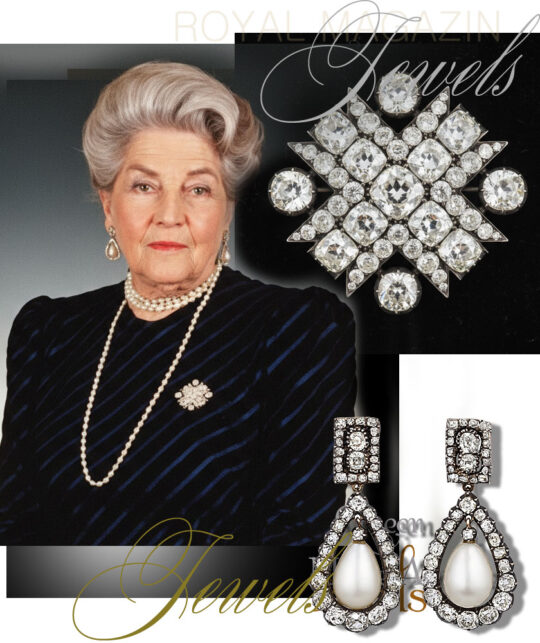
Countess of Paris‘ Diamond Brooch -Andreas Cross of Diamonds

countess of paris diamond brooch cross
Queen Marie Amelie of France Natural Pearl and Diamond Earrings| French Crown Jewels later worn by the Madame la comtesse de Paris, see first pic.

An extraordinary pair of natural pearl and diamond earrings, dating to circa 1790, once belonged to Queen Marie-Amélie of France, the last Queen of France. A rare surviving example of authentic French Crown Jewels.
Louis-Philippe I of France, son of Philippe-Égalité and Louise-Marie de Bourbon-Penthièvre, married Marie-Amélie of Bourbon-Two Sicilies in 1809. She was the sixth daughter of Ferdinand IV, King of the Two Sicilies.

Following the abdication of Charles X in 1830, Louis-Philippe and Marie-Amélie ascended the throne as King and Queen of the French, reigning until 1848, when the Revolution led to the establishment of the Second Republic and forced the royal family into exile.
Marie-Amélie of Bourbon-Two Sicilies (1782–1866) and Louis-Philippe of Orléans (1773–1850) thus became the final sovereigns of the French monarchy.

The pearl and diamond earrings originated from Queen Marie-Amélie’s mother,
Countess of Paris often wore this magnificent heirloom Diamond Brooch from the Princess of Joinville. Left to her youngest daughter, Princess Chantal, Baroness de Sambucy de Sorgue

Isabelle d’Orléans-Braganza, Madame la Comtesse de Paris, wore the earrings and the other jewels as the 221 pearls as necklace , the St Andres cross brooch, and the bezel pins frequently.
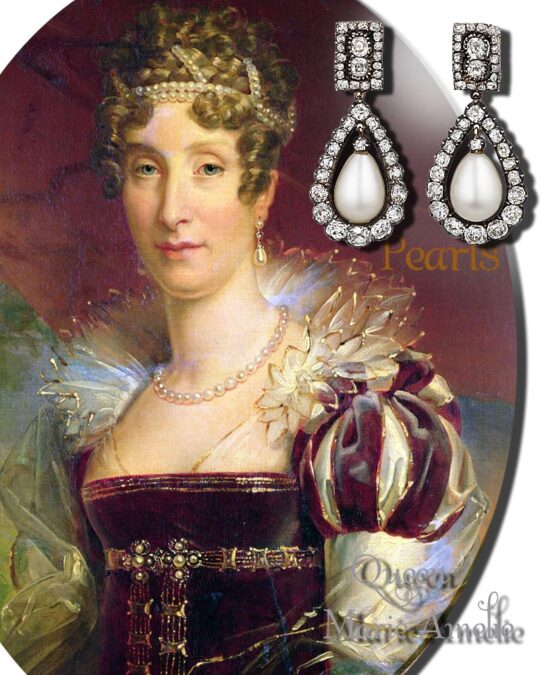
Queen Marie Amelie of France Natural Pearl and Diamond Earrings| French Crown Jewels

An extraordinary pair of natural pearl and diamond earrings, dating to circa 1790, once belonged to Queen Marie-Amélie of France, the last Queen of France. A rare surviving example of authentic French Crown Jewels.Isabelle d’Orléans-Braganza, Madame la Comtesse de Paris, wore the earrings and the other jewels as the 221 pearls as necklace , the St Andres cross brooch, and the bezel pins frequently. However, they were not her personal property. The jewels formed part of the dynastic family collection, and were later sold by her husband, together with the greater part of the family jewels.
Queen Marie Amelie of France Natural Pearl and Diamond Earrings| French Crown Jewels
An extraordinary pair of natural pearl and diamond earrings, dating to circa 1790, once belonged to Queen Marie-Amélie of France, the last Queen of France. A rare surviving example of authentic French Crown Jewels.Isabell d’Orléans-Braganza, Madame la Comtesse de Paris, Countess of Paris wore the earrings and the other jewels as the 221 pearls as necklace , the St Andres cross brooch, and the bezel pins frequently. However, they were not her personal property. The jewels formed part of the dynastic family collection, and were later sold by her husband, together with the greater part of the family jewels.

Queen Mary’s Sapphire Diamond Brooch |Marina Duchess of Kent rectangular sapphire and two diamonds sapphire brooch| History of a Romanov Sapphire Brooch

Tsarina Maria Feodorovna Sapphire Brooch, later Queen Mary Sapphire Diamond Brooch |Marina Duchess of Kent rectangular sapphire and two diamonds sapphire brooch
Tsarina Maria Feodorovna Sapphire Brooch later bought by Queen Mary |Marina Duchess of Kent rectangular sapphire and two diamonds sapphire brooch

Queen Mary Sapphire Diamond Brooch |Marina Duchess of Kent rectangle sapphire and two diamonds sapphire brooch |Sapphire clasp pearl necklace Princess Michael


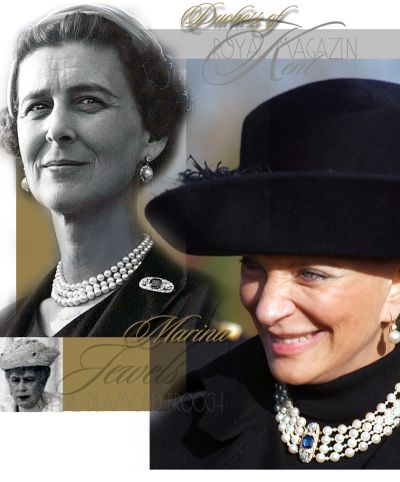
Queen Mary Sapphire Diamond Brooch |Marina Duchess of Kent rectangular sapphire and two diamonds sapphire brooch. The jewel was later altered and now used as sapphire clasp pearl necklace by Princess Michael.

empress maria fedorovna oval-brooch octaconal sapphire diamonds Queen Mary Sapphire Diamond Brooch |Marina Duchess of Kent rectangular sapphire and two diamonds sapphire brooch |Sapphire clasp pearl necklace Princess Michael It was probably bought by Queen Mary in the year 1929 April 7th , from the Romanov jewels of Empress Maria Feodorovna of Russia. There is a picture of the Empress Marie Feodorvna with an similar bar brooch. The notes from the Hennell list: of Empress Maria Feodrovna's jewels Tsarina Maria Feodorovna Sapphire Brooch
Tsarina Maria Feodorovna Sapphire Brooch | Empress of Russia’s oval-brooch octaconal sapphire diamonds Queen Mary Sapphire Diamond Brooch |Marina Duchess of Kent rectangular sapphire and two diamonds sapphire brooch |Sapphire clasp pearl necklace Princess Michael

More of Queen Mary’s Sapphire Brooches

Queen Mary’s Sapphire Diamond Cluster Brooch |Large Sapphire in four bows setting 1911 Royal Jewels History| British Royal Jewels Queen Mary England

Queen Mary's Sapphire Diamond Cluster Brooch |Large Sapphire in four bows setting 1911 Royal Jewels History| British Royal Jewels Queen Mary England 
 Queen Mary would later wear the brooch in two tiaras - the Honeysuckle Tiara now worn by The Duchess of Gloucester and a diamond bandeau. 
  later owned by Princess Margret, Countess of Snowdon
Queen Mary’s Sapphire Diamond Cluster Brooch |Large Sapphire in four bows setting 1911 Royal Jewels History| British Royal Jewels Queen Mary England later owned by Princess Margret, Countess of Snowdon

Queen Mary’s Sapphire Diamond Cluster Brooch |Large Sapphire in four bows setting 1911 Royal Jewels History| British Royal Jewels Queen Mary England

Art Deco Diamond Bandeau Tiara wedding gift from the Duke of Kent to Princess Marina

Art Deco Diamond Bandeau Tiara Duchess Marina of Kent

An all diamond scroll pattern tiara with brilliant custer centre and entourage of baquette diamonds, was one of the wedding gifts of the Duke of Kent to his bride. It was noted in the royal wedding gift list.

The Duchess of Kent wore the diamond tiara in her earlier times on some occassion, see the picture below.

Similar to the Duchess of Sussex wedding tiara, but not the same !!

For more stories about the history of royal jewels and details of the diamond bandeau:
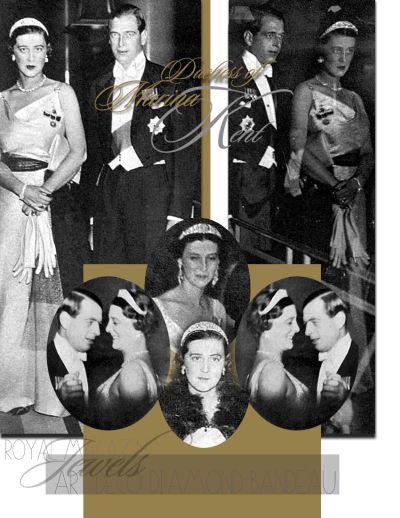
Art Deco Diamond Bandeau Tiara wedding gift from the Duke of Kent>>


Art Deco Diamond Bandeau Tiara wedding gift from the Duke of Kent

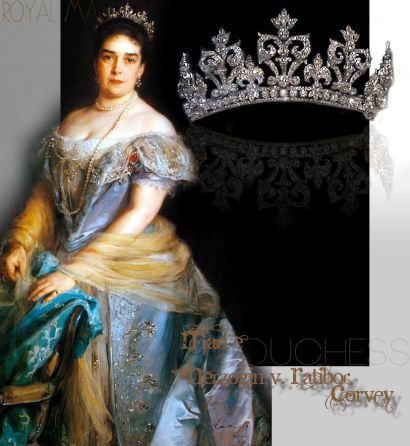
Duchess of Ratibor-Corvey Honeysuckle Diamond Tiara | Jewel History

Duchess of Ratibor Corvey Honeysuckle Diamond Tiara| Marie Herzogin von Ratibor-Corvey Palmetten Diamant Diadem | Royal Jewel History Jewels Historic Jewellery Marie Herzogin von Ratibor-Corvey Palmetten Diamant Diadem | Historischer Schmuck und Juwelen der Herzöge Ratibor-Corvey   marie duchess of ratibor   marie princess of hohenlohe schillingfürst  house of breunner enckevoirth
--
Duchess of Ratibor Corvey Honeysuckle Diamond Tiara| Marie Herzogin von Ratibor-Corvey Palmetten Diamant Diadem | Royal Jewel History Jewels Historic Jewellery
Marie Herzogin von Ratibor-Corvey Palmetten Diamant Diadem | Historischer Schmuck und Juwelen der Herzöge Ratibor-Corvey

The history about the historic tiara of the Duchess of Ratibor-Corvey :

Heart shaped diamond Ornament Tiara Marie Duchess of Ratibor-Corvey Large diadem with palmette in heart-shaped elements with diamonds. As base a double diamond hoop with large solitaires, in between leaf-shaped small motifs, lily-shaped, between the large elements.
The gallery set in gold. All motifs are wearable as brooches Jeweler Kobert Vienna 1860.

more details:

Duchess of Ratibor Corvey Honeysuckle Diamond Tiara| Marie Herzogin von Ratibor-Corvey Palmetten Diamant Diadem | Royal Jewel History Jewels Historic Jewellery
Marie Herzogin von Ratibor-Corvey Palmetten Diamant Diadem | Historischer Schmuck und Juwelen der Herzöge Ratibor-Corvey

Royal Jewels of Queen Marie of Romania | Schmuck & Juwelen Marie von Edinburgh Königin von Rumänien

Princess Marie of Edinburg | Queen of Romania| Royal Jewel Boucheron Diamond hair ornament Misteltoe   reginamarie
Princess Marie of Edinburg | Queen of Romania| Royal Jewel Boucheron Diamond hair ornament Misteltoe

Translated from Romanian to E,nglish by Google Translator.

The Jewels of Queen Marie of Romania.


The jewels of Queen Marie of Romania hidden in a villa in Moscow.


Before 102 years, on 14 (27) December 1916, the treasury of the National Bank of Romania was packed in 1738 boxes and sent to Russia.

Besides treasury bills, values ​​belonging to various Romanian private banks, commercial companies, private persons, art collections, documents and money, valued at 314,580,456, 84 lei gold, the Romanian officials decided to put in conditions safe and jewelry of Queen  Maria, valued at 7,000,000 gold. The latter were stored in 2 boxes.

The fate of the Queen’s jewels has been the subject of many journalistic investigations in the interwar period. Lastny Novosti, the newspaper of Russian emigrants in Paris, makes an interesting account of the subject in 1933.
The royal family’s jewels were handed over to Mr. Constantin Dimandy, then the plenipotentiary minister at Petrograd.

In the spring of 1918, after the departure of ambassadors and foreign ministers from Soviet Russia, Diamandy gave precious objects to the American consul in Moscow. This, in turn, before leaving Russia, handed them over to the Norwegian Consul.
The Norwegian Consulate occupied at that time a villa on Charitonov Street no. 15.

At the end of 1918, Norwegian Consulate staff had to leave Russia. To save the treasure entrusted to him, the consul hid the boxes in a wall of the villa in the greatest mystery and hoping that later, Queen Marie’s jewelry boxes would be taken out of the secret hiding place and, of course, from Soviet Russia.
One man in Moscow knew about the treasure of the villa, a former servant of the Russian submissive consulate who could not leave with the rest of his staff in Norway. After a while, this servant died. But before closing his eyes, he told a German citizen, a certain K., about the existence of treasure, indicating exactly the place in the wall where the boxes were built.
In 1923, K., a refugee in Germany, contacted the Soviet Embassy in Berlin. This individual, K., the secretary of the Soviet Embassy, ​​Iakubovici, and the second secretary, Mirov, concluded a verbal agreement under which K., as a reward for his denunciation, guaranteed a certain percentage of the value of the treasury.
The agreement was confirmed in the presence of the representative of the Soviet State Bank, Sergheev-Romm, specially sent to Berlin for this purpose.
It seems that German K, born and raised in Moscow, recognized Sergheev-Romm as an old high school colleague. Among friends, the business has settled without difficulty. The formalities were
resolved quickly, and K. left for Moscow. Here he was directed to a certain Stein who was given the representative of the Soviet Ministry of Finance.
Stein confirmed his understanding between K. and the Soviet Embassy in Berlin through the representatives of Iakubovici and Mirov on the one hand and the bank through its representative, Sergeyev-Romm.
The villa on Charitonov Street was at that time occupied by the Czechoslovak Mission. For this reason, he was told by K., coming from Germany, that he can not start looking for the treasure, because the matter is too delicate and he must for now give up.
Incidentally or not, in three months, Soviet officials found the treasure.

In the Czechoslovak Mission’s building the guilds appeared, under the pretext that they are workers from the water pipes. They showed a Soviet order in Moscow that had the immediate repair of the upper pipes, otherwise the building would have been threatened to collapse.
The treasure was built in a wall on the first floor. During the repairs, the Czechoslovak Mission moved to the second floor. Within a few days, in September 1923, the jewels were discovered and transported to the Soviet warehouse.

In 1928, K. learned, by chance, that the treasure was found and that he was practically pulled on the string. Consequently, he addresses a Berlin lawyer, Bruno Marwitz, asking him to sue a Soviet trial.
Marwitz, before commencing the action, addresses the Soviet Embassy in Berlin to confirm whether there was any agreement between K and the Embassy. Iakubovici admits, in a rather imprudent way, that he really spoke to Mr. K. about the treasure, and that, after this conversation, K. left for Moscow.
Yakubovich could no longer remember any formal obligations towards K. The process threatens to become embarrassing for the Soviet government, especially since the intervention of the Romanian government, which until then knew nothing of the fate of Queen Mary’s jewels, was inevitable.

In order to get rid of a lawsuit, the Soviet Embassy in Berlin intervened with the German Foreign Ministry, which took the necessary steps with the Ministry of Justice. Interventions were successful, as the process ended with no result: censuses could not be handed over to Ban.

In the year 1903 Grand Duchess Marie, Duchess of Edinburgh, the mother of Queen Marie held a Charity exhibition at Coburg, of her famous jewels, as well with the jewels of her daughters. Some of the missing jewels are on display in 1903.
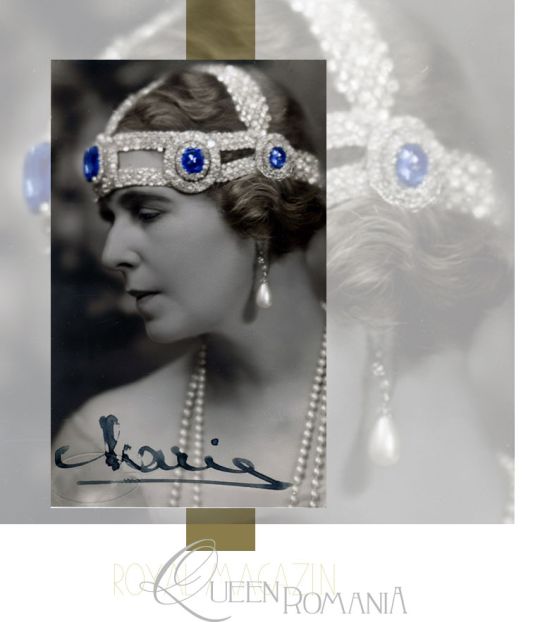


 Pearl and Diamond Tiara | Royal Wedding Gift to Queen Elisabeth | Queen Marie of Romania

Jewels Wedding gifts to Princess Marie of Edinburgh| Crown Princess of Romania list of the Royal Jewelry |Bijuteriile Reginei Maria

Royal Wedding Presents | Juwelen und Schmuck Hochzeitsgeschenke an Kronprinzessin Marie von Rumänien|Bijuteriile Reginei Maria

Royal Wedding gifts to Princess Marie of Edinburgh| Royal Jewelry|Bijuteriile Reginei Maria

Royale Imperiale Geschenke zur Hochzeit an Prinzessin Marie von Edinburgh|Bijuteriile Reginei Maria

Royal Marriage Gift Duchess of Edinburgh |Diamant Brillantkreuz Anhänger ein Hochzeitsgeschenk der Herzogin von Edinburgh|Bijuteriile Reginei Maria

Royal Jewel History| Sapphire Tiara Queen Marie Romania |Bijuteriile Reginei Maria||Königin Marie von Rumänien und ihre Saphir Diadem

The Romanov Sapphire and Diamond Tiara The Romanov Sapphire and Diamond Tiara stood out as one of the most versatile creations of imperial jewel design. Commissioned in the Russian court tradition, it was composed of magnificent sapphire and diamond clusters that could be worn interchangeably as a regal tiara, brooches, pendants, or even transformed into an Art Deco bandeau in the 1920s. For Grand Duchess Maria Pavlovna and later Queen Marie of Romania, this adaptability was more than fashion—it reflected the ingenuity of jewelers who crafted treasures to suit the evolving styles of each era. The deep blue sapphires, radiant against diamonds, carried the aura of Romanov splendor into a new age. By the mid-20th century, the tiara’s fate became uncertain. Like so many jewels tied to the turbulent history of Russia and Romania, it slipped into legend—its clusters remembered through portraits, photographs, and the stories they left behind.
The Romanov Sapphire and Diamond Tiara

The Romanov Sapphire and Diamond Tiara stood out as one of the most versatile creations of imperial jewel design. Commissioned in the Russian court tradition, it was composed of magnificent sapphire and diamond clusters that could be worn interchangeably as a regal tiara, brooches, pendants, or even transformed into an Art Deco bandeau in the 1920s.


Schmuck und Juwelen des Königshaus Rumänien – Romania Royal Jewels|Bijuteriile Reginei Maria

Royal Jewels gifts to Queen of Romania|Imperial Historic Royal Jewelry|Bijuteriile Reginei Maria


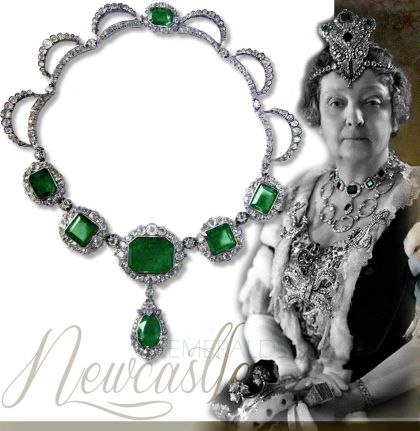
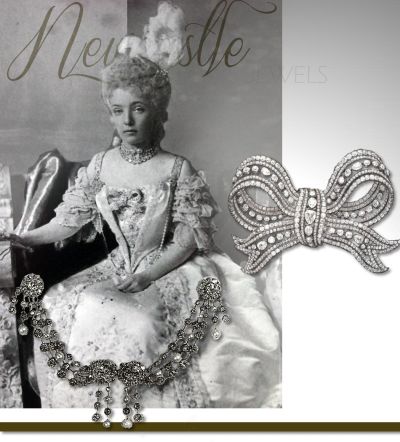
Duchess of Newcastle | Royal Imperial Jewelry| Famous Diamond Jewels History

The story about famous and royal jewels, history of:
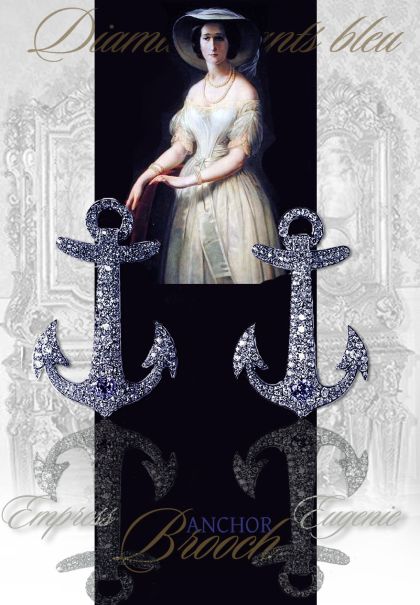
Anchor Brooches from Empress Eugenie - later owned by the Duchess of Newcastle

Royal Jewel History - Duchess of Newcastle
Anchor Brooches from Empress Eugenie – later owned by the Duchess of Newcastle The anchors are from the personel jewels of Empress Eugenie of France, two large anchors of diamonds>>

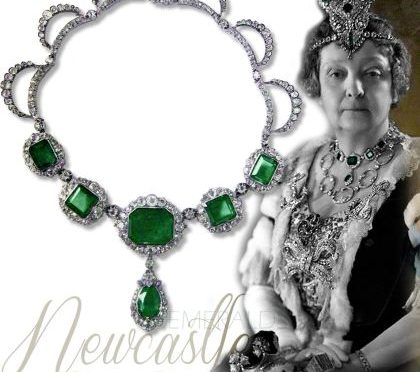
newcastle emeralds necklace duchess Tiara Diadem Coronation Tiaras Coronation Diademe
Duchess of Newcastle emeralds necklace duchess of Newcastle important jewels | Emerald Diamond Collier| Coronation Tiaras
Diamond Emerald Necklace Jewelry | Duchess of Newcastle Jewels
Diamond Tiara with Plume brooch |Noble Jewelry | Duchess of Newcastle Jewels
Diamond Tiara with Diamond Plume brooch |Noble Jewelry | Duchess of Newcastle Jewels
Diamond Tiara with Plume brooch |Noble Jewelry | Duchess of Newcastle Jewels
Diamond Bow Brooch Stomacher | Noble Jewelry | Duchess of Newcastle Jewel Devante de Corsage

Duchess of Newcastle imperial diamond bow-brooch Duchess of Newcastle imperial diamond bow-brooch |Importante broche noeud de ruban en diamants, bapst, circa 1850.
commande de la duchesse kathleen de newcastle pour le mariage de la reine victoria.
Duchess of Newcastle imperial diamond bow-brooch |Importante broche noeud de ruban en diamants, bapst, circa 1850, commande de la duchesse kathleen de newcastle pour le mariage de la reine victoria.
Diamond Bow Brooch | Famous Jewels and Stomachacher Bow |Duchess of Newcastle


Turquoise Pectoral Badge of Yanhuitlan | Royal wedding gift of the citizens of Mexico | Queen Elizabeth II.

Turquoise Pectoral Badge of Yanhuitlan | Royal wedding gift of the citizens of Mexico | Queen Elizabeth II.

The Mexican wedding present, turquoise brooch to Princess Elizabeth the future Queen of Great Britain and Irland | Königin Elisabeth II. von England>>

Pectoral Badge of Yanhuitlan | The wedding gift of the citizens of Mexico was sent by Dr Miguel Alemán Valdés , President of Mexico, on the occasion on the marriage of Princess Elizabeth II in 1947.
Never seen worne in public, by the Queen, but one of the costly presents to her marriage.

Overseas League royal wedding gift clip brooch | Elizabeth Queen of Great Britain and Irland

Overseas League wedding gift clip brooch to Princess Elizabeth the future Queen of Great Britain and Irland | Königin Elisabeth II. von England


Overseas League wedding gift clip brooch to Princess Elizabeth the future Queen of Great Britain and Irland | Königin Elisabeth II. von England

Every jewel of the Queen tells a story – more about the history…

Who bought Queen Alexandrine’s Russian Sapphire Tiara?

Queen Alexandrine's Russian Sapphire Tiara
Queen Alexandrine’s Russian Sapphire Tiara


Queen Alexandrine’s Russian Sapphire Tiara was sold for 2 Mio DK

Tsars Wedding gift bandeau  to Queen Alexandrine, seen above in the picture

attributed to  C.E. Bolin, Saint Petersburg 1897-1898, „The Russian Sapphire Tiara“. Provenance: Gift from Tsar Nikolai II of Russia to Queen Alexandrine. Estimate: DKK 1.5-2 million. Sold for: DKK 2 million (EUR 350,000 including buyer’s premium).

Friday afternoon, a historical treasure was up for auction at Bruun Rasmussen in Copenhagen. Queen Alexandrine’s Russian sapphire tiara was sold for DKK 2 million.

„The Russian sapphire tiara is by far the most spectacular Russian objet d’art we have ever sold at Bruun Rasmussen. Here beauty and history come together at the highest level. I am overwhelmed by all the attention this piece of jewellery has garnered from our customers and the Danish and international press,“ says Martin Hans Borg, Bruun Rasmussen’s Head Specialist in Russian Art.

In 1898, Princess Alexandrine of Mecklenburg-Schwerin was married to the Danish Crown Prince Christian in Cannes, and the couple were in 1912 proclaimed Queen Alexandrine and King Christian X of Denmark.

One of their wedding presents was the beautiful sapphire bandeau, later rebuild to an tiar.  They were given the piece of jewellery by Tsar Nikolai II and Tsaritsa Alexandra Feodorovna of Russia.

In 1933, the Danish royal couple passed on the piece of jewellery to their daughter-in-law Hereditary Princess Caroline-Mathilde at her wedding to their youngest son Hereditary Prince Knud at the Fredensborg Palace Chapel.

After the Hereditary Princess‘ death in 1995, the tiara was given to her son Count Christian of Rosenborg and his family, where it has been until today.

It was the three daughters of Count Christian, Josephine, Camilla and Feodora of Rosenborg, who sold the tiara at the Russian auction.

Who bought the imperial diamond and sapphire tiara?

Probably an museum – or an collector, I had ask for by the auction house, the information will follow.

The Story Behind the Tiara  The orginal – bandeau – The Russian Sapphire Tiara

Princess Alice Grand Duchess of Hesse by Rhine | Royal Marriage presents Wedding gifts|England German Royal Jewels

Princess Alice Grand Duchess of Hesse by Rhine | Royal Marriage presents Wedding gifts|England German Royal Jewels


Princess Alice of Great Britain and Irland, the second daughter of Queen Victoria married Prince Louis of Hesse.

The royal wedding presents >> are costly


Prinzessin Alice Grossherzogin von Hessen bei Rhein |Geschenke zur Hochzeit und Vermählung | Royale Juwelen und Königlicher Schmuck|England Deutschland
Princess Alice Grand Duchess of Hesse by Rhine | Royal Marriage presents Wedding gifts|England German Royal Jewels
Prinzessin Alice, Grossherzogin of Hessen bei Rheine | Royale Saphir Parure Collier, Brosche und Ohrringe |Juwelen und Schmuck Geschenk des Prinz of Wales
Royal Wedding Gift to Princess Alice, Grand Duchess of Hesse & by Rhine, consort of Ludwig IV, Grand Duke of Hesse & by Rhine 1843-78
Princess Victoria of Hesse, Princess of Battenberg | Royal Jewel History | Grand Duchess Alice Sapphire-Diamond Pearl Parure
Princess Alice Grand Duchess of Hesse by Rhine | Diamond Riviere Empress of Russia |Royal Marriage Presents & Wedding Gifts


Schmuck und Juwelen der Deutsche Fürstenhäuser | Royal Jewels – Historical Jewerly and Treasure of Royals and Aristocracy | bijoux historiques| исторические драгоценности