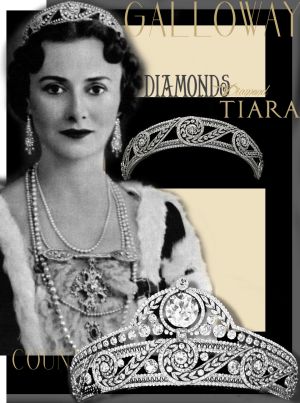
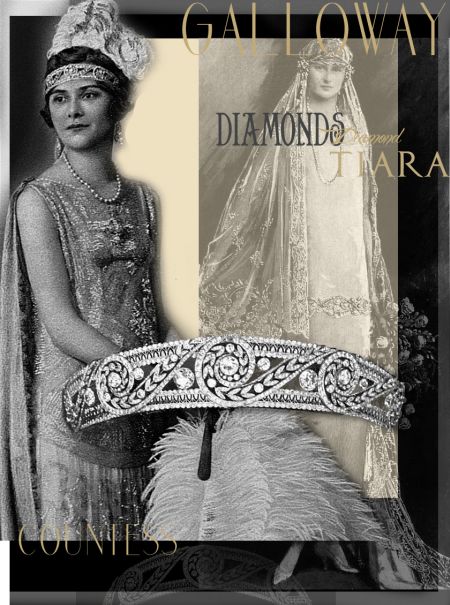
Meander Diamond Tiara |Countess Ottilie von Castell Rüdenhausen|Gräfin Faber Castell | German Noble Family
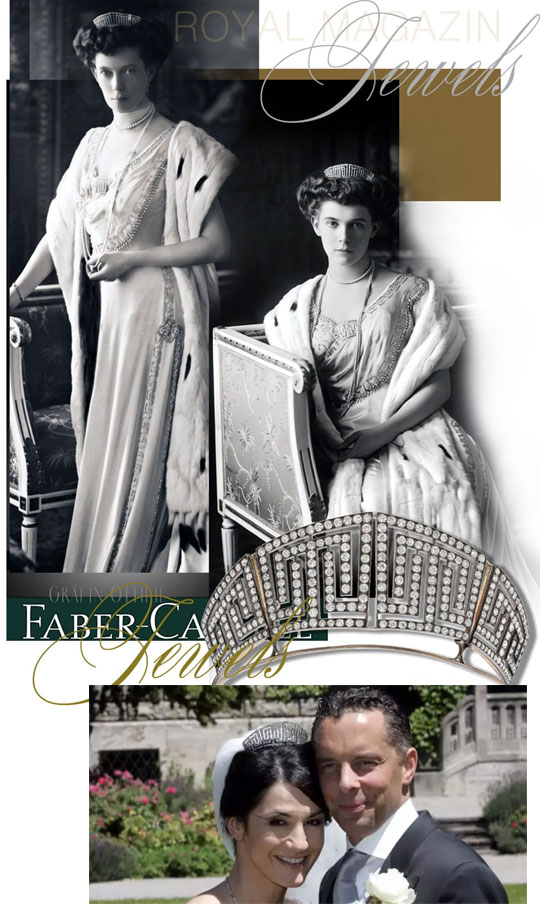
Meander Diamond Tiara |Countess Ottlie von Castell Rüdenhausen|Gräfin Faber Castell | German Noble Family

Der Mäander ist ein seit der Jungsteinzeit verwendetes orthogonales Ornament. Eine Sonderform des Mäanders ist der Doppelmäander, der aus zwei entgegengesetzt verlaufenden Mäandern besteht. Die gerundete Form heißt Laufender Hund. Mäander stammen ursprünglich aus der griechischen Kunst. In der griechischen Antike steht dieses Ornament für die Erlangung der Ewigkeit als Dauer in der Zeit durch Reproduktion. Ein alterndes Wesen setzt ein junges an seine Stelle und erlangt so Unsterblichkeit. Das ältere Wesen rollt sich zusammen, während sich ein junges entfaltet. Es ist eine Anspielung auf den uralten und ewig jungen Gott Eros und die sich ewig erneuernde Energie des Kosmos
The word „meander“ is used to describe a winding pattern, after the river. And used in Etruscan, Greek, Roman and Byzantine cultures. Greek fret or Greek key design, diadema greekkey meander meandertiara meanders or Greek keys are quite recurrent motifs in jewelry design, meander diadem, meander diademe, bandeau greek key, among the most important symbols in ancient Greece; and perhaps symbolized infinity and unity; many ancient Greek temples incorporated the sign of the meander
La grecque grecque.Meander | Greek Key | La grecque| grecque Méandre | Mäander
Imperial Jewels – Grand Duchess Victoria Melita’s Meander Kokoshnik
update the website from 2006
Greek Key Tiara with Diamonds of Grand Duchess Viktoria Melitta| Royal Jewel History
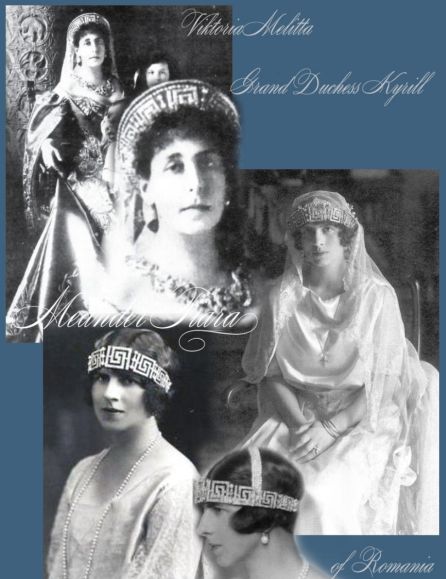
Princess Helen of Romania Royal Wedding Princess Helena of Greece |Royal Jewel History
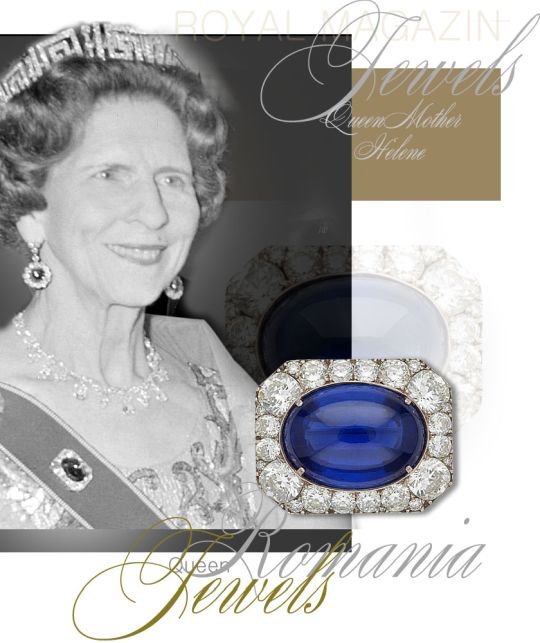
Since Sunday my full update has been online – you can read all details here: royal-magazin.de Unfortunately, it seems that once again others have taken the content without credit. Please note that the original research and images are mine.
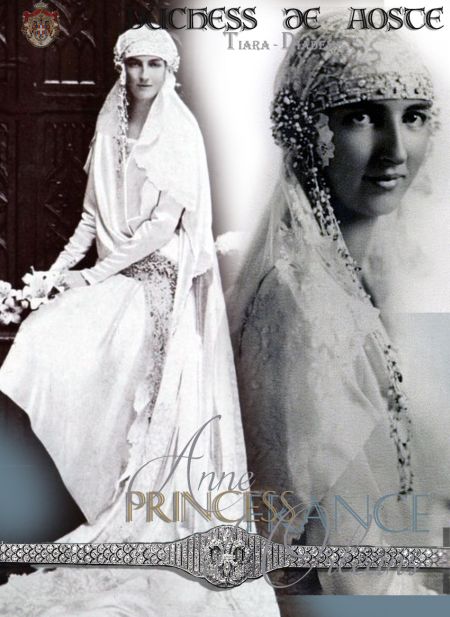
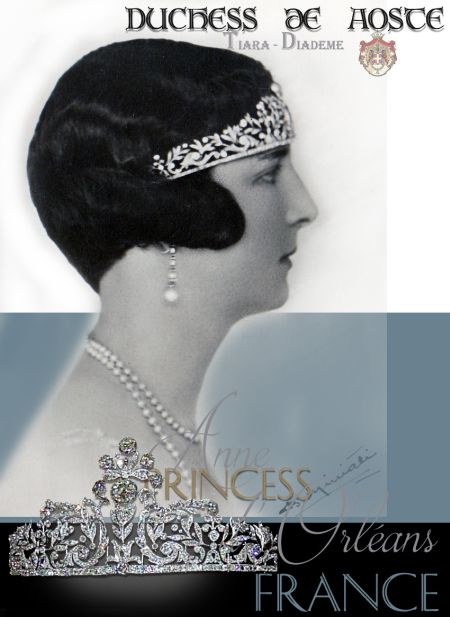
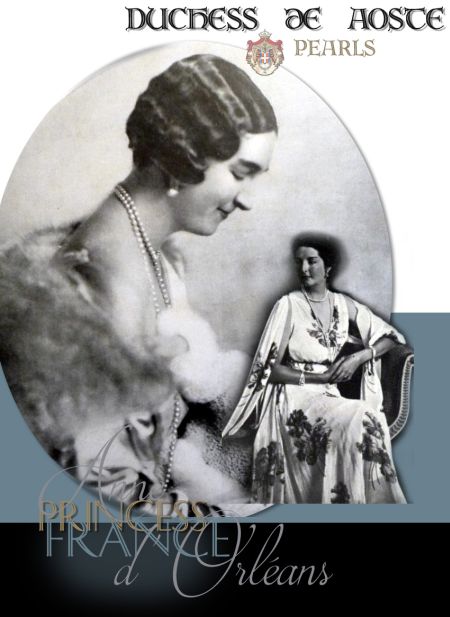
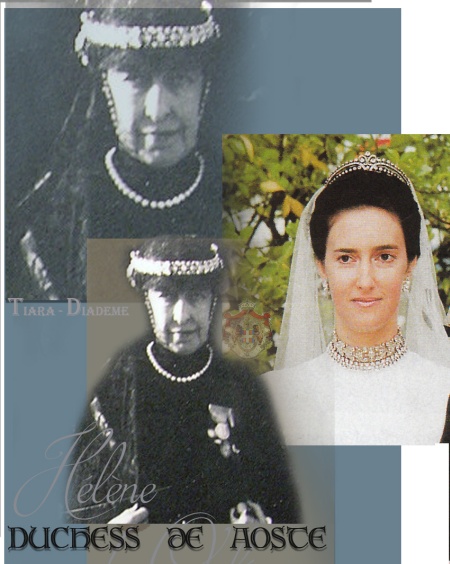
see on top the diamond bandeau worn by the bride Princess Anna of Orleans | Duchess of Aosta – again as choker on her neck from the bride in later days
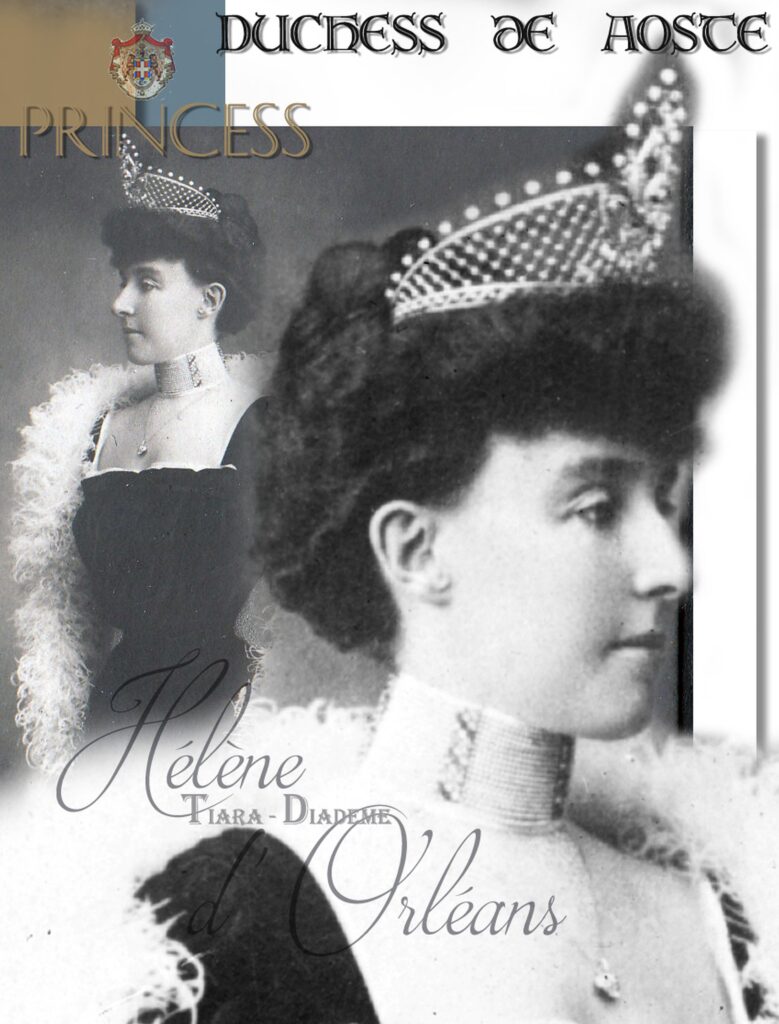

Margherita Erzherzogin von Österreich-Este Prinzessin Margherita von Savoy-Aosta
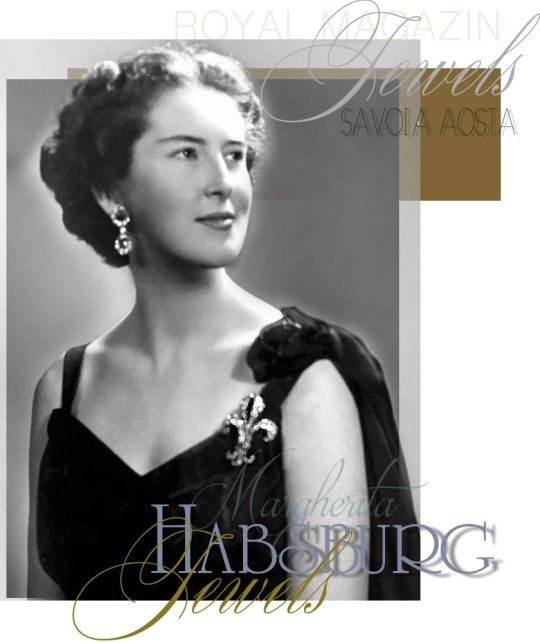
Archduchess Margherita of Austria-Este, Princess Margherita of Savoy-Aosta
On 29 December 1953, Princess Margherita of Savoy-Aosta entered into marriage with Archduke Robert of Austria-Este (1915–1996), son of the last Austrian Emperor, Charles I. Tall and graceful at 1.80 metres, the bride made a striking figure in an ivory satin gown with a sweeping train, radiating both regal dignity and youthful charm.
Their union was blessed with five children: Maria Beatrice (b. 1954), Lorenz (b. 1955), Gerhard (b. 1957), Martin (b. 1959), and Isabella (b. 1963), thus continuing the distinguished traditions of two illustrious dynasties.
Pos 33 vent de Diamants de la couronne:
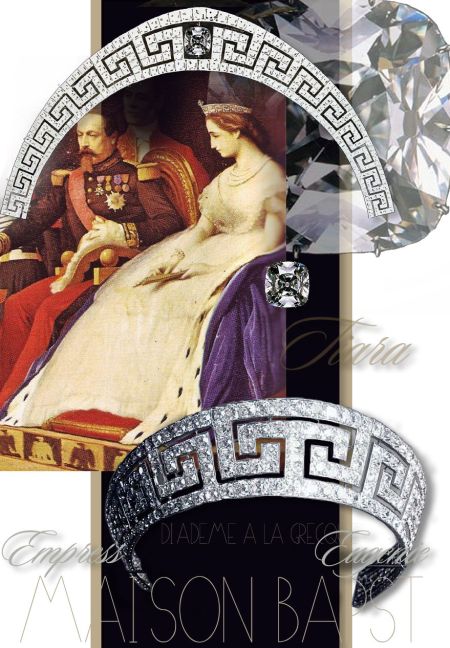
Diadem a la grecque -326 brillants, pes 306 19/32ct
……………………………..-286 petits brillants, pes 5ct –
……………………………..- 612 Brillants tt 411ct value: 150 000,–
The Greek Diadem This diadem in a Greek design was made as a setting for the Regent Diamond.
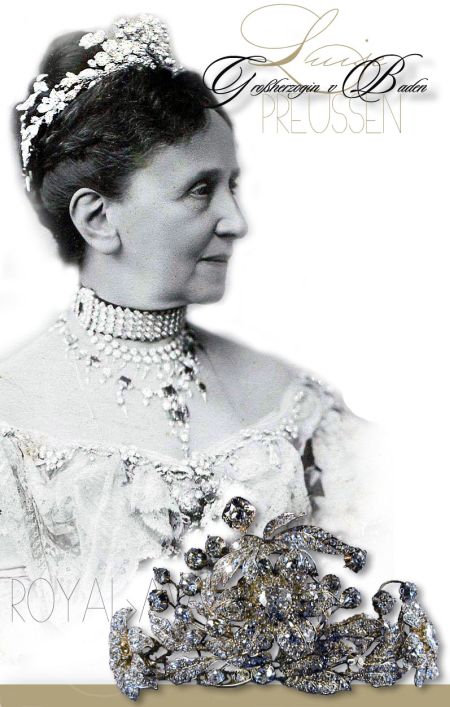
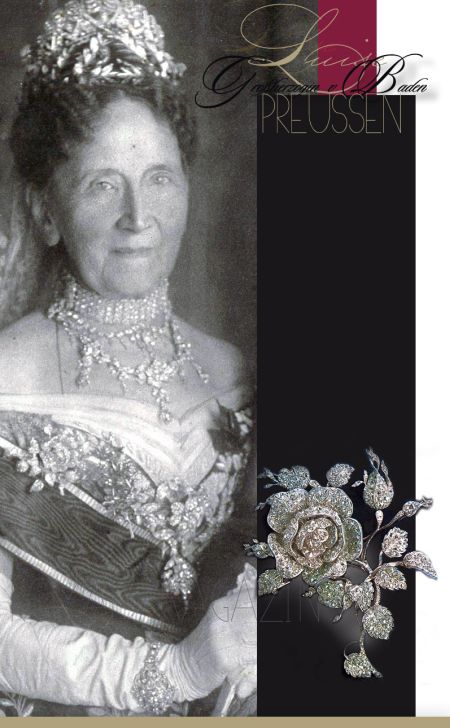
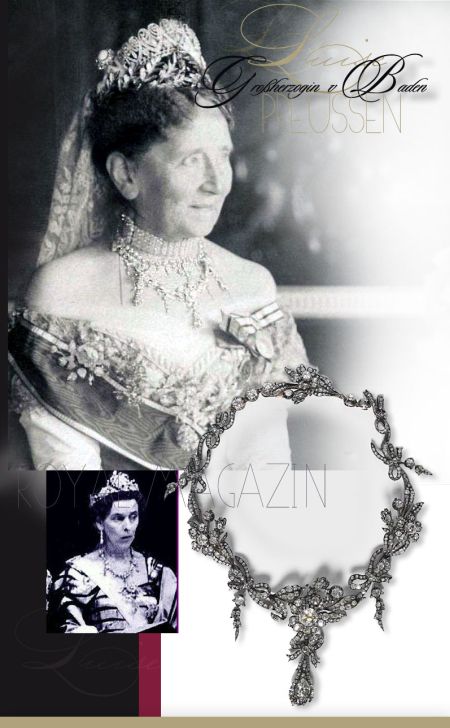
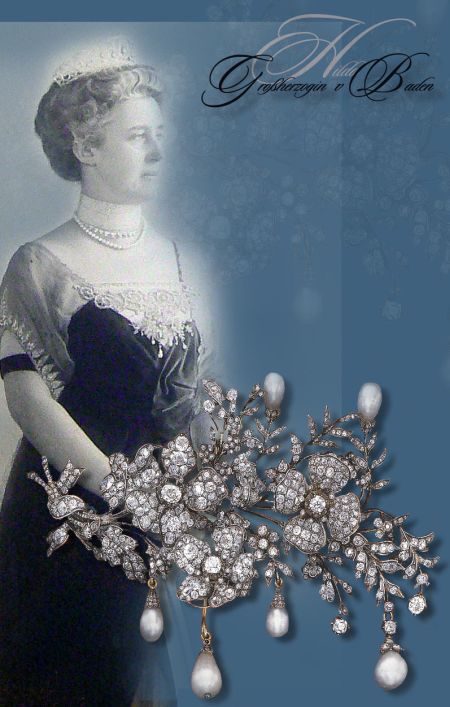
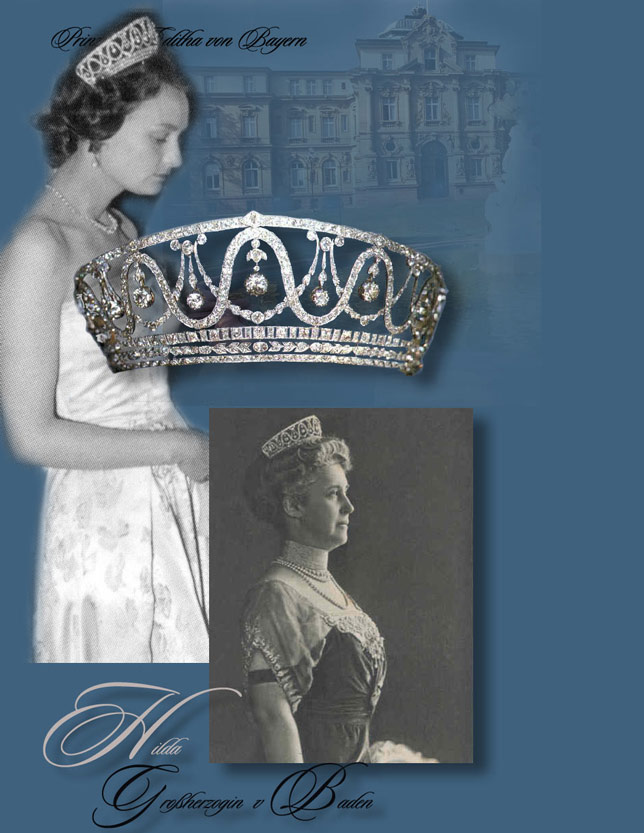
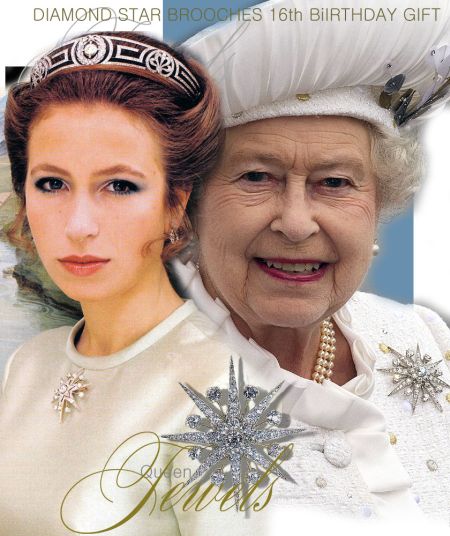
The story behind the Royal Jewels of the Elizabeth the Queen Mother, Queen Elizabeth II, Princess Anne.
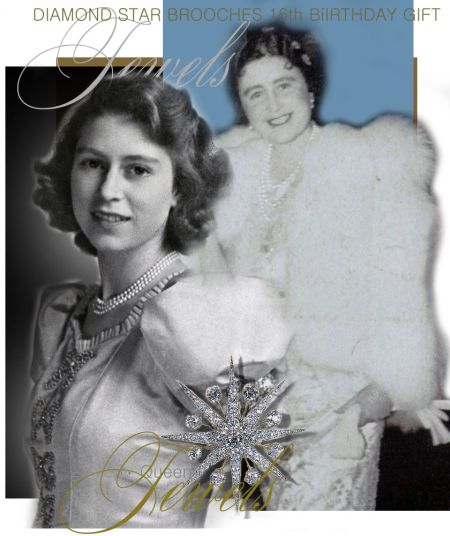

click for more history!
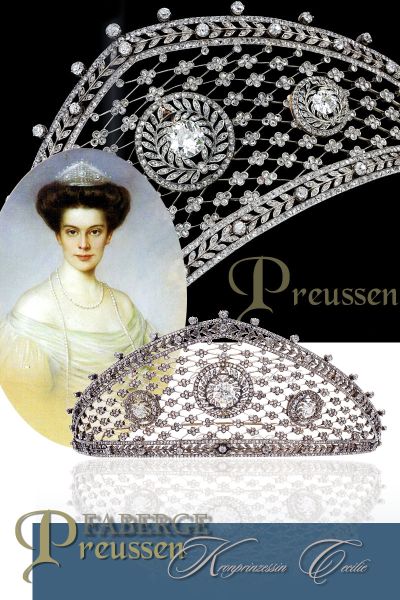
Royaler Schmuck und Kaiserliche Juwelen des Hauses Hohenzollern – Preussen | Royal Jewellery and Imperial Treasures of Prussian Kings and Queens
Königliche Rubinschmuck der Königin Ludovika von Preussen | Royal Ruby-Parure Queen Elisabeth Ludovika of Prussia
Royale Diamant Mäander-Tiara Kronprinzessin Cecilie | Royal Diamond Greek Key Mäander-Tiara of the Prussian Crown Princess
Diamant Mäander-Tiara Kronprinzessin Cecilie | Royal Diamond Greek Key Mäander-Tiara of the Prussian Crown Princess
Königlich Preussische Saphir-Diamant-Perlen-Parure |Preussen | Royal The Sapphire-Pearl-Diamond Parure of the Prussian Queen
Kronprinzessin Cecilie und das Saphir-Aigrette|Kaiserhaus Preussen Hohenzollern| Sapphire Head Jewel of the Prussian Crown-Princess
Kronprinzessin Cecilie und ihr Saphir-Tropfen |Imperial Jewel History|Crownprincess Cecilies Sapphire Pendant
Diamant Faberge-Kokoschnik der Kronprinzessin Cecilie | Royal Imperial Jewelry| Crownprincess Cecilies Faberge Tiara
Diamond bridal tiara of the of Prussian Imperial Princess Marie-Cecilie Prncess Kira Princess | Die Mäander-Tiara der Kronprinzessin als Braut-Tiara
Wedding Kira Grand Duchess of Russia and Prince Louis-Ferdinand of Prussia | Die Hochzeit von Prinz Louis-Ferdinand von Preussen und Grossfürstin Kira
Precious Wedding Gifts Royal Jewellery and Imperial Bonaparte Wedding on 23 May 1868
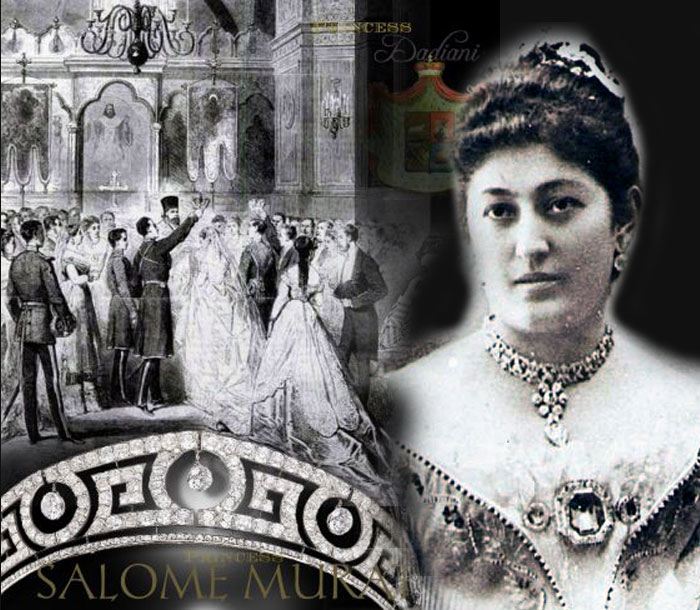
Princess Salome sent me a depesche: „Share my luck, I just got engaged to Prince Achille Murat“.
I was told how the whole thing came.
Last winter, Empress Eugenie and Princess Ekaterina Dadiani had already considered it, and the matter had been brought to a close last week.
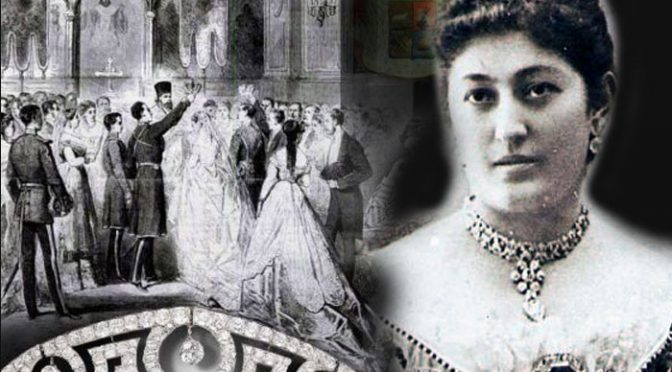
The emperor, Napoleon III, took it upon himself to give his nephew 50000 francs of Apanage annually, which harmonized excellently with the same income of the bride, and furthermore to pay his debts. Well, debts…that the young man was one of the most wasteful men of life in Paris, was well known in the city, among the diamonds, the then so celebrated – beautiful Helena, Hortense Schneider, was many a piece of jewellery laid at her feet by Prince Achille Murat. The whole marriage was arranged by one of the relatives on both sides, and she had only seen her groom three or four times, but in those circles, especially in France, it is customary for marriages to be arranged this way. She was downright in love with the young man and was looking forward to becoming „Princess Achille Murat„ >>
Die Toiletten der Damen waren von großer Pracht.
Die Braut trug einen Schleier, der für sie in Brüssel angefertigt worden und in dem das Familienwappen, das Goldene Vliess, eingewebt war.
Der Schleier wallte von einem Diamantdiadem herab, das Hochzeitsgeschenk der Kaiserin Eugenie – in griechischem Meander Ornamenten.
::::::::::::::::
Massin Oscar en Russie
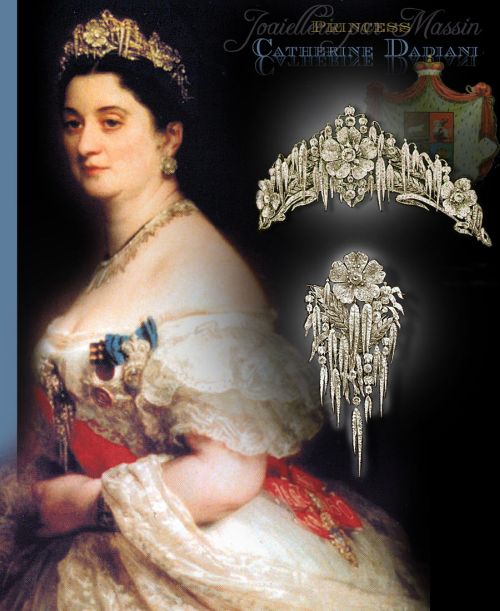
Diadème dit „diadème aux eglantines“ par Oscar Massin
Le début de projet Oscar Massin a été acheté par la princesse Ekaterina Chavchavadze-Dadiany vers 1860 à Paris. Princesse Ekaterina Chavchavadze épousé une princesse géorgienne Dadiany David I, qui a régné jusqu’à sa mort en 1853, la Mingrélie Principauté.
::::::::::::::